


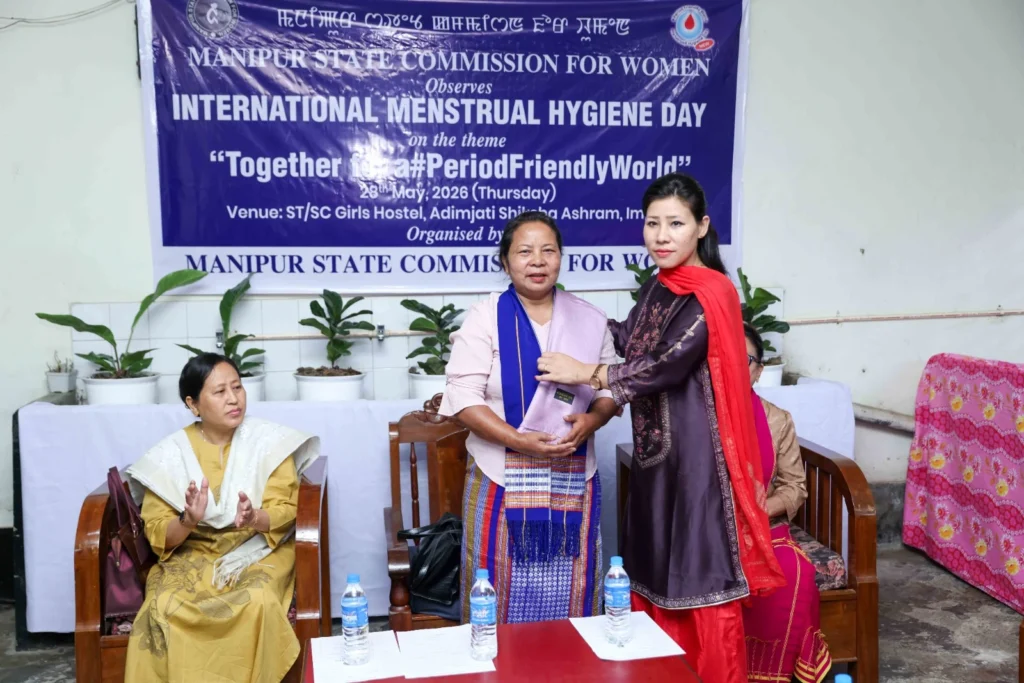
The Manipur State Commission for Women (MSCW) observed International Menstrual Hygiene Day on Thursday at the ST Girls’ Hostel of Adimjati Shiksha Ashram under the global theme “Together for a #PeriodFriendlyWorld.” The awareness programme focused on menstrual hygiene, health care, nutrition, mental wellness, and breaking social stigma related to menstruation. MSCW Chairperson Th. Tiningpham Monsang emphasized that menstruation should never become a source of shame or discrimination for girls and women.
She encouraged students to spread awareness in their communities, especially in hill districts of Manipur. The programme also included expert sessions on health and wellness, menstrual hygiene management, and adolescent health awareness.
Read More: Tipra Motha Secures Massive Victory In TTAADC Election Results – Borok Times
Key Facts
- Event: International Menstrual Hygiene Day 2026
- Location: ST Girls’ Hostel, Adimjati Shiksha Ashram, Manipur
- Theme: “Together for a #PeriodFriendlyWorld”
- Organiser: Manipur State Commission for Women (MSCW)
- Chairperson Present: Th. Tiningpham Monsang
- Participants: More than 90 students
- Focus Areas: Menstrual hygiene, health care, nutrition, wellness, awareness
- Special Speaker: Sports Nutritionist A.S. Wungzip Zimik
- Objective: Break stigma and improve awareness on menstrual health
MSCW Organises Menstrual Hygiene Awareness Programme in Manipur
Imphal, Manipur: The Manipur State Commission for Women (MSCW) on Thursday observed International Menstrual Hygiene Day at the ST Girls’ Hostel of Adimjati Shiksha Ashram with an awareness programme aimed at promoting menstrual health and breaking social stigma surrounding menstruation.
The event was organised under the global theme “Together for a #PeriodFriendlyWorld” and brought together students, officials, health experts, and resource persons for discussions on menstrual hygiene management and adolescent health.
MSCW Chairperson Th. Tiningpham Monsang attended the programme along with Member S.K. Sophia and MSCW Member Secretary as well as Additional Director of DIPR, W. Phajatombi Devi.
Officials stated that the programme aimed to educate young girls about proper menstrual hygiene, health care practices, emotional well-being, and the importance of awareness during adolescence.
Chairperson Highlights Importance of Menstrual Awareness
Addressing the gathering, Chairperson Th. Tiningpham Monsang said the Commission regularly conducts awareness campaigns, outreach programmes, and seminars apart from handling women-related cases in the state.
She explained that the Commission mainly deals with issues concerning women above eighteen years of age, while matters related to children below eighteen fall under the Child Commission.
Furthermore, she stressed the importance of organising the awareness programme at the hostel because many tribal girls from different districts of Manipur currently reside there.
According to the Chairperson, several students from hill districts have been staying at the hostel due to the prevailing situation in the state. Therefore, she expressed hope that the participants would carry the awareness message back to their families, villages, and districts.
She also encouraged the students to openly discuss menstrual health issues and support awareness initiatives in their communities.
Menstruation Should Not Be Treated as a Stigma
During her speech, Th. Tiningpham Monsang emphasized that menstruation should never become a matter of shame, fear, or stigma for girls or boys.
She said adolescent girls often face emotional confusion and social discomfort because of a lack of awareness about menstrual health. As a result, many young girls hesitate to seek help or discuss their health concerns openly.
The Chairperson noted that poor menstrual hygiene management can lead to several health-related complications. Therefore, awareness and proper education remain essential for maintaining women’s health and dignity.
She added that International Menstrual Hygiene Day is observed globally to break taboos, remove stigma, and address systemic barriers linked to menstruation.
According to her, proper menstrual hygiene management directly impacts women’s safety, dignity, health, and confidence.
Significance of Menstrual Hygiene Day
The Chairperson also explained the significance behind observing Menstrual Hygiene Day on May 28 every year.
She said the number 28 symbolises the average 28-day menstrual cycle, while the number 5 represents the average five days of menstruation experienced by women.
Through global observance campaigns, governments, institutions, and organisations aim to create greater awareness about menstrual health and improve access to hygiene facilities and education.
Moreover, such programmes encourage communities to discuss menstruation openly and reduce discrimination against girls and women.
Students Encouraged to Become Awareness Ambassadors
More than ninety students participated in the awareness programme organised at the hostel.
During the event, officials urged the students to understand the importance of menstrual hygiene and apply the knowledge meaningfully in their daily lives.
Th. Tiningpham Monsang encouraged participants to become “messengers of awareness” by sharing information about menstrual hygiene management with people in their communities.
She stated that awareness at the grassroots level can help remove misconceptions and improve health outcomes for women and adolescent girls across Manipur.
Additionally, the Chairperson assured that the Commission would continue organising similar awareness programmes for the welfare, empowerment, and safety of women and girls in the state.
Experts Deliver Sessions on Health and Wellness
Delivering the welcome address, W. Phajatombi Devi advised students to understand the importance of menstrual hygiene and health care practices.
She encouraged girls to seek proper medical consultation whenever they experience discomfort or health-related complications during menstruation.
Meanwhile, Sports Nutritionist of OGQ, A.S. Wungzip Zimik, delivered a special awareness session on “Health and Wellness.”
Her session focused on nutrition, healthy lifestyle habits, mental health awareness, and physical well-being among adolescent girls.
She explained the importance of balanced nutrition, regular exercise, emotional health, and hygienic practices for maintaining overall wellness during adolescence.
In addition, resource persons at the programme spoke about menstrual cycle awareness, hygiene management, and preventive health care practices.
Officials believe such awareness initiatives can improve confidence among young girls and encourage healthier lifestyle practices.
Importance of Menstrual Awareness in Northeast India
Menstrual hygiene awareness remains an important public health issue in Northeast India, especially in rural and hill districts where awareness and access to hygiene facilities may still be limited. Therefore, awareness campaigns organised by institutions like MSCW play a crucial role in improving women’s health, promoting education, and reducing social stigma across the region.
Question and Answer Section
What programme did MSCW organise in Manipur?
The Manipur State Commission for Women organised an awareness programme on International Menstrual Hygiene Day.
Where was the programme held?
The programme took place at the ST Girls’ Hostel of Adimjati Shiksha Ashram in Manipur.
What was the theme of the event?
The event was organised under the theme “Together for a #PeriodFriendlyWorld.”
Why is Menstrual Hygiene Day observed on May 28?
The date symbolises the average 28-day menstrual cycle and the average five days of menstruation.
What topics were discussed during the programme?
Speakers discussed menstrual hygiene management, nutrition, mental wellness, health care, and adolescent awareness.
Also Read: Arunachal Bans Commercial Mithun Slaughter