


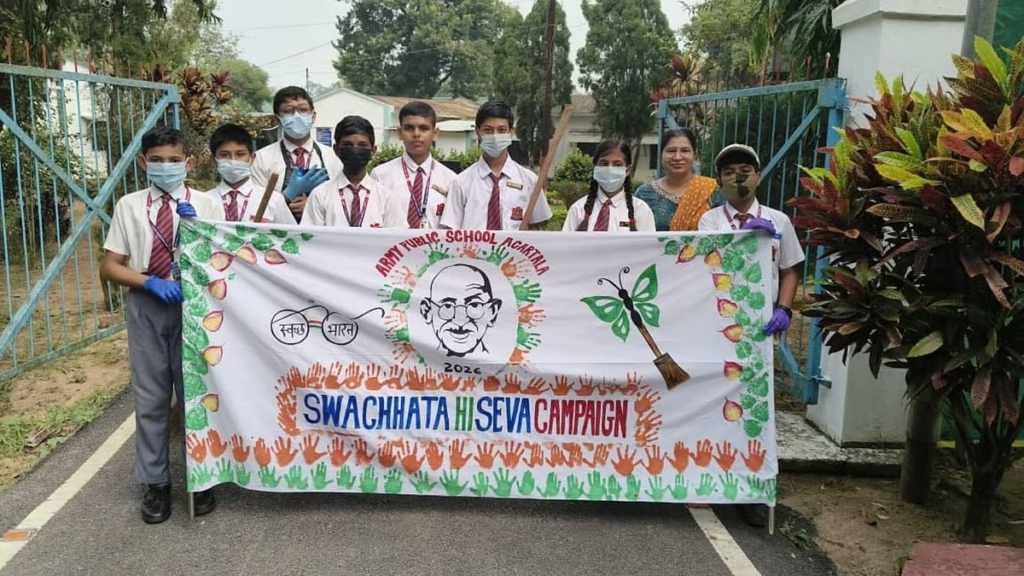
The Agartala Swachh Bharat campaign gained momentum around Swachh Bharat Diwas on October 2, with cleanliness activities involving students, Army personnel, volunteers and local residents. Multiple initiatives across the city and its surrounding institutional areas focused on sanitation, environmental awareness and civic responsibility. The activities formed part of the wider Swachhata Hi Seva 2026 campaign.
In Agartala Military Station, the Indian Army’s Spear Corps and Army Public School Agartala conducted a four-day programme from September 29 to October 2. The initiative combined educational activities with practical cleanliness work and concluded with a large outdoor drive at the Albert Ekka War Memorial.
Sikkim Special Gram Sabha Drives Awareness of Watershed Schemes and SHG Livelihoods
Agartala Swachh Bharat Campaign Expands Community Participation
The Agartala Swachh Bharat campaign reflected the wider national emphasis on public participation during Swachhata Hi Seva 2026. The national campaign encouraged citizens, institutions, youth groups and local bodies to participate in cleanliness activities and promote sustained behavioural change.
In Agartala, the Army-led programme brought together military personnel and school students. The four-day initiative at Agartala Military Station focused on environmental consciousness, personal hygiene and civic responsibility. Organisers also linked cleanliness with everyday discipline and responsible management of public spaces.
The programme reached its main cleanliness phase on October 2. Army volunteers conducted Shramdaan across the military station, while students and personnel participated in the outdoor cleaning activity at the Albert Ekka War Memorial.
Such participation gave the campaign a practical dimension. Instead of limiting activities to awareness messages, organisers involved participants directly in cleaning public and institutional spaces.
The approach also encouraged younger participants to connect cleanliness with everyday civic behaviour. Students took part in creative competitions and educational activities before joining the outdoor cleanliness programme.
Students Join Cleanliness and Awareness Activities
Student participation formed an important part of the Agartala Swachh Bharat campaign. Army Public School Agartala organised several activities across different grade levels during the four-day programme.
Students prepared awareness banners carrying messages related to environmental hygiene. They also participated in poster-making activities focused on the Swachh Bharat Campaign.
Additionally, an essay-writing competition gave students an opportunity to discuss cleanliness, public health and hygiene solutions. A drawing competition used the theme “Clean, Green & Sustainable Station” to encourage students to think about environmentally responsible public spaces.
These activities complemented the physical cleanliness drive. They encouraged students to consider why waste management, hygiene and environmental protection matter rather than treating cleanliness as a one-day exercise.
The programme also connected environmental awareness with community responsibility. By involving students alongside Army personnel, organisers created a setting where different groups could contribute to the same civic objective.
Meanwhile, the broader Swachhata Hi Seva campaign has placed strong emphasis on citizen participation. National guidelines for the 2026 campaign called for cleanliness activities at public places on October 2 and encouraged young people and community groups to participate.
Albert Ekka War Memorial Receives Cleanliness Focus
The cleanliness drive at the Albert Ekka War Memorial added a civic and commemorative dimension to the Agartala Swachh Bharat campaign. Participants cleaned the historic public space while paying tribute to the nation’s fallen heroes through community service.
The activity combined remembrance with environmental responsibility. Rather than treating the memorial only as a commemorative location, participants used the occasion to contribute to its upkeep.
The Army’s Spear Corps also conducted a wider Shramdaan across the Agartala Military Station. Volunteers cleared waste, maintained green belts and worked on public transit corridors within the garrison. The programme also promoted environmentally responsible waste disposal practices.
Such activities are particularly relevant in institutional areas with residential, operational and public-facing spaces. Regular waste management can help maintain hygiene while reducing the accumulation of litter.
The initiative also demonstrated how cleanliness campaigns can combine routine maintenance with public awareness. Participants contributed directly while learning about environmental responsibility.
Furthermore, the involvement of school students helped extend the campaign’s message beyond the military station. Young participants can carry lessons about waste disposal, hygiene and environmental care into their schools, homes and neighbourhoods.
The memorial drive therefore served both an immediate cleaning purpose and a broader awareness objective.
Local Initiatives Strengthen Citywide Cleanliness Efforts
The Agartala Swachh Bharat campaign also coincided with other cleanliness and environmental initiatives in the city. On October 4, a tree plantation and cleanliness programme took place in Ward No. 31 under the month-long Seva Sankalp Abhiyan.
The Ward No. 31 programme began with plantation activities under the “Ek Ped Maa Ke Naam” initiative. Participants then conducted a cleanliness drive at a nearby Kali Temple compound with the involvement of residents, volunteers and party workers.
Although this programme followed Swachh Bharat Diwas, it demonstrates how cleanliness activities continued beyond October 2. The combination of plantation and sanitation also connected waste management with broader environmental conservation.
At the same time, West Tripura has been strengthening waste collection infrastructure. In May 2026, the district administration launched six electric vehicles dedicated to garbage and solid-waste collection under the Swachh Bharat Mission.
Such infrastructure can complement public participation. Cleanliness drives can remove accumulated waste, while regular collection systems help prevent new waste from building up in public spaces.
The citywide approach therefore requires both behavioural participation and dependable municipal services. Residents can contribute by disposing of waste responsibly, while authorities must maintain collection, transportation and processing systems.
The combination becomes particularly important as urban areas generate waste continuously. A one-day campaign can create awareness, but sustained sanitation depends on routine systems and consistent public cooperation.
Swachh Bharat Diwas Highlights Long-Term Civic Responsibility
The Agartala Swachh Bharat campaign formed part of a broader national effort to make cleanliness a continuing public responsibility. Swachh Bharat Diwas on October 2 commemorates Mahatma Gandhi’s birth anniversary and provides a prominent occasion for reinforcing the importance of sanitation.
The 2026 Swachhata Hi Seva campaign used the theme “Swachhata Mein Sahbhag, Swachh Bharat, Viksit Bharat.” The campaign promoted public participation, behavioural change, waste management and environmental responsibility.
Nationally, the campaign encouraged activities under initiatives such as “Ek Din, Ek Ghanta, Ek Saath.” It also connected cleanliness with waste segregation, recycling, resource recovery and sustainable practices.
For Agartala, these priorities have practical relevance. Urban cleanliness depends on the combined efforts of households, markets, institutions, schools, sanitation workers and local authorities.
Moreover, public spaces require regular attention because litter and unmanaged waste can affect the appearance and hygiene of neighbourhoods. Community-led drives can supplement formal municipal services when they remain organised and responsible.
The recognition of sanitation workers also remains an important part of the national campaign. Cleanliness depends heavily on workers who collect, transport and manage waste, making their contribution essential to any sustainable sanitation programme.
Therefore, the significance of Swachh Bharat Diwas extends beyond the cleaning activity itself. It provides an opportunity to strengthen habits that can continue throughout the year.
Conclusion
The Agartala Swachh Bharat campaign around Swachh Bharat Diwas brought together Army personnel, students, volunteers and residents through a series of cleanliness and environmental activities. The programme at Agartala Military Station culminated in a major cleaning drive at the Albert Ekka War Memorial and Shramdaan across the station.
Other initiatives in Agartala and West Tripura have also supported the broader cleanliness objective through plantation drives and improved waste collection infrastructure. Together, these efforts show that urban sanitation requires both public participation and dependable waste-management systems.
The larger challenge now lies in sustaining the habits promoted during the campaign. Regular waste collection, responsible disposal, community participation and environmental awareness can help turn a commemorative cleanliness drive into a continuing civic practice.
FAQs
What was the Agartala Swachh Bharat campaign?
The Agartala Swachh Bharat campaign refers to cleanliness and awareness activities conducted in and around Agartala as part of Swachhata Hi Seva 2026 and Swachh Bharat Diwas observances.
When was the main Swachh Bharat Diwas cleanliness drive held?
The major Army-led cleanliness activity at Agartala Military Station took place on October 2, 2026, coinciding with Swachh Bharat Diwas. Participants cleaned the Albert Ekka War Memorial and carried out Shramdaan across the station.
Who participated in the Agartala cleanliness activities?
Indian Army personnel from the Spear Corps and students of Army Public School Agartala participated in the four-day programme. Other local cleanliness activities also involved residents, volunteers and community members.
What activities did Army Public School students conduct?
Students participated in banner preparation, poster-making, essay writing and drawing competitions. The activities focused on environmental hygiene, public health and creating cleaner and more sustainable surroundings.
Why is Swachh Bharat Diwas important for Agartala?
Swachh Bharat Diwas provides an opportunity to reinforce cleanliness, hygiene and civic responsibility. For Agartala, sustained public participation combined with regular waste-management services can support cleaner and healthier urban surroundings.