


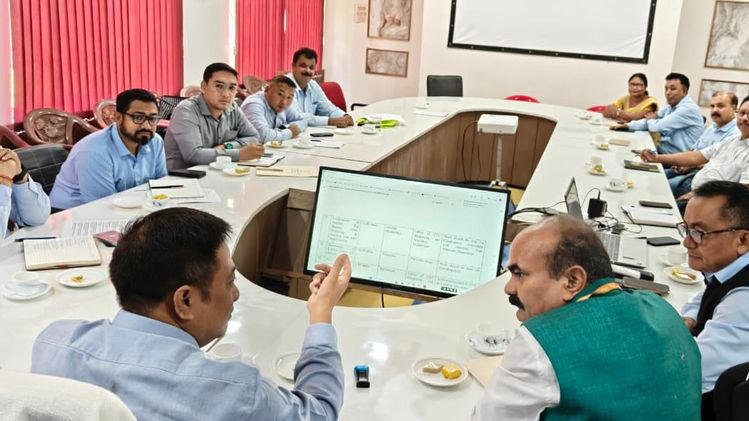
A high-level meeting was recently held to discuss the post-closure repurposing of the Ledo Open Cast Project (OCP) mine in Margherita. Officials, industry representatives, local authorities, and stakeholders participated in the discussions focused on sustainable development, environmental restoration, and future economic use of the mining area.
The meeting highlighted the growing importance of planned mine closure and land repurposing strategies in coal-producing regions. Participants explored various possibilities for transforming the former mining site into an area that could support environmental recovery, economic activity, and community development.
Officials stated that the discussions aimed to ensure that the transition after mining operations benefits local residents and supports long-term sustainability goals.
Read More: Arunachal CM Seeks Local CUET Centres For Students
Focus On Sustainable Repurposing
Participants at the meeting stressed the need for a sustainable approach toward the repurposing of the Ledo OCP mine area. They discussed how former mining land can contribute to development once extraction activities permanently end.
Officials examined proposals related to environmental restoration, tourism potential, green spaces, industrial use, and community infrastructure development.
Experts at the meeting noted that repurposing closed mining sites has become increasingly important across India and globally. Such initiatives can help reduce environmental damage while creating new opportunities for local economies.
Authorities also emphasised the need to balance ecological restoration with future economic planning.
The discussions reportedly included long-term land management strategies and possible rehabilitation models for the affected region.
Importance Of Ledo OCP Mine
The Ledo Open Cast Project has played an important role in the coal mining sector of upper Assam for years. Located in the Margherita region, the mine contributed significantly to local employment and industrial activity.
Coal mining has historically shaped the economy and social structure of the area. However, experts have increasingly highlighted the need for careful post-mining planning once operations conclude.
Officials stated that closure planning remains crucial because mining activities often leave environmental and land-use challenges behind.
The meeting therefore focused on ensuring that the closure process does not negatively impact local communities or ecological systems.
Stakeholders also discussed ways to preserve the region’s industrial heritage while encouraging future development.
Environmental Restoration Remains Key Priority
Environmental restoration emerged as one of the central themes during the discussions. Experts highlighted the importance of land reclamation, soil recovery, afforestation, and water management after mine closure.
Officials reportedly examined scientific approaches for restoring ecological balance in the mining zone.
Environmental specialists noted that abandoned mining sites can create long-term challenges if authorities fail to implement proper rehabilitation measures.
Participants therefore stressed the need for regular monitoring and sustainable restoration practices.
The discussions also included proposals for increasing green cover and improving biodiversity in the area.
Experts believe ecological rehabilitation can help improve environmental quality and public health in mining regions.
Exploring Economic Opportunities
Apart from environmental concerns, the meeting also focused on identifying future economic opportunities linked to the repurposed mine site.
Officials discussed possibilities such as eco-tourism projects, industrial parks, educational institutions, renewable energy projects, and recreational infrastructure.
Participants noted that repurposing mining land can create alternative employment opportunities for local communities affected by mine closure.
Experts stressed that economic diversification remains important in regions that traditionally depend on mining activities.
Authorities reportedly encouraged stakeholders to explore innovative development models that combine sustainability with economic growth.
The meeting also highlighted the importance of involving local communities in future planning decisions.
Community Welfare And Rehabilitation
Community welfare formed another major focus area during the discussions. Officials acknowledged that many families in the region depend directly or indirectly on mining-related activities.
Participants therefore discussed rehabilitation measures, livelihood support programmes, and skill development initiatives for workers and residents.
Experts suggested that training programmes could help local people adapt to new economic opportunities after mining operations end.
Officials also stressed the need for inclusive planning processes that consider the concerns and expectations of affected communities.
The meeting reportedly examined ways to strengthen social infrastructure, including healthcare, education, and transportation facilities in the region.
Observers believe community participation will remain essential for the long-term success of any repurposing project.
Need For Long-Term Planning
Industry experts at the meeting highlighted the importance of long-term strategic planning for mine closure and land repurposing.
They stated that successful post-mining transformation requires coordination among government agencies, environmental experts, industries, and local communities.
Participants also stressed the importance of policy support and financial investment for sustainable redevelopment projects.
Officials noted that several countries have successfully converted former mining sites into tourism centres, green zones, and industrial hubs.
Such examples, according to experts, can offer valuable lessons for Assam and other mining regions in India.
The discussions therefore focused on creating a roadmap that combines environmental responsibility with economic viability.
Margherita’s Historical Mining Legacy
Margherita has long remained associated with Assam’s coal mining history. The region played a significant role in industrial development during the colonial and post-independence periods.
Mining activities shaped the local economy and contributed to employment generation for decades.
However, changing environmental priorities and evolving industrial policies have increased attention on sustainable mining practices and responsible closure planning.
Experts believe regions like Margherita can benefit from carefully designed redevelopment strategies that preserve industrial heritage while promoting modern economic activities.
The meeting therefore represented an important step toward reimagining the future of former mining zones in Assam.
Push For Responsible Mining Practices
The discussions also reflected broader national and global efforts to encourage responsible mining practices.
Environmental experts increasingly emphasise that mining companies and authorities should plan for post-closure management well before operations end.
Responsible closure planning can help minimise environmental risks and reduce long-term economic disruption for local communities.
Officials at the meeting reportedly stressed that future mining policies must integrate sustainability and rehabilitation measures more effectively.
Participants also highlighted the growing importance of environmental accountability in industrial sectors.
Scope For Tourism And Green Development
Several participants reportedly suggested that the repurposed Ledo OCP site could eventually support eco-tourism and recreational activities.
The region’s natural surroundings and industrial heritage may offer opportunities for tourism-based development projects.
Experts said transformed mining sites in other countries have successfully attracted visitors through museums, parks, and ecological restoration initiatives.
Officials discussed how similar models could potentially generate employment and economic activity in Margherita.
At the same time, they stressed that environmental safety and scientific planning must remain top priorities.
Future Roadmap Under Discussion
The meeting concluded with discussions on preparing a detailed roadmap for the post-closure transformation of the Ledo OCP mine area.
Officials stated that future consultations and technical studies would help determine the most suitable development model for the region.
Stakeholders agreed that sustainable planning, environmental restoration, and community participation must remain central to the process.
As Assam continues balancing industrial growth with environmental responsibility, the repurposing of the Ledo OCP mine may become an important example of post-mining redevelopment in the Northeast.
Read More: Meghalaya Sets Up Judicial Panel To Probe Garo Hills ADC Poll Nomination Unrest