


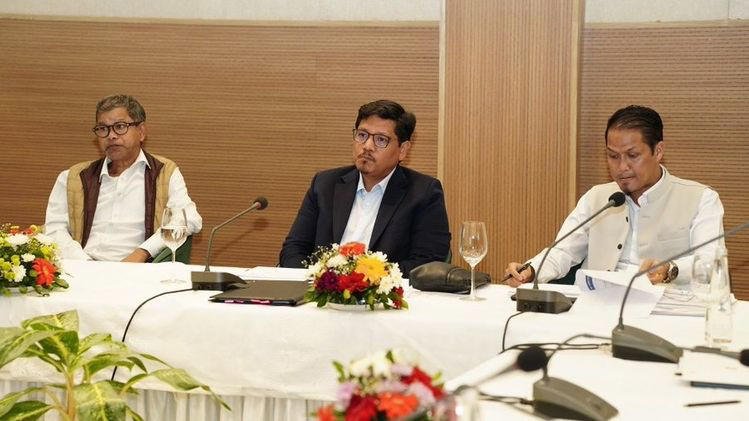
Meghalaya Chief Minister Conrad K Sangma chaired the first meeting of the Meghalaya State Council on AIDS on September 15, 2026. The meeting reviewed the state’s HIV/AIDS situation and discussed measures to strengthen prevention, testing and treatment.
The Chief Minister called HIV/AIDS a serious public health challenge for Meghalaya. He also stressed the need for a coordinated, whole-of-society response.
According to figures shared by Sangma, Meghalaya’s HIV prevalence stands at 0.40%. The national average stands at 0.20%. This places Meghalaya’s reported prevalence at twice the national figure.
The meeting focused on improving early detection, treatment coverage and patient retention. Officials also discussed ways to reduce stigma and ensure that people living with HIV can access healthcare without discrimination.
Read More: Tripura to Hold Month-Long ‘Seva Pakhwada’ for PM Modi’s Birthday
New HIV Infections Rise Since 2010
Sangma said Meghalaya has recorded a 58.74% increase in new HIV infections since 2010. The current trend amounts to nearly seven detections every day, according to the Chief Minister.
The state currently has 618 HIV cases, including 60 pregnant women living with HIV, he said. These figures have increased the focus on early testing and timely treatment.
At the same time, the state has recorded progress in reducing AIDS-related deaths. Sangma said such deaths have declined by 61.18% since 2010.
However, treatment coverage remains a major concern. Only 77.2% of people living with HIV are currently receiving treatment, according to the figures presented at the meeting.
Treatment and Retention Remain Major Gaps
The Chief Minister identified treatment initiation and retention as key gaps in Meghalaya’s HIV response.
According to Sangma, 2,381 diagnosed people have yet to begin treatment. Financial difficulties and stigma contribute to people dropping out of care or delaying treatment.
The government therefore wants to improve the system beyond diagnosis. Finding people with HIV remains important, but officials also need to ensure that diagnosed people start treatment and continue it.
Regular treatment can play an important role in managing HIV and improving the health of people living with the virus. Strong follow-up systems can also help health authorities identify patients who miss appointments and reconnect them with care.
The meeting therefore placed treatment retention alongside testing as a major priority for the state.
Five-Pronged Strategy Announced
Sangma outlined a five-pronged approach to strengthen the Meghalaya HIV response.
The first priority will focus on early detection. The government plans to expand testing so that people can know their HIV status earlier.
The second area will focus on better treatment and retention. Officials want more diagnosed people to start treatment and continue receiving regular care.
The third priority involves preventing new HIV infections. The government will strengthen testing and awareness programmes to reduce transmission.
The fourth area focuses on the protection of mothers and children. This will include stronger support for pregnant women living with HIV and measures to reduce the risk of transmission to children.
The fifth priority involves reducing stigma. The government wants communities and institutions to create a more supportive environment for people living with HIV.
More HIV Testing Services Planned
The government plans to expand several testing options across Meghalaya.
Officials discussed increasing access to HIV self-testing. This approach can give people a more private way to check their status and encourage those who may hesitate to visit a testing centre.
The meeting also discussed index partner testing. This approach can help health workers identify people who may have been exposed to HIV through a diagnosed person’s partners.
The government also plans to deploy more mobile Integrated Counselling and Testing Centres (ICTCs). These units can take testing and counselling services closer to communities that face difficulties reaching fixed healthcare facilities.
The expansion of testing aims to identify infections earlier and connect people with treatment services.
New ART Centres and Home Medicine Delivery
Treatment access formed another important part of the discussions.
The government plans to establish additional Anti-Retroviral Therapy (ART) centres. These centres provide treatment and follow-up services for people living with HIV.
Officials also discussed home delivery of medicines. The measure could help people who face difficulties travelling regularly to treatment centres.
The government also wants to track missed appointments. Health workers can use such tracking systems to contact patients who stop attending treatment centres and help them return to care.
These measures aim to address the treatment-retention gap identified by the Chief Minister.
Focus on Mothers and Children
The government’s five-pronged strategy places specific emphasis on mothers and children.
Meghalaya currently has 60 pregnant women living with HIV, according to figures presented by Sangma. Ensuring that these women receive timely testing, treatment and medical support remains an important part of the state’s HIV response.
Early identification can allow healthcare teams to provide appropriate treatment and counselling during pregnancy. It can also help reduce the risk of HIV transmission from mother to child.
The government plans to strengthen awareness and healthcare access so that pregnant women can receive the support they need.
Awareness Campaigns to Target Young People
The Meghalaya government also wants to expand HIV awareness campaigns across society.
The campaigns will involve young people, communities, educational institutions and people living with HIV. The aim is to improve knowledge about prevention, testing and treatment.
The initiative builds on recent efforts by the state to expand HIV awareness. In August, Health Minister Wailadmiki Shylla launched the Statewide Intensified IEC Campaign 3.0. The campaign focuses on awareness, prevention, testing, treatment and dignity for people living with HIV.
The government has also approved a five-year plan to strengthen its HIV/AIDS response.
Tackling HIV-Related Stigma
Stigma remains one of the challenges affecting HIV testing and treatment. People may avoid testing or stop treatment because they fear discrimination.
The Meghalaya government therefore wants awareness programmes to address misconceptions about HIV. Educational institutions, communities and civil society groups can play a role in spreading accurate information.
The government also wants people living with HIV to participate in awareness efforts. Their involvement can help create more understanding and reduce discrimination.
A stronger public conversation about HIV can also encourage people to seek testing and treatment earlier.
Whole-of-Society Approach
Sangma stressed that the government alone cannot address Meghalaya’s HIV challenge. He called for a coordinated approach involving different sections of society.
Healthcare workers, government departments, educational institutions, communities and civil society organisations all have roles to play.
The approach also places people living with HIV at the centre of the response. Their experiences can help authorities identify barriers to testing, treatment and follow-up.
The state wants this coordination to ensure that people do not remain outside the healthcare system because of financial difficulties, stigma or lack of access.
Road Ahead for Meghalaya’s HIV Response
The first meeting of the Meghalaya State Council on AIDS has set out a broad framework for the state’s next phase of HIV intervention.
The five priorities cover early detection, treatment and retention, prevention, maternal and child protection, and stigma reduction. The government also plans to expand self-testing, mobile testing services and ART centres.
The figures presented at the meeting show both progress and continuing challenges. AIDS-related deaths have fallen significantly since 2010, but treatment coverage remains below full coverage. More than 2,300 diagnosed people have yet to begin treatment, according to the Chief Minister.
The Meghalaya government will now focus on turning the five-pronged strategy into stronger services on the ground. Better testing, easier treatment access, regular follow-up and wider awareness will remain central to the state’s efforts to strengthen its Meghalaya HIV response.
Read More: Chief Minister Rekha Gupta Announces Hostels for 10,000 Students in Delhi