


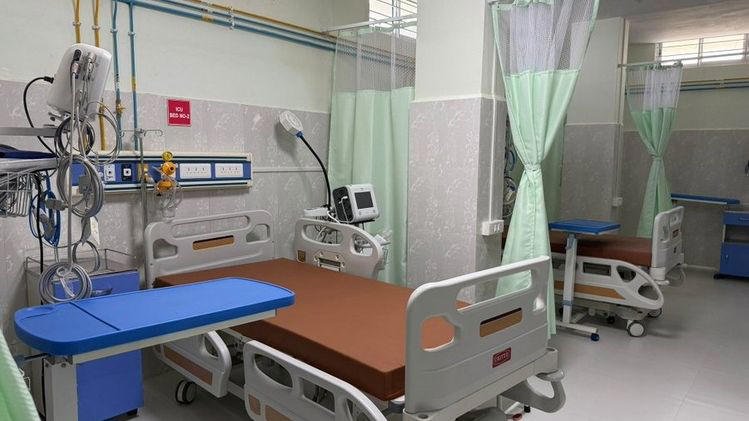
Meghalaya Chief Minister Conrad K. Sangma inaugurated a new 50-bed extension at the District Maternity & Child Hospital (DMCH) in Tura on September 21. The expansion increases the hospital’s total capacity to 150 beds and strengthens maternal and child healthcare services across the Garo Hills region.
The expanded facility includes Garo Hills’ first public Neonatal Intensive Care Unit (NICU). It also features an upgraded Special Newborn Care Unit (SNCU), a dedicated oxygen plant and residential quarters for medical specialists. The new infrastructure aims to provide specialised treatment closer to home and reduce the need for patients to travel outside the region.
Read More: Tripura CM Announces 250 MBBS Seats at Agartala Government Medical College
New 50-Bed Wing Expands Hospital Capacity
The new annex adds 50 beds to the existing District Maternity & Child Hospital. The expansion brings the hospital’s total capacity to 150 beds.
The additional space will help the hospital manage its growing patient load. It will also reduce overcrowding and create better conditions for mothers, newborns and children who require treatment.
Hospital officials have highlighted the pressure on the existing facility. The hospital handles pregnant women, gynaecological cases and paediatric patients from across Garo Hills. The additional beds will allow medical teams to manage these cases more effectively.
Garo Hills Gets First Public NICU
One of the major additions to the expanded hospital is the region’s first public Neonatal Intensive Care Unit.
A NICU provides specialised care for newborn babies who need close medical monitoring or intensive treatment. The new facility will allow critically ill newborns to receive advanced care in Tura.
The hospital has also strengthened its Special Newborn Care Unit. Together, these facilities will expand the region’s ability to handle newborn emergencies and complicated cases.
The development can reduce the need for families to make long journeys to other parts of Meghalaya or outside the region when newborns require specialised treatment.
Oxygen Plant and Specialist Accommodation Added
The expansion also includes a dedicated oxygen plant. Reliable oxygen supply remains essential for emergency care, intensive care and the treatment of critically ill patients.
The project also provides residential quarters for medical specialists. Such accommodation can help hospitals attract and retain specialist doctors, particularly in regions where healthcare facilities face challenges in securing specialised medical staff.
Together, these additions strengthen the hospital’s ability to provide more comprehensive maternal and child healthcare services.
CM Highlights Reduction in Maternal Deaths
Speaking at the inauguration, Chief Minister Conrad Sangma highlighted Meghalaya’s progress in maternal healthcare.
According to figures cited by the Chief Minister, maternal deaths in the state declined from 244 to 107 over five years, representing a reduction of more than half. Another report placed the decline at 56.1 per cent between 2020-21 and 2025-26.
Sangma said the state must continue working towards eliminating preventable maternal and child deaths. He described the ultimate goal as zero maternal and child deaths.
The Chief Minister also said healthcare professionals need to remain motivated because their work directly affects people’s lives.
Focus on Outcomes, Not Just Spending
Sangma also stressed the importance of measuring development through outcomes rather than simply tracking government expenditure.
He said investments in health and education often require several years before their full impact becomes visible. According to the Chief Minister, both sectors can take five to 10 years to show measurable results.
The state government has therefore focused on long-term investments in healthcare infrastructure, medical personnel and community-level health services.
Since 2018, the government has given significant attention to the social sector. Health, education and social welfare together account for nearly one-fourth of the state’s budget, according to the Chief Minister.
Mother and Child Health Model Gains Recognition
Sangma also highlighted Meghalaya’s Mother and Child Health Model during the programme.
The model focuses on improving healthcare for women and children through better infrastructure, early intervention and community-based services. The Chief Minister said the model had received national recognition.
He also said he had received an invitation to present the model before Prime Minister Narendra Modi.
The state’s approach includes programmes that focus on maternal health, newborn care, nutrition and early childhood development.
Mission 1,000 Days Supports Early Childhood Health
The expanded Tura facility also supports Meghalaya’s Mission 1,000 Days.
The programme focuses on the health, nutrition and development of children from pregnancy through their first two years of life. This period plays an important role in a child’s physical and cognitive development.
Better maternal care can improve outcomes during pregnancy and childbirth. Strong newborn services can then provide early medical support when babies face health complications.
The new NICU and strengthened newborn care facilities at Tura can therefore support the state’s broader focus on maternal and early childhood health.
Government Expands Healthcare Across Garo Hills
The Tura expansion forms part of a wider effort to strengthen healthcare services across Garo Hills.
The Meghalaya government has been upgrading hospitals and smaller health facilities so that patients can access more services closer to their homes. The state has also focused on improving referral systems and emergency transportation.
Additional Chief Secretary Sampath Kumar said the government had invested in healthcare infrastructure over the past six to seven years. He said these investments were beginning to show results in the state’s human development indicators.
The government aims to bring both the Maternal Mortality Ratio (MMR) and Infant Mortality Rate (IMR) into single digits.
Community Participation Remains Important
Healthcare infrastructure alone cannot address every maternal and child health challenge. The state has also focused on community participation and grassroots healthcare services.
Sampath Kumar said the government was working with traditional institutions and communities to strengthen healthcare delivery. Officials also highlighted the importance of effective referral vehicles for emergency maternal and child cases.
These measures can help connect hospitals with communities, particularly in rural and remote areas of Garo Hills.
Mother and Child Care Kits Distributed
During the inauguration programme, Chief Minister Sangma also launched and distributed Mother & Child Care Kits to beneficiaries admitted to the hospital.
The kits provide practical items for mothers and newborns during the postnatal period. The initiative forms part of the state’s broader support for maternal and child health.
The programme also gave healthcare workers an opportunity to discuss the needs of mothers and newborns with government representatives. Hospital staff have reported that improved infrastructure, training and government-supported services have helped them manage patients more effectively.
Healthcare Services Moving Closer to Communities
The expansion of the Tura hospital reflects the state’s effort to reduce dependence on long-distance referrals. Patients from Garo Hills can now access a larger range of maternal and newborn services within the region.
The new NICU represents a particularly important addition for critically ill newborns. Earlier, families could face the challenge of travelling long distances when local facilities could not provide intensive neonatal care.
The expanded hospital can now serve as a stronger referral centre for difficult and high-risk cases from across Garo Hills.
Road Ahead for Maternal and Child Healthcare
The inauguration of the 50-bed extension marks another step in Meghalaya’s efforts to strengthen healthcare infrastructure. With its total capacity now reaching 150 beds, the Tura District Maternity & Child Hospital has greater capacity to serve mothers and children across Garo Hills.
The addition of the region’s first public NICU, upgraded newborn care facilities, an oxygen plant and specialist accommodation further expands the hospital’s capabilities.
The government plans to continue investing in maternal and child healthcare while improving community-level services and referral systems. For Garo Hills, the expanded Tura facility provides a larger platform for specialised care and supports Meghalaya’s wider goal of reducing preventable maternal and child deaths.