


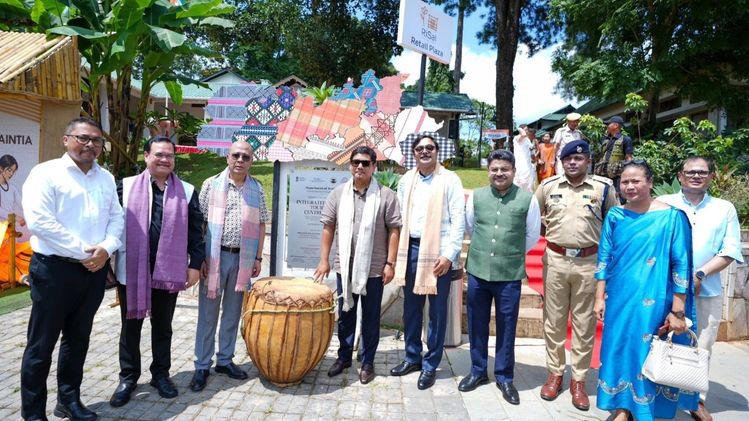
Meghalaya Chief Minister Conrad K. Sangma has inaugurated a new Eri silk yarn manufacturing unit at Bhoirymbong in Ri Bhoi district, giving a major boost to the state’s traditional silk industry. The facility, named Sai Lum, aims to connect Eri cocoon farmers with local weavers and create better market opportunities for both groups.
The unit marks an important step in Meghalaya’s efforts to strengthen its Eri silk value chain. The state produces large quantities of Eri cocoons, but farmers have often struggled to find organised local markets. At the same time, weavers have depended on yarn brought from outside the state.
The new facility seeks to bridge this gap by processing locally produced cocoons into yarn within Meghalaya. The initiative will also create employment and support entrepreneurship in Ri Bhoi.
CM Conrad Sangma Inaugurates Eri Silk Unit
Chief Minister Conrad K. Sangma inaugurated Sai Lum at Bhoirymbong on May 11. The facility represents Meghalaya’s first Eri silk yarn manufacturing unit.
Sangma said entrepreneurship remains an important part of the government’s development strategy. He highlighted the need to create stronger opportunities for local entrepreneurs while ensuring that farmers receive better returns for their produce.
The Chief Minister also pointed to a major gap in the state’s Eri silk industry. Farmers produced cocoons locally, but many had to sell them at low prices. Weavers then purchased processed yarn from outside the state at higher costs.
Sai Lum aims to address this problem by creating a direct link between farmers and weavers.
Ri Bhoi Remains a Major Eri Silk Hub
Ri Bhoi holds an important position in Meghalaya’s silk industry. The district has thousands of silkworm rearers and weavers who depend on the sector for their livelihoods.
The Chief Minister described Ri Bhoi as an epicentre of silk production in Meghalaya. The district has nearly 7,900 silkworm rearers and 4,760 weavers, according to figures shared during the inauguration.
Despite this large workforce, the returns from Eri silk production have not always matched the effort of farmers and artisans. Limited processing facilities and dependence on outside markets have affected the value chain.
The new unit could help change that situation by keeping more stages of production within the state.
Bridging the Cocoon-to-Yarn Gap
One of the biggest challenges in Meghalaya’s Eri silk sector has been the gap between cocoon production and yarn manufacturing.
Farmers rear Eri silkworms and produce cocoons. However, the absence of enough local processing facilities has forced them to depend on outside buyers.
The same problem affects weavers. They need quality yarn to produce traditional Eri textiles, but outside procurement can increase costs.
Sangma described this “cocoon-to-yarn gap” as a major constraint for the state’s Eri silk value chain. Sai Lum aims to bridge this gap by buying cocoons directly from local farmers and processing them into yarn locally.
Farmers to Get Better Market Access
The new unit could provide greater stability for Eri cocoon farmers.
Sai Lum plans to purchase cocoons directly from local producers at fair and stable prices. This arrangement can reduce farmers’ dependence on middlemen and provide them with a more reliable local market.
Officials estimate that around 7,000 cocoon-producing farmers across Ri Bhoi could benefit from the initiative.
A stable buyer can also encourage more farmers to continue investing in sericulture. Better prices may increase household income and make Eri rearing a more attractive livelihood option.
The initiative therefore links traditional knowledge with a more organised market system.
Weavers Can Access Affordable Yarn
The facility will also support local weavers.
Instead of purchasing yarn from outside the state, weaving clusters can obtain locally manufactured Eri yarn. This could reduce transportation and procurement costs.
Officials expect around 2,500 weavers to benefit from access to affordable local yarn. Lower input costs can help improve their margins and make traditional weaving more commercially sustainable.
The initiative also supports the preservation of Meghalaya’s indigenous textile traditions. Eri weaving has strong cultural significance in the state, particularly among women artisans who have passed weaving skills from one generation to another.
Eri Silk Known as Ryndia
Eri silk holds a special place in Meghalaya’s textile heritage. Locally known as Ryndia, Eri silk is also widely associated with the concept of Ahimsa or peace silk.
Unlike conventional silk production methods that kill the silkworm before extracting the silk, Eri production traditionally allows the moth to emerge before the fibre gets processed. This has made Eri silk popular among consumers who value ethical and sustainable textiles.
Meghalaya has developed a strong identity around Ryndia and traditional handloom products. The state has also worked to promote its unique textiles through tourism, exhibitions and market development.
The development of local yarn manufacturing can strengthen this identity further by improving the supply chain behind the finished products.
Investment Supports Local Entrepreneurship
Sai Lum represents an investment of around ₹1.20 crore. The project received support from PRIME Meghalaya and the North East Centre for Technology Application and Reach (NECTAR), along with investment from local entrepreneur Wallambok Pyngrope.
The unit has a spinning capacity of around 25 to 30 kg of Eri yarn per day. It can produce approximately 7.5 metric tonnes of yarn annually.
The facility is also expected to create around 10 to 15 direct jobs. These positions will include work in spinning, procurement, quality control and operations.
The project therefore combines traditional agriculture and weaving with modern entrepreneurship.
Meghalaya Seeks Stronger Textile Value Chain
The government has been working to strengthen Meghalaya’s textile and sericulture sectors through several programmes.
The Department of Sericulture and Weaving runs schemes that support Eri farmers, weavers and traditional textile producers. These programmes aim to improve skills, increase production and create sustainable livelihoods.
The state has also promoted Ri Bhoi as a centre for Eri silk production. Projects such as textile tourism and skill-development initiatives aim to connect production with design, training and markets.
The new yarn manufacturing facility adds an important processing link to these efforts.
New Opportunities for Rural Communities
The Eri silk sector provides more than a source of income. It also supports rural communities and helps preserve Meghalaya’s cultural heritage.
Women play a particularly important role in sericulture and weaving. Many artisans practise these skills from their homes while managing other household responsibilities.
A stronger local market could help increase their earnings and encourage younger generations to continue the craft.
The new facility could also create opportunities for entrepreneurs to enter other parts of the silk value chain, including design, processing, packaging and marketing.
Eri Silk Industry Gets a New Push
The inauguration of Sai Lum marks an important development for Meghalaya Eri silk 2026. By processing cocoons locally, the facility can reduce the gap between farmers and weavers while keeping more economic activity within the state.
For farmers, the unit can provide a stable market. For weavers, it can offer more affordable access to yarn. For entrepreneurs, it creates opportunities in processing and value addition.
The initiative also strengthens Meghalaya’s efforts to promote Ryndia as a distinctive traditional textile.
As the state continues to invest in sericulture, weaving and textile tourism, the new unit could become an important part of that ecosystem. Its success will depend on consistent procurement, quality production and access to wider markets.
For Ri Bhoi’s farmers and weavers, however, the project represents a significant step towards building a stronger and more sustainable Eri silk industry within Meghalaya itself.
Read More: MEA fact-checks viral post claiming ‘no foreign funding for CJP’ as misleading — here’s the truth