


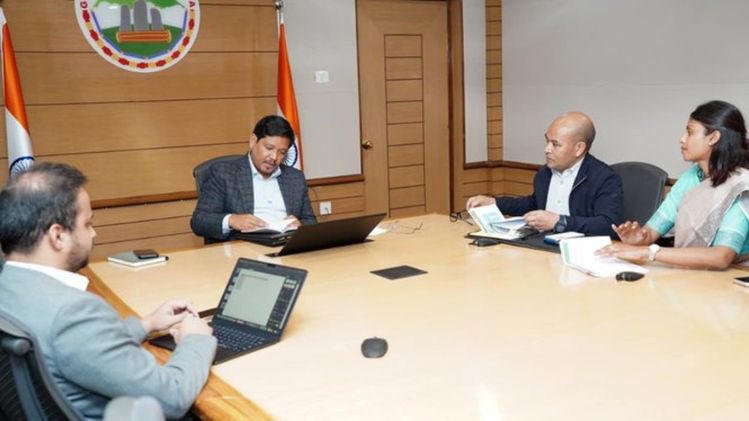
Meghalaya Chief Minister Conrad Sangma reviewed the progress of Public Distribution System (PDS) diversification in the state and stressed the need to strengthen nutrition support for mothers. The review highlights the government’s focus on improving food security and public health.
The PDS diversification Meghalaya initiative aims to expand the range of food items provided under the system. It seeks to address nutritional gaps among vulnerable groups.
During the meeting, Sangma emphasised the importance of targeted interventions. He said improving nutrition remains a key priority for the government.
Read More: Arunachal CM Inaugurates Wudong Mentoh Festival 2026
Focus on Nutrition Kits for Mothers
One of the key proposals discussed during the review involved introducing nutrition kits for mothers. These kits will provide essential food items that support maternal health.
The PDS diversification Meghalaya plan includes this initiative to address malnutrition. Pregnant and lactating mothers often require additional nutritional support.
Sangma said the nutrition kits will include items rich in proteins, vitamins, and minerals. These components are essential for both mothers and infants.
He also highlighted the need for regular monitoring. Proper implementation will ensure that benefits reach the intended recipients.
Expanding Scope of Public Distribution System
The diversification of PDS aims to move beyond basic food grains. The government plans to include a wider range of nutritious items.
The PDS diversification Meghalaya approach focuses on improving diet quality. It recognises that food security involves both quantity and nutrition.
Officials discussed the inclusion of pulses, fortified foods, and other essentials. These additions can help improve overall health outcomes.
Sangma said the state must adopt innovative approaches. Traditional systems need to evolve to meet current challenges.
Addressing Malnutrition Challenges
Meghalaya continues to face challenges related to malnutrition. Certain sections of the population remain vulnerable.
The PDS diversification Meghalaya initiative seeks to address these issues. Nutrition kits for mothers form a crucial part of the strategy.
Sangma stressed that early intervention can make a significant difference. Proper nutrition during pregnancy and early childhood supports long-term development.
He also emphasised the role of awareness. People must understand the importance of balanced diets.
Role of Health and Welfare Departments
The success of the initiative depends on coordination between departments. Health and welfare agencies will play a key role in implementation.
The PDS diversification Meghalaya plan requires joint efforts. Officials must ensure smooth distribution and monitoring.
Sangma directed departments to work closely together. This approach can improve efficiency and reduce gaps.
He also highlighted the importance of data collection. Accurate information will help track progress and identify challenges.
Benefits for Women and Children
The proposed nutrition kits will directly benefit women and children. Improved nutrition can lead to better health outcomes.
The PDS diversification Meghalaya initiative aims to reduce health risks associated with poor diet. It can also support child development.
Sangma said that investing in maternal health benefits the entire community. Healthy mothers contribute to stronger families.
Experts believe that such interventions can reduce long-term healthcare costs. Prevention remains more effective than treatment.
Government’s Commitment to Welfare
The review reflects the government’s commitment to welfare and inclusive development. Ensuring food security remains a top priority.
The PDS diversification Meghalaya initiative aligns with broader development goals. It focuses on improving quality of life.
Sangma said that policies must address real needs. The government will continue to refine its approach based on feedback.
He also stressed transparency in implementation. Public trust depends on efficient service delivery.
Challenges in Implementation
While the initiative offers several benefits, challenges remain. Logistics and distribution systems need to be strengthened.
The PDS diversification Meghalaya plan requires careful planning. Authorities must ensure timely supply of items.
Remote areas pose additional challenges. Accessibility can affect delivery and monitoring.
Sangma acknowledged these issues. He said the government will take steps to overcome them.
Way Forward for PDS Diversification
The state government plans to expand the initiative gradually. Pilot projects may help test the effectiveness of new measures.
The PDS diversification Meghalaya strategy will evolve based on results. Continuous improvement remains a key focus.
Sangma said stakeholder engagement is important. Feedback from beneficiaries can help refine the system.
The government also plans to leverage technology. Digital tools can improve tracking and efficiency.
Conclusion
The review of PDS diversification by Conrad Sangma highlights Meghalaya’s commitment to improving nutrition and public health. The proposal for nutrition kits for mothers marks a significant step.
The PDS diversification Meghalaya initiative aims to address both food security and nutritional quality. It reflects a comprehensive approach to welfare.
With proper implementation, the initiative can bring lasting benefits. It can improve health outcomes for mothers and children. Meghalaya continues to move toward a more inclusive and responsive system.
Read More: TTAADC Poll Counting on April 17 Under Tight Security