


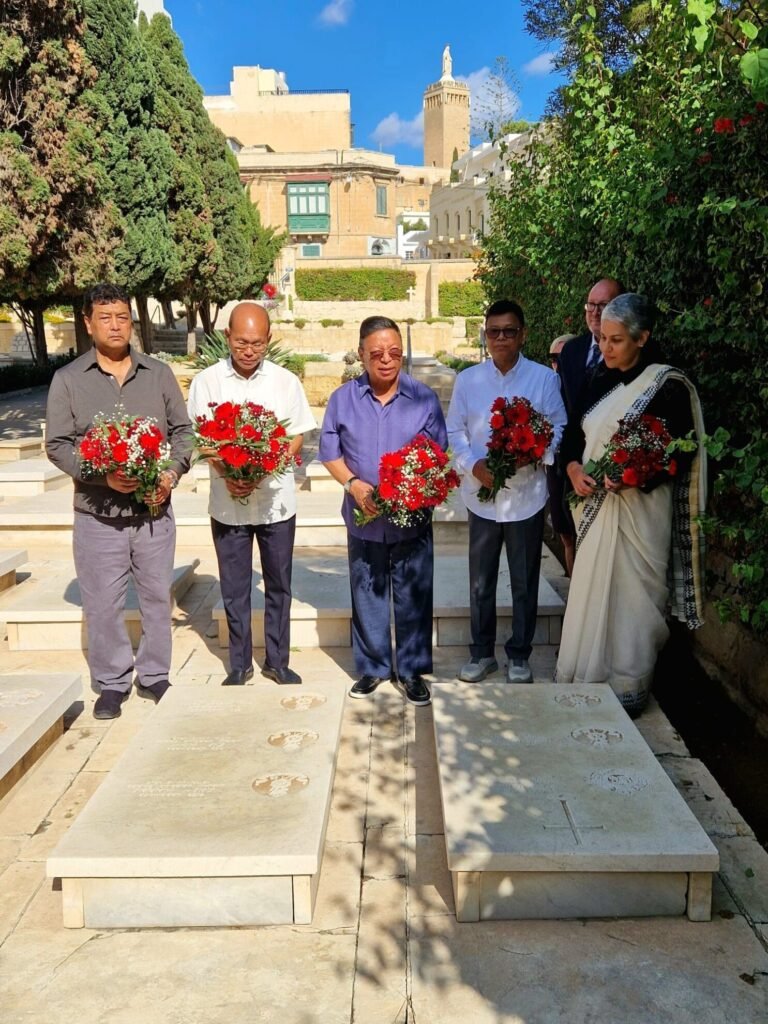
A Meghalaya Legislative Assembly delegation led by Speaker Thomas A Sangma has discovered three additional graves of Garo labourers who served during the First World War. The graves were found at the Pieta Military Cemetery in Malta during the delegation’s visit. The graves belong to Ading Marak, Sangjim Sangma and Join Marak, members of the 69th Garo Labour Company who died in June 1918. Until this discovery, only the grave of Khew Marak was known at the cemetery.
Read More: Two Bangladeshi Nationals Held in Guwahati
Key Facts
- Location: Pieta Military Cemetery, Malta
- Delegation leader: Meghalaya Assembly Speaker Thomas A Sangma
- Graves discovered: Three additional graves
- Names: Ading Marak, Sangjim Sangma and Join Marak
- Unit: 69th Garo Labour Company
- Period: First World War
- Date of deaths: June 1918
- Previously identified grave: Khew Marak
- Visit facilitated by: High Commission of India in Malta
Three Garo Graves Identified in Malta
The Meghalaya delegation identified the graves during its visit to the Pieta Military Cemetery in Malta.
Ading Marak, Sangjim Sangma and Join Marak served with the 69th Garo Labour Company. All three died in June 1918 while serving during the First World War.
The discovery adds to the known wartime presence of people from Garo Hills overseas.
Delegation Pays Homage
Speaker Thomas A Sangma led the delegation during the cemetery visit. Deputy Speaker Limison D Sangma, Deputy Chief Whip Ronnie V Lyngdoh and MTDC Chairman Marthon J Sangma also joined the delegation.
The members paid homage to the four Garo men whose wartime contributions had received limited recognition over the years.
The delegation had previously known about Khew Marak’s grave at the cemetery. The identification of three more graves has now expanded the known record.
Role of the 69th Garo Labour Company
The 69th Garo Labour Company supported Allied operations during the First World War.
The labour company carried out essential support work, including road construction and transportation of supplies. These activities helped maintain infrastructure and logistics during wartime operations.
The newly identified graves provide a tangible link between Garo Hills and the wider history of India’s contribution to the Allied war effort.
Visit Linked to Commonwealth Parliamentary Conference
The Malta visit formed part of a post-conference study tour following the Commonwealth Parliamentary Association Conference in Cape Town.
The High Commission of India in Malta facilitated the delegation’s visit to the military cemetery.
The visit also gave the Meghalaya representatives an opportunity to identify and document historical links involving people from the state.
Speaker Highlights Historical Significance
Thomas A Sangma described the discovery as deeply significant for Meghalaya.
According to the Speaker, the identification of the graves strengthens the historical connection between Meghalaya and India’s role in the Allied war effort.
The discovery also highlights the contribution of people from Garo Hills to an international conflict more than a century ago.
Preserving Garo Hills’ Wartime Legacy
The identification of the graves can help preserve the wartime history of the Garo community.
Documenting the names and service of these labourers can also ensure that their contributions remain part of Meghalaya’s historical record.
The discovery provides an opportunity to recognise the role of Garo Hills residents within the broader history of the First World War.
Questions and Answers
What did the Meghalaya delegation discover?
The delegation discovered three previously unidentified graves of Garo labourers at the Pieta Military Cemetery in Malta.
Who were the three Garo labourers?
The graves belong to Ading Marak, Sangjim Sangma and Join Marak.
Which unit did they serve with?
They were members of the 69th Garo Labour Company during the First World War.
When did they die?
The three labourers died in June 1918.
Whose grave was previously known?
The grave of Khew Marak was previously known at the cemetery.
Why is the discovery significant?
The graves provide historical evidence of the contribution of people from Garo Hills to wartime operations during the First World War.
Meghalaya and Northeast India Context
Garo Hills is an important cultural and historical region of Meghalaya. The discovery connects the region with a wider chapter of Northeast India’s historical contribution to international events and helps preserve the wartime legacy of its people.
Also Read: Rice vehicle seizure now draws trade scrutiny in Abhayapuri