


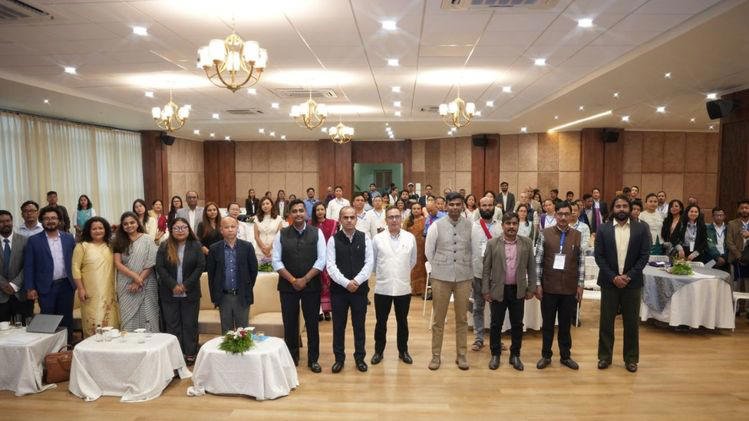
The government of Meghalaya has intensified its efforts to achieve the Sustainable Development Goals (SDGs) by adopting a district-focused strategy and strengthening outcome-based budgeting. This renewed push aims to ensure that development initiatives deliver measurable results while addressing local needs more effectively.
Officials have emphasized that aligning policies with district-level priorities will help bridge gaps in implementation. At the same time, outcome budgeting is expected to enhance accountability and improve the overall efficiency of government spending.
Read More: Opposition Insulted Women: Tripura CM on Stalled Reservation Bill
District-centric planning drives Meghalaya SDG push
The administration in Meghalaya has shifted its approach by placing districts at the center of development planning. Instead of relying solely on state-level strategies, authorities are now encouraging district administrations to identify key challenges and tailor solutions accordingly.
This approach allows policymakers to address region-specific issues such as healthcare access, education quality, and infrastructure gaps. Moreover, it ensures that resources are allocated where they are needed the most.
Officials have noted that each district has unique socio-economic conditions. Therefore, localized planning can significantly improve the effectiveness of development programs. By involving local stakeholders, the government also aims to enhance community participation in decision-making.
Outcome budgeting to ensure measurable progress
A key component of the Meghalaya SDG push is the introduction of outcome budgeting. This system focuses on linking financial allocations to specific, measurable outcomes rather than just tracking expenditure.
Under this framework, departments in Meghalaya are required to define clear objectives and performance indicators. These indicators help assess whether government programs are achieving their intended goals.
For example, instead of merely allocating funds for education, outcome budgeting evaluates improvements in literacy rates, school attendance, and learning outcomes. As a result, policymakers can make informed decisions based on actual performance data.
Officials believe that this approach will reduce inefficiencies and ensure better utilization of public funds. It also promotes transparency, as progress can be tracked and reported more effectively.
Strengthening alignment with Sustainable Development Goals
The SDGs, adopted globally, provide a comprehensive framework for sustainable development. The government of Meghalaya has aligned its policies with these goals to address critical areas such as poverty, health, education, and environmental sustainability.
By integrating SDG targets into district planning and budgeting processes, the state aims to accelerate progress. Authorities have developed indicators that map local initiatives to global goals, ensuring consistency and clarity.
Furthermore, regular monitoring and evaluation mechanisms have been put in place. These systems help track progress and identify areas that require additional attention.
Focus on data-driven governance
Data plays a crucial role in the success of the Meghalaya SDG push. The government has invested in improving data collection and analysis to support evidence-based decision-making.
District administrations are now using data to identify gaps and prioritize interventions. For instance, health data can highlight areas with high disease prevalence, enabling targeted action.
In addition, digital tools have been introduced to streamline data management. These tools allow officials to monitor progress in real time and make timely adjustments to policies.
Experts have noted that data-driven governance not only improves efficiency but also enhances accountability. By relying on accurate information, authorities can ensure that resources are used effectively.
Collaboration across departments and stakeholders
Achieving the SDGs requires coordinated efforts across multiple sectors. The government of Meghalaya has emphasized the importance of collaboration among departments, local bodies, and civil society organizations.
Inter-departmental coordination ensures that policies are aligned and resources are utilized optimally. For example, initiatives in education and health often overlap, requiring joint efforts for maximum impact.
The government has also engaged with community organizations and development partners. These stakeholders bring valuable insights and expertise, contributing to more effective implementation of programs.
Challenges in implementation
Despite the proactive approach, the Meghalaya SDG push faces several challenges. Limited resources, difficult terrain, and infrastructure gaps can hinder progress in certain districts.
Moreover, ensuring consistent data quality remains a concern. Accurate data is essential for effective outcome budgeting and monitoring. Therefore, efforts are being made to strengthen data systems and build capacity at the local level.
Another challenge is maintaining coordination among various stakeholders. While collaboration is crucial, it requires continuous effort and effective communication.
Positive outlook for sustainable development
Despite these challenges, the outlook for sustainable development in Meghalaya remains positive. The district-focused approach and outcome budgeting framework have already shown promising results in pilot initiatives.
Officials are optimistic that these strategies will lead to significant improvements in key development indicators. By focusing on outcomes rather than inputs, the government aims to create lasting impact.
Furthermore, the emphasis on transparency and accountability is expected to build public trust. As citizens see tangible improvements, their confidence in government initiatives is likely to increase.
Conclusion
The decision by Meghalaya to sharpen its SDG push through district-focused planning and outcome budgeting marks an important step toward sustainable development. By prioritizing local needs and ensuring measurable outcomes, the state is setting a strong example for effective governance.
As implementation progresses, continued collaboration, data-driven strategies, and community participation will be essential. Ultimately, the success of this initiative will depend on the ability to translate plans into tangible improvements in people’s lives.
Read More: India’s diplomatic stance highlighted in weekly briefing