


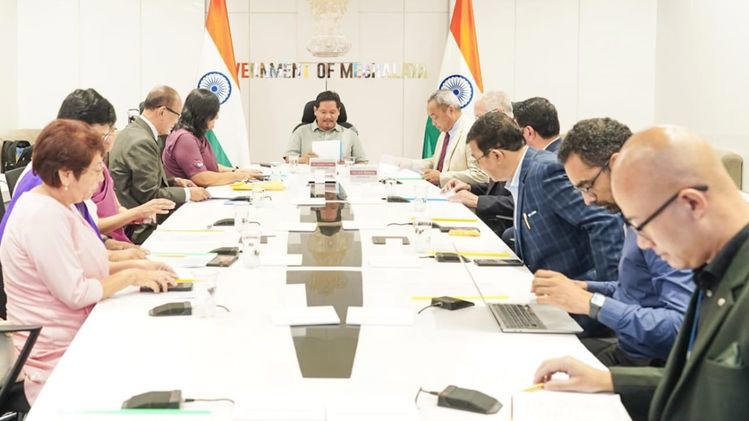
The Meghalaya government has released a comprehensive education commission report aimed at transforming the state’s academic system. The document outlines plans to improve school infrastructure, upgrade teacher training, and enhance access to quality education in both urban and rural areas.
Commission’s Vision for Education
The Meghalaya education commission report lays out a roadmap for the next decade, focusing on inclusive and skill-based learning. It recommends revising the curriculum to match national standards while incorporating local culture and history.
Officials believe these changes will help students become globally competitive while maintaining a strong sense of identity. The report also highlights the need to align Meghalaya’s education policies with the National Education Policy (NEP) 2020, ensuring a smooth integration of modern teaching methods.
Read More: Mizoram Landowners Warn of Stir Over Rail Project Dues
Key Infrastructure Improvements
One of the central points in the report is the urgent need for better school infrastructure. Many schools in Meghalaya, especially in rural areas, lack proper classrooms, laboratories, and libraries. The commission recommends a multi-phase construction and renovation plan to address these gaps.
The proposal includes building science labs, digital classrooms, and sports facilities. Such improvements aim to create an environment where students can explore subjects beyond textbooks and gain practical skills.
Focus on Teacher Training
The commission stresses that improving infrastructure alone will not solve education challenges. Skilled teachers are essential for delivering quality education. The Meghalaya education commission report suggests introducing regular training workshops, certification programmes, and exposure visits for educators.
It also proposes incentives to attract qualified teachers to remote and rural schools. These incentives could include housing support, transport allowances, and career advancement opportunities.
Addressing Rural Education Gaps
Rural areas face some of the biggest challenges in Meghalaya’s education sector. The report outlines measures to reduce dropout rates, improve attendance, and increase enrollment in remote regions.
Plans include deploying mobile learning units, expanding hostel facilities for students from distant villages, and strengthening community engagement in school management. The commission also recommends local recruitment of teachers to ensure better understanding of cultural contexts and local languages.
Integrating Technology in Classrooms
The report places a strong emphasis on integrating technology into learning. It calls for high-speed internet access in all schools, training teachers in digital tools, and providing students with access to tablets or laptops.
Digital education platforms will supplement traditional teaching, offering interactive lessons and access to global learning resources. The commission believes this shift will prepare students for a technology-driven future.
Emphasis on Vocational and Skill-Based Learning
The Meghalaya education commission report recognises the importance of vocational training alongside academic learning. It proposes setting up skill centres within schools to teach trades such as carpentry, tailoring, agriculture, and hospitality management.
By equipping students with practical skills, the state hopes to boost employability and encourage entrepreneurship among youth.
Higher Education Reforms
Beyond school education, the commission addresses higher education challenges. It recommends upgrading college infrastructure, introducing research grants, and forming partnerships with national and international universities.
The report also proposes career counselling services in schools and colleges to guide students toward suitable career paths based on their skills and interests.
Inclusion and Equal Opportunities
Inclusion remains a core theme in the report. Special attention is given to students with disabilities, children from economically weaker backgrounds, and those from remote tribal communities.
The commission calls for scholarships, assistive learning devices, and inclusive classrooms where all students can learn without discrimination. It also urges the government to implement targeted nutrition and health programmes for schoolchildren.
Strengthening Governance and Accountability
To ensure the recommendations are implemented, the report suggests forming an independent monitoring body. This body will track progress, publish annual reviews, and hold education authorities accountable for delays or underperformance.
The commission also advises strengthening the role of school management committees and involving parents more actively in the education process.
Government’s Response
Chief Minister Conrad K Sangma welcomed the report, calling it a “blueprint for Meghalaya’s education future.” He assured that the government will prioritise key recommendations and allocate necessary funds for implementation.
The education department has already begun drafting action plans based on the report’s findings. Officials say the first phase will focus on upgrading infrastructure in the most underserved areas.
Stakeholder Reactions
Teachers, parents, and student organisations have largely welcomed the Meghalaya education commission report. Many see it as a step toward addressing long-standing issues in the state’s education system.
However, some have urged the government to set clear deadlines for each reform. They argue that without a strict timeline, the proposals may remain on paper.
Expected Impact
If implemented effectively, the report’s recommendations could reshape Meghalaya’s education landscape over the next decade. Students would gain access to better facilities, skilled teachers, and modern learning methods.
The reforms could also help bridge the gap between urban and rural education standards, ensuring that all students, regardless of location, receive equal opportunities.
The Meghalaya education commission report represents a significant step toward building a stronger, more inclusive, and future-ready education system. By combining infrastructure upgrades, teacher development, and technology integration, Meghalaya has the opportunity to create lasting change.
The challenge now lies in swift and effective execution. With commitment from the government, educators, and communities, the state can turn this vision into reality and prepare its youth for the demands of tomorrow.
Read More: Tripura Tourism Development Plans: Guides & Funding