


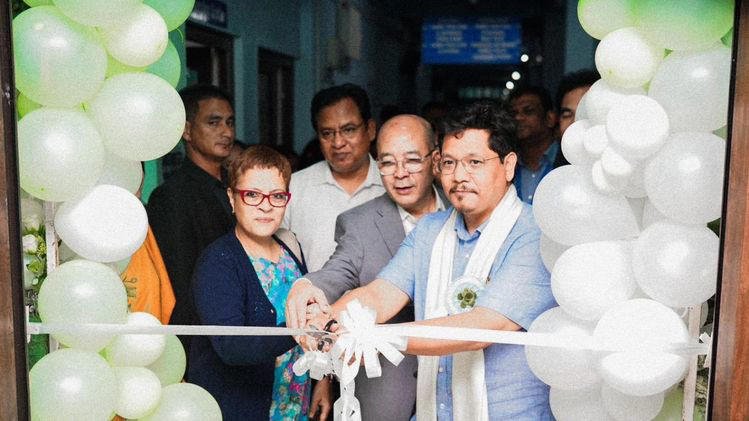
The Meghalaya government has strengthened its healthcare infrastructure by upgrading a key hospital with a specialised newborn unit. This initiative is part of a larger Rs 300 crore investment aimed at enhancing healthcare delivery across the state. Officials believe the move will improve access to quality neonatal care, particularly for rural and underserved communities.
Read More: Mizoram Landowners Warn of Stir Over Rail Project Dues
New Facility Targets Neonatal Care Gaps
The upgraded hospital now houses advanced equipment and a fully staffed Meghalaya hospital newborn unit. The unit will focus on treating premature babies, managing birth-related complications, and reducing infant mortality rates.
Health department officials say the decision addresses a critical need. Many newborns in Meghalaya face health challenges due to premature birth, infections, and limited access to advanced care facilities. By creating a dedicated space for them, the state aims to ensure timely treatment and better survival outcomes.
Part of Rs 300 Crore Health Investment
The newborn unit is one component of Meghalaya’s ongoing Rs 300 crore health sector investment. This funding supports infrastructure upgrades, procurement of modern medical equipment, and recruitment of trained personnel.
Chief Minister Conrad K Sangma highlighted that the investment reflects the state’s commitment to achieving universal healthcare coverage. He emphasised that access to quality medical facilities should not be limited to urban areas, and rural populations deserve equal healthcare opportunities.
Advanced Equipment and Skilled Staff
The new Meghalaya hospital newborn unit features modern incubators, phototherapy units, ventilators, and specialised monitors. The hospital has also appointed trained neonatal nurses and paediatricians to provide round-the-clock care.
Officials say these resources will allow healthcare workers to manage complex neonatal cases within the state rather than referring patients to distant facilities. This will save families from long travel times and reduce treatment delays.
Boosting Rural Healthcare Access
While the hospital is located in an urban centre, the facility will serve newborns from surrounding rural areas. The health department has also arranged a referral and transport system to transfer critical cases quickly.
Ambulances equipped with neonatal life-support systems will connect rural health centres to the hospital. This measure is expected to significantly cut response times and improve chances of survival for high-risk newborns.
Training for Local Health Workers
The state government has launched training programmes for healthcare workers in neonatal care. Nurses, midwives, and medical officers from rural health centres will receive skill development sessions.
This training will enable them to identify early signs of complications, stabilise newborns, and refer them to the Meghalaya hospital newborn unit when necessary. The initiative also aims to strengthen the first line of care and reduce preventable neonatal deaths.
Part of a Larger Healthcare Vision
According to state health officials, the newborn unit is part of a long-term vision to expand Meghalaya’s healthcare capabilities. The Rs 300 crore plan includes building new district hospitals, upgrading community health centres, and setting up telemedicine facilities.
By integrating these efforts, the government hopes to create a robust healthcare network that can handle specialised treatment needs within the state.
Community Response
Local communities have welcomed the move, calling it a much-needed step toward better health outcomes. Parents who have previously faced challenges in accessing neonatal care see the unit as a sign of progress.
Several non-governmental organisations working in maternal and child health have also expressed their support. They believe the facility will complement existing community health programmes and create a safety net for vulnerable newborns.
Addressing High Infant Mortality Rates
Data from the National Family Health Survey shows Meghalaya has struggled with higher-than-average infant mortality rates compared to some other states. Limited access to specialised care has been a major contributing factor.
The Meghalaya hospital newborn unit aims to address this challenge by offering treatment for conditions like respiratory distress syndrome, neonatal jaundice, and sepsis. Officials hope these measures will lead to measurable improvements in infant survival rates over the next few years.
Funding and Sustainability
While the initial infrastructure has been funded under the Rs 300 crore health investment, the state plans to allocate additional resources for maintenance, staff salaries, and continuous training.
Health officials stress that sustainability will depend on effective management and regular upgrades to keep pace with medical advancements. Partnerships with central government health schemes and international health agencies may also support long-term operations.
Expected Outcomes
Authorities expect the specialised newborn unit to handle hundreds of cases annually. With advanced care available locally, more families will seek treatment without delay. The hospital’s enhanced capabilities could also attract skilled doctors and encourage young medical professionals to build their careers in the state.
In the long run, this facility could serve as a model for similar upgrades in other hospitals across Meghalaya.
The launch of the Meghalaya hospital newborn unit marks a significant step in the state’s healthcare journey. By combining infrastructure upgrades with skilled staff and community outreach, Meghalaya is positioning itself to better protect its most vulnerable citizens.
This initiative not only addresses immediate health needs but also lays the groundwork for a stronger, more inclusive healthcare system. As the state continues its Rs 300 crore investment, projects like this will play a central role in shaping a healthier future for Meghalaya’s people.
Read More: Tripura Tourism Development Plans: Guides & Funding