


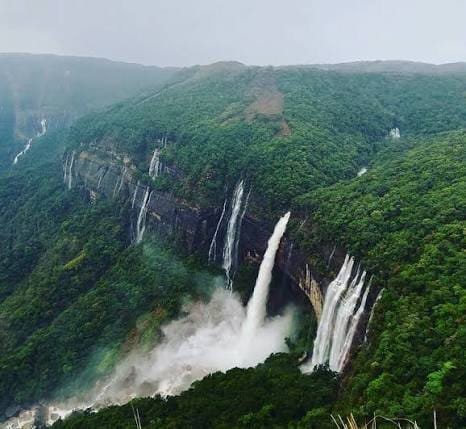
Mawsynram and Cherrapunji, widely known for receiving some of the world’s highest rainfall, are facing a growing drought risk as climate change alters rainfall patterns in Meghalaya. A recent study published in Theoretical and Applied Climatology found that rainfall is becoming more concentrated in fewer but heavier spells. At the same time, the region is experiencing fewer rainy days and less light rainfall. Researchers warn that this shift could affect water availability, agriculture, ecosystems and communities that depend on regular rainfall.
Read More: Tripura BJP-Tipra Motha Election Strategy
Key Facts
- Location: Meghalaya, Northeast India
- Places highlighted: Mawsynram and Cherrapunji
- Study period: 1981–2100
- Published in: Theoretical and Applied Climatology
- Researchers: Ashesh Rudra Paul and Pankaj Kumar Roy
- Main finding: More intense rainfall but fewer rainy days
- Major concern: Increasing drought and water scarcity risks
Rainfall Pattern Is Changing
The study examined climate and hydrological data covering the period from 1981 to 2100.
Researchers found a notable change in the way rainfall occurs across Meghalaya. Instead of receiving rain across many days, the region could experience precipitation in fewer and more intense spells.
As a result, higher rainfall intensity does not necessarily mean greater water availability throughout the year.
Heavy Rain and Drought Risk
The findings highlight what researchers describe as a climate paradox. While intense rainfall events are increasing, the decline in lighter rainfall and rainy days could increase drought vulnerability.
Heavy downpours can deliver large amounts of water within a short period. However, such rainfall may not provide a steady water supply between rainfall events.
Consequently, communities that depend on consistent rainfall could face increasing challenges in managing water resources.
Impact on Agriculture and Ecosystems
Changes in rainfall patterns could create challenges for agriculture in Meghalaya. Farmers often depend on predictable rainfall to plan cultivation and maintain crops.
Meanwhile, ecosystems could also face pressure as water availability becomes less consistent. Longer dry periods between intense rainfall events may affect soil moisture, vegetation and local water systems.
The study therefore highlights the need to consider both rainfall intensity and the number of rainy days when assessing future water security.
Rising Temperatures Add to the Concern
Researchers also linked the changing rainfall pattern with rising temperatures. Increasing temperatures can influence evaporation and the overall movement of water through the environment.
Therefore, even areas that receive extremely heavy rainfall may face periods of water stress if rainfall becomes increasingly irregular.
The researchers warn that continued changes could alter the region’s long-term hydrological balance.
What Could Happen in the Future?
The study suggests that Meghalaya’s traditionally wet areas may not remain consistently water-rich throughout the year.
Instead, the region could experience a combination of intense rainfall events and longer dry periods. This shift could increase pressure on water resources and make drought management more important.
The findings underline the importance of climate adaptation and better water management in Meghalaya.
Questions and Answers
What does the study say about Mawsynram and Cherrapunji?
The study indicates that these extremely wet regions could face increasing drought vulnerability as rainfall becomes less frequent but more intense.
Why is drought risk increasing despite heavy rainfall?
Researchers found that rainfall is becoming concentrated into fewer intense events, while light rainfall and the overall number of rainy days are declining.
What period did researchers study?
The researchers analysed climate and hydrological data from 1981 to 2100.
Who conducted the study?
Researchers Ashesh Rudra Paul and Pankaj Kumar Roy conducted the analysis.
What could the changing rainfall pattern affect?
The changes could affect water availability, agriculture, ecosystems and communities that rely on regular rainfall.
Importance for Meghalaya and Northeast India
Meghalaya plays an important role in the Northeast India region’s water and ecological systems. The changing rainfall pattern in places such as Mawsynram and Cherrapunji highlights how climate change can affect even areas traditionally associated with abundant rainfall. The findings also point to the need for long-term water management and climate adaptation across the region.
Also Read: Imphal West Arms Cache Recovered