


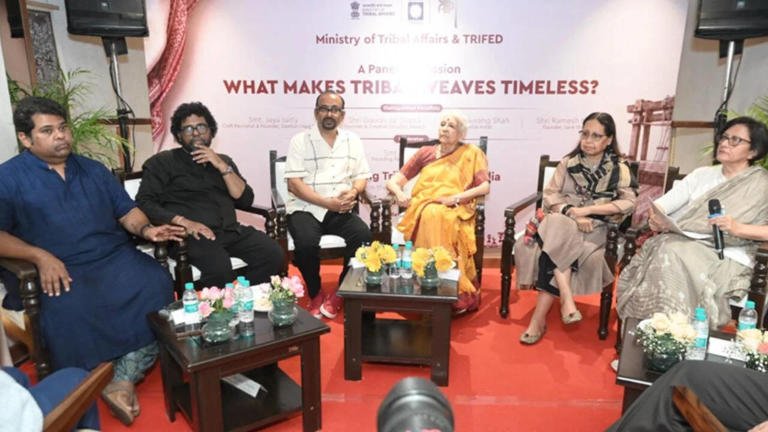
The Ministry of Tribal Affairs showcased India’s rich tribal textile heritage through “RISA: Timeless Tribal” on the occasion of the 12th National Handloom Day. The initiative celebrated the country’s diverse handloom traditions while highlighting the skills, creativity and cultural knowledge of tribal artisans.
The event, titled “Tribal Weaves of India,” took place at the RISA Flagship Store at the State Emporia Complex on Baba Kharak Singh Marg in New Delhi. The Ministry organised the programme in collaboration with the Tribal Cooperative Marketing Development Federation of India (TRIFED).
The showcase placed tribal weaves at the centre of the National Handloom Day celebrations. It also highlighted the government’s efforts to give traditional tribal products greater visibility in modern markets.
RISA Celebrates India’s Tribal Weaving Traditions
RISA: Timeless Tribal is a premium brand created by the Ministry of Tribal Affairs to promote tribal textiles, embroidery and handicrafts. The ministry launched the brand in March 2026 with the aim of bringing India’s tribal craftsmanship to premium domestic and international markets. (pib.gov.in)
The name RISA draws inspiration from the traditional handwoven Risa stole of Tripura. The garment holds strong cultural significance and forms an important part of the state’s traditional identity.
The brand seeks to connect traditional craftsmanship with contemporary design. It aims to create a distinct identity for tribal products while helping artisans receive better market opportunities and fairer returns.
The initiative also seeks to ensure that India’s traditional weaving practices remain relevant in changing consumer markets.
National Handloom Day Highlights India’s Weavers
India observes National Handloom Day every year on August 7. The day recognises the contribution of handloom weavers and highlights the importance of the sector to India’s social and economic development.
The 12th National Handloom Day took place in 2026. Various programmes, exhibitions and promotional activities were organised across the country to celebrate India’s handloom traditions.
The Ministry of Textiles has said that National Handloom Day aims to create greater awareness about handloom products, improve the income of weavers and encourage people to take pride in India’s textile heritage. (pib.gov.in)
The RISA showcase added a special tribal dimension to these celebrations. It highlighted the diversity of weaving traditions found among India’s tribal communities.
Tribal Textiles Carry Cultural Knowledge
Tribal textiles represent more than clothing or decorative products. They often carry stories about a community’s history, identity and traditional knowledge.
Patterns, colours and weaving techniques can reflect local traditions passed from one generation to another. Many artisans learn these skills within their families and communities from an early age.
However, traditional artisans often face challenges when trying to reach wider markets. Limited market access, changing consumer preferences and dependence on intermediaries can affect their income.
RISA seeks to address some of these challenges by creating stronger market connections and giving tribal products a recognisable national identity. (pib.gov.in)
RISA Connects Tradition With Modern Design
One of the key objectives of RISA is to combine traditional techniques with contemporary design.
The Ministry of Tribal Affairs has partnered with design institutions and professionals to develop modern product lines while preserving the authenticity of tribal crafts.
The initiative includes design development, garment prototypes, capacity building and improvements in product presentation. It also includes support for stitching facilities and stronger weaving and handicraft clusters. (pib.gov.in)
This approach can help traditional textiles reach younger consumers. It can also allow artisans to expand beyond conventional products and explore new designs and markets.
Tribal Weaves From Across India
RISA brings together textile traditions from different parts of the country.
The initiative’s first phase covers five tribal weaves, two embroideries and three crafts across 10 clusters. These products represent the diversity of India’s tribal craftsmanship. (pib.gov.in)
Among the featured textile traditions is Eri and Muga silk from Assam. These silks have a strong connection with the cultural traditions of the Northeast.
The RISA initiative also features Kotpad cotton from Odisha, Changpa Pashmina from Ladakh and Toda embroidery from Tamil Nadu. Its craft portfolio includes Longpi pottery from Manipur, Turtuk brass cutlery from Ladakh and Dokhra art from Chhattisgarh. (pib.gov.in)
Together, these products demonstrate the wide range of materials, techniques and artistic traditions found among India’s tribal communities.
Greater Market Access for Tribal Artisans
Market access remains one of the biggest challenges for traditional artisans. Producing high-quality products does not always guarantee that artisans can reach customers willing to pay fair prices.
RISA aims to bridge this gap.
The brand gives tribal products a common premium identity. It also seeks to improve packaging, branding, product presentation and market promotion.
The Ministry has said that the initiative aims to position tribal products in both domestic and international premium markets. This could create new opportunities for artisans and increase the value of their traditional skills. (pib.gov.in)
The launch of the exclusive RISA Store in New Delhi also provides a dedicated space where consumers can discover tribal textiles and handicrafts.
Women Artisans Play a Major Role
Women hold an important position in India’s tribal textile and handicraft economy.
Many women work as weavers, embroiderers, craft producers and members of community-based cooperatives. Their skills often contribute directly to household incomes.
The Ministry has highlighted the role of women artisans in the tribal economy. RISA aims to strengthen their participation by improving market access and creating better opportunities for income generation.
The initiative also promotes community-led production. By connecting artisans with markets and design support, it can help turn traditional skills into sustainable livelihoods.
Focus on Sustainable and Ethical Production
RISA also places emphasis on sustainable production practices.
Many tribal crafts rely on locally available materials and traditional production methods. Such practices can offer valuable lessons in sustainability and responsible consumption.
The initiative also includes environmentally sustainable packaging through collaboration with the National Institute of Design, Haryana. The goal is to improve the presentation of tribal products while reducing environmental impact. (pib.gov.in)
This combination of traditional knowledge and modern sustainability standards can help tribal products appeal to environmentally conscious consumers.
RISA Aims for Global Recognition
The Ministry of Tribal Affairs wants RISA to take India’s tribal craftsmanship beyond traditional markets.
Premium branding can help position tribal textiles alongside other high-value Indian handloom and craft products. International exposure could also create new demand for products that have traditionally remained within regional markets.
The government hopes that stronger branding, design development and market connections will increase the economic value of tribal craftsmanship.
At the same time, RISA aims to preserve the cultural identity behind each product. The initiative therefore seeks to modernise presentation without removing the traditional character of the crafts.
A New Platform for Tribal Heritage
The 12th National Handloom Day provided an important platform to highlight India’s tribal textile traditions. Through RISA: Timeless Tribal, the Ministry of Tribal Affairs has combined cultural preservation with economic empowerment.
The initiative recognises that India’s tribal textiles carry centuries of knowledge and artistic traditions. It also acknowledges the need to give artisans better access to modern consumers and premium markets.
By connecting traditional weavers with designers, organised markets and improved branding, RISA aims to create a stronger ecosystem for tribal products.
For India’s tribal artisans, the initiative represents an opportunity to turn heritage into sustainable livelihoods. For consumers, it offers greater access to authentic tribal products with a distinct cultural identity.
As RISA Timeless Tribal 2026 continues to expand, the initiative could play an important role in preserving India’s diverse textile heritage while helping tribal communities gain greater recognition, stronger markets and better economic opportunities.