


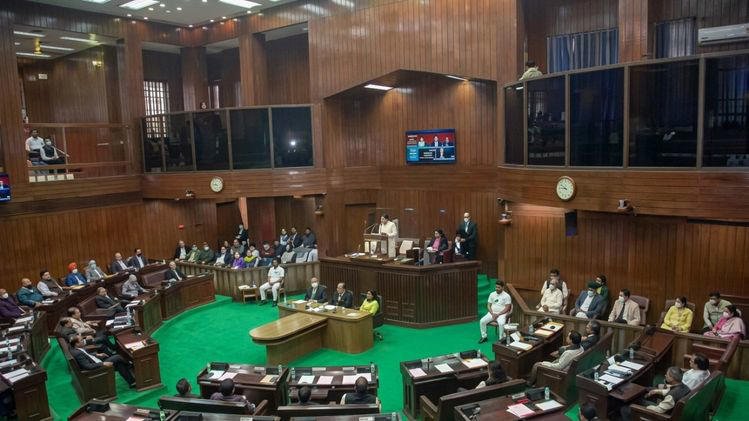
Mizoram Assembly budget session bills took center stage as the state legislature successfully passed 10 government bills during its 28-day budget session. The session, marked by detailed discussions and legislative activity, reflected the government’s focus on strengthening governance and accelerating development.
The budget session witnessed participation from both ruling and opposition members, with debates covering a wide range of issues. The passage of these bills highlights the Assembly’s role in shaping policies that impact the state’s administration and public welfare.
Read More: Tripura TTAADC Polls 2026: Over 9 Lakh Voters, Dharmanagar By-Election on April 9
Key Highlights of the Budget Session
The 28-day Mizoram Assembly budget session was one of the most significant legislative gatherings in recent times. Lawmakers engaged in discussions on financial allocations, policy measures, and developmental priorities.
During the session, the government introduced several bills aimed at improving administrative efficiency and addressing emerging challenges. After thorough deliberations, 10 of these bills were passed, signaling a productive legislative period.
Additionally, the session provided a platform for members to raise constituency-specific concerns and seek solutions.
Focus on Governance and Administrative Reforms
Many of the bills passed during the Mizoram Assembly budget session were focused on enhancing governance and administrative processes. These measures aim to streamline operations and improve service delivery across various departments.
The government emphasized the need for modernizing administrative systems to meet current demands. By introducing legislative reforms, it seeks to create a more efficient and transparent governance framework.
Such initiatives are expected to benefit both officials and citizens by reducing delays and improving accountability.
Development-Oriented Legislation
A significant portion of the bills passed during the session focused on development. These include provisions related to infrastructure, social welfare, and economic growth.
The government has prioritized projects that can boost connectivity, improve public services, and create employment opportunities. As a result, the legislation reflects a forward-looking approach to development.
Moreover, the focus on inclusive growth ensures that benefits reach all sections of society, including those in remote areas.
Role of Opposition in Legislative Process
The opposition played an active role during the 28-day session, contributing to debates and discussions on various bills. While supporting certain measures, opposition members also raised concerns and suggested amendments.
This engagement highlights the importance of a healthy democratic process. Constructive criticism and dialogue help refine policies and ensure that they address public needs effectively.
The collaborative approach adopted during the session contributed to its overall success.
Budget Discussions and Financial Planning
Apart from legislative business, the budget session also included detailed discussions on the state’s financial planning. Members examined budget allocations and expenditure priorities.
The government presented its vision for economic growth, focusing on key sectors such as healthcare, education, and infrastructure. Lawmakers debated these proposals to ensure that resources are utilized efficiently.
These discussions play a crucial role in shaping the state’s development trajectory.
Impact on Public Welfare
The bills passed during the Mizoram Assembly budget session are expected to have a direct impact on public welfare. Measures related to healthcare, education, and social services aim to improve the quality of life for residents.
For instance, initiatives to strengthen healthcare infrastructure can enhance access to medical services. Similarly, educational reforms can contribute to better learning outcomes.
By addressing essential needs, the legislation seeks to create a more inclusive and equitable society.
Strengthening Institutional Framework
Another important aspect of the session was the focus on strengthening institutional frameworks. Several bills aim to enhance the functioning of government bodies and regulatory institutions.
These measures are designed to improve coordination, efficiency, and accountability. A मजबूत institutional framework is essential for effective governance and long-term development.
The government’s emphasis on this area reflects its commitment to building a robust administrative system.
Challenges and Way Forward
While the passage of 10 bills marks a significant achievement, challenges remain in implementing these measures effectively. Ensuring timely execution and monitoring will be crucial for achieving desired outcomes.
The government will need to work closely with various departments and stakeholders to translate legislative intent into action. Continuous evaluation and feedback mechanisms can help address any issues that arise.
Looking ahead, the focus will be on sustaining momentum and addressing emerging challenges.
Conclusion
The passage of 10 government bills during the 28-day Mizoram Assembly budget session underscores the state’s commitment to governance and development. The session demonstrated the importance of legislative processes in shaping policies that impact citizens’ lives.
With a focus on administrative reforms, development initiatives, and public welfare, the bills are expected to contribute to Mizoram’s progress. As implementation begins, the effectiveness of these measures will determine their long-term impact.
Overall, the session reflects a proactive approach to governance, with the Assembly playing a central role in driving the state’s growth and development.