


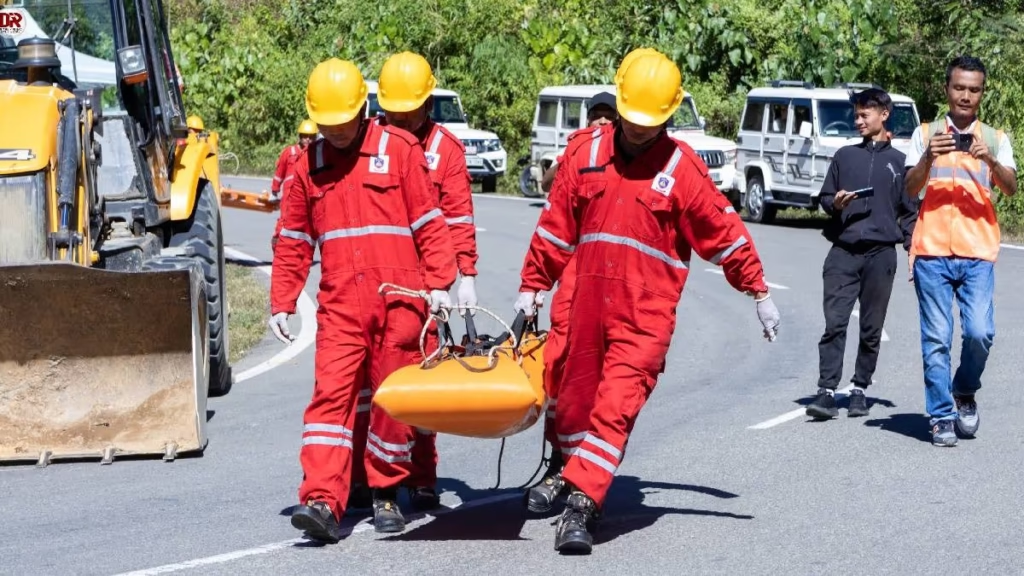
Mizoram disaster management teams have successfully conducted mock drills across multiple locations to enhance earthquake preparedness and emergency response capabilities. The exercise aimed to test coordination between various response agencies, improve public awareness, and strengthen disaster readiness in a seismically sensitive region. Moreover, officials stated that the drills are part of a regular preparedness strategy to minimize risks during natural disasters. The initiative reflects the state’s focus on building resilient emergency response systems.
Sikkim State Board Announces Changes to School Curriculum to Include Local Environmental Histories
Assam Rifles Engages With Civil Society Organisations in Tamenglong to Bolster Border Peace
Coordinated Mock Drills to Test Emergency Response Systems
Mizoram disaster management teams execute successful mock drills for earthquake preparedness to evaluate response efficiency and coordination. Consequently, various departments including police, health services, and fire response units participated in the exercise.
The drills simulated earthquake scenarios in both urban and rural settings to assess readiness under different conditions. Moreover, rescue operations, evacuation procedures, and emergency medical responses were tested. Therefore, the exercise helped identify strengths and areas for improvement.
Officials emphasized that coordination among agencies is crucial during real disaster situations. Furthermore, communication systems were tested to ensure rapid information flow. As a result, inter-agency collaboration is expected to improve.
Meanwhile, emergency response teams practiced search-and-rescue operations in simulated collapsed structures. Consequently, field preparedness and technical efficiency were reinforced.
Strengthening Public Awareness and Safety Preparedness
Mizoram disaster management teams execute successful mock drills for earthquake preparedness with a focus on increasing public awareness. Moreover, community participation is essential in reducing disaster-related risks. Therefore, citizens were briefed on safety protocols.
The drills included evacuation training for schools, offices, and residential areas. Consequently, participants learned how to respond during seismic events. Such awareness programs improve survival outcomes during emergencies.
Furthermore, safety instructions such as “Drop, Cover, and Hold” were demonstrated. As a result, basic earthquake response knowledge was reinforced among residents.
Meanwhile, educational institutions were encouraged to conduct similar internal drills. Similarly, awareness campaigns are being expanded across districts.
Enhancing Institutional Coordination and Response Capacity
The Mizoram disaster management teams execute successful mock drills for earthquake preparedness as part of efforts to strengthen institutional response capacity. Moreover, disaster-prone regions require regular training and simulations. Therefore, such drills are essential for preparedness.
Officials highlighted that standardized protocols were followed to assess efficiency. Consequently, gaps in communication and logistics were identified and reviewed. Such evaluations help improve future response systems.
Furthermore, emergency equipment such as rescue tools and communication devices were tested. As a result, operational readiness has been strengthened.
Meanwhile, feedback from participating agencies is being analyzed for future improvements. Similarly, updated disaster response plans are being developed.
Building a Resilient Disaster Management Framework
The initiative reflects Mizoram’s broader commitment to strengthening disaster resilience in a region prone to earthquakes and landslides. Moreover, proactive preparedness reduces potential loss of life and property. Therefore, continuous training is essential.
Officials stated that regular mock drills help build confidence among responders and citizens. Consequently, community resilience is expected to improve. Such preparedness measures are critical for risk reduction.
Furthermore, integration of technology in disaster management is being explored. As a result, early warning systems and digital coordination tools may be enhanced.
Meanwhile, collaboration with national disaster management authorities is being strengthened. Similarly, capacity-building programs are being expanded.
Conclusion
Mizoram disaster management teams execute successful mock drills for earthquake preparedness, marking an important step in strengthening emergency readiness and public safety. Moreover, the exercise improved coordination among agencies and increased community awareness.
The initiative highlights the importance of regular disaster preparedness in reducing risks from natural hazards. Therefore, it represents a significant contribution to building a resilient response system.
As Mizoram disaster management teams execute successful mock drills for earthquake preparedness, the state reinforces its commitment to safeguarding lives through proactive planning and training.
FAQs
1. What was conducted in Mizoram?
Earthquake preparedness mock drills.
2. Who participated in the drills?
Disaster management teams, police, health, and emergency services.
3. What was the purpose of the exercise?
To improve earthquake response and coordination.
4. What skills were practiced?
Evacuation, rescue operations, and emergency medical response.
5. Why are mock drills important?
They improve preparedness and reduce disaster-related risks.