


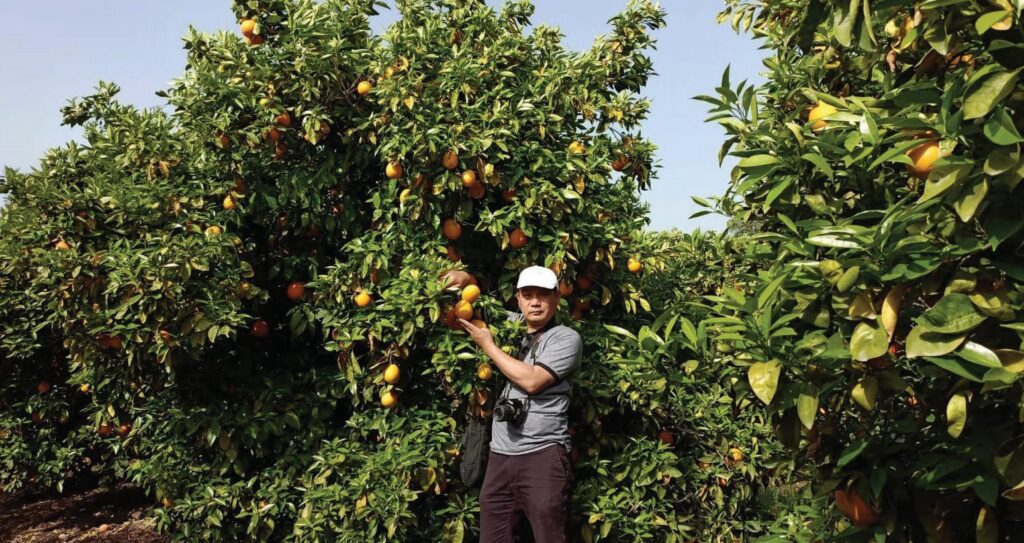
The Mizoram Horticulture Department has launched a distribution drive of free high-yield orange saplings to jhum farmers across the state, aiming to promote sustainable horticulture and improve rural incomes. The initiative is designed to encourage a shift from traditional shifting cultivation practices toward long-term fruit cultivation. Moreover, officials stated that the program is part of broader efforts to enhance horticultural productivity and support farmer livelihoods. The move highlights the state’s focus on climate-resilient and income-generating agricultural practices.
Meghalaya Dynamic Tourism Portal Records High Registrations for Community-Led Home-Stays
Khaidem Amarjit Scores Two Goals to Guide Utlou FC Into the Regional CC Football Meet Finals
Encouraging Shift from Jhum Cultivation to Orchard Farming
Mizoram horticulture department distributes free high-yield orange saplings to jhum farmers as part of efforts to promote sustainable land use practices. Consequently, farmers are being encouraged to gradually adopt orchard-based farming systems.
The high-yield orange varieties provided under the scheme are expected to improve productivity and market value compared to traditional crops. Moreover, citrus farming offers long-term income stability once plantations mature. Therefore, the initiative is seen as a step toward agricultural transformation.
Officials emphasized that shifting cultivation, while traditional, often leads to soil degradation over time. Furthermore, orchard farming helps improve soil conservation and ecological balance. As a result, the program supports both environmental and economic goals.
Meanwhile, extension officers are providing training on sapling care and orchard management. Consequently, farmer awareness and adoption rates are expected to improve.
Boosting Rural Income and Horticultural Development
Mizoram horticulture department distributes free high-yield orange saplings to jhum farmers to strengthen rural livelihoods through horticulture development. Moreover, citrus cultivation has strong market demand in both local and regional markets. Therefore, it presents a viable income source for farmers.
The initiative is expected to increase household earnings once orchards reach full production capacity. Consequently, rural economies may benefit from improved agricultural output. Such programs contribute to long-term financial stability.
Furthermore, the department is promoting scientific farming techniques such as irrigation management and pest control. As a result, crop survival rates and productivity are likely to improve.
Meanwhile, linkages with marketing agencies and cooperatives are being explored. Similarly, storage and transport facilities are being strengthened.
Promoting Climate-Resilient Agriculture Practices
The Mizoram horticulture department distributes free high-yield orange saplings to jhum farmers as part of efforts to promote climate-resilient agriculture. Moreover, orchard farming helps reduce environmental degradation caused by shifting cultivation. Therefore, it supports sustainable land management.
Officials highlighted that fruit orchards contribute to soil conservation and carbon sequestration. Consequently, they play a role in environmental protection. Such practices are increasingly important in ecologically sensitive regions.
Furthermore, diversified farming systems reduce dependency on a single crop cycle. As a result, farmers gain better resilience against climate variability.
Meanwhile, research support is being provided to identify suitable varieties for different altitudes. Similarly, monitoring programs are being implemented to track plantation growth.
Strengthening Agricultural Support Systems
The initiative reflects Mizoram’s broader strategy to strengthen agricultural support systems for rural communities. Moreover, access to quality planting material is essential for improving productivity. Therefore, government-supported distribution programs play a key role.
Officials stated that continued technical assistance will be provided to farmers. Consequently, adoption of improved horticultural practices is expected to increase. Such interventions enhance long-term agricultural sustainability.
Furthermore, collaboration with agricultural research institutions is being strengthened. As a result, better crop varieties and farming techniques can be introduced.
Meanwhile, awareness campaigns are being conducted in rural areas. Similarly, community participation in horticulture programs is being encouraged.
Conclusion
Mizoram horticulture department distributes free high-yield orange saplings to jhum farmers, marking a significant step toward sustainable agriculture and rural income enhancement. Moreover, the initiative promotes a shift toward orchard-based farming systems that are both economically and environmentally beneficial.
The program highlights the importance of horticulture in improving livelihoods and ensuring long-term agricultural sustainability. Therefore, it represents a meaningful transformation in farming practices.
As the Mizoram horticulture department distributes free high-yield orange saplings to jhum farmers, the initiative underscores the state’s commitment to climate-resilient and income-generating agriculture.
FAQs
1. What has the Mizoram Horticulture Department distributed?
Free high-yield orange saplings.
2. Who are the beneficiaries?
Jhum farmers in Mizoram.
3. Why is the initiative important?
It promotes sustainable farming and improves rural income.
4. What farming shift is being encouraged?
From jhum cultivation to orchard-based farming.
5. What is the long-term benefit?
Better income stability and environmental conservation.