


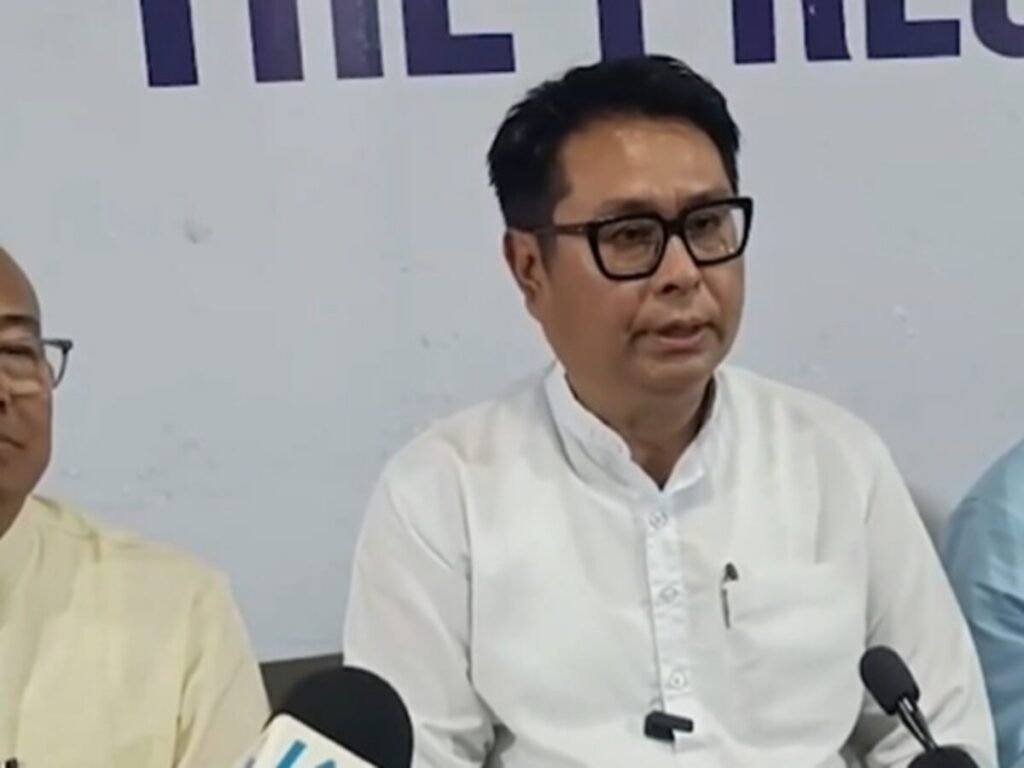
A delegation of Manipur lawmakers is reportedly preparing to travel to New Delhi to seek the Central government’s approval for the immediate implementation of an NRC-style exercise in the state. The proposed move places citizenship documentation and identification at the centre of renewed political discussions in Manipur.
The delegation’s reported visit highlights growing political attention on questions surrounding migration, documentation, and border management. Moreover, any decision concerning an NRC would involve significant legal, administrative, and humanitarian considerations.
However, the available information does not confirm that the Centre has approved immediate NRC implementation in Manipur or establish the final composition of the delegation.
Dr. Thejo Kumari Amudala Honoured at Rashtriya Gourav Awards
Manipur MLAs Prepare for Delhi Visit
The Manipur MLAs’ Delhi delegation is reportedly preparing to meet Central authorities over the proposed NRC implementation.
Lawmakers could use the meetings to present their concerns and seek clarification on the Centre’s position. Furthermore, discussions in New Delhi could provide an opportunity to examine the legal and administrative requirements involved in conducting such an exercise.
The delegation’s initiative therefore places the issue directly before the Union government.
However, the exact date of the visit and the names of all participating lawmakers have not been provided.
NRC Demand Gains Political Attention
The proposed NRC exercise aims to address questions surrounding citizenship documentation and identification.
Supporters of such an exercise can argue that systematic documentation could help authorities distinguish between eligible citizens and individuals without valid citizenship status. Additionally, proponents may connect the issue with broader concerns about migration and border management.
However, an NRC-style process can involve complex legal and administrative questions.
Central Approval Would Be Crucial
Any state-level initiative of this scale would require coordination with the Union government and relevant authorities.
The Central government would need to consider the applicable legal framework, administrative procedures, documentation standards, and implementation mechanisms. Moreover, authorities would need to establish how officials would verify records and handle disputed cases.
The reported Delhi visit could therefore focus on obtaining clarity on these issues.
Manipur’s Border Context Adds Complexity
Manipur shares an international border with Myanmar, making migration and border management particularly sensitive issues.
The state’s geography and cross-border social connections can create challenges for documentation and movement monitoring. Furthermore, authorities must distinguish between lawful residents, migrants, refugees, and other categories under the applicable legal framework.
An NRC-style process would therefore require careful implementation.
Documentation Could Become a Major Challenge
A large-scale citizenship documentation exercise can require extensive records.
Authorities may need to examine historical documents, birth records, land records, electoral documents, and other legally recognised evidence. Additionally, people who lack documentation may require clearly defined procedures for presenting claims or correcting records.
The administrative workload could therefore be substantial.
However, the available information does not specify which documents a proposed Manipur NRC would require.
Humanitarian Concerns Require Attention
Citizenship-related verification can have serious consequences for individuals whose documentation remains incomplete or disputed.
Therefore, authorities would need transparent procedures, opportunities for review, and safeguards against wrongful exclusion. Moreover, vulnerable groups could require additional assistance in accessing documentation and legal processes.
These considerations would likely form an important part of any detailed implementation framework.
Legal Framework Remains Important
An NRC-style process cannot operate solely through political declarations.
Authorities would need to establish the appropriate legal basis and follow constitutional and statutory requirements. Furthermore, any decisions affecting citizenship status would need to respect applicable legal remedies and judicial oversight.
The proposed Delhi meetings could therefore address the legal pathway for implementation.
Border Management Could Be Discussed
The delegation may also raise broader border-management concerns during its discussions with Central authorities.
Border fencing, surveillance, immigration checks, and coordination between security agencies can form part of wider migration-management policies. Additionally, improved border infrastructure could complement documentation initiatives.
However, the available information does not indicate whether these issues form part of the delegation’s formal agenda.
Political Debate Could Intensify
The NRC proposal is likely to remain politically sensitive.
Different political groups and community organisations may hold sharply different views regarding citizenship verification and migration. Moreover, public discussion could intensify as lawmakers seek Central approval.
Authorities will therefore need to communicate clearly about the purpose, legal framework, and potential consequences of any proposed exercise.
What Happens Next?
The immediate focus will be the Manipur lawmakers’ proposed visit to New Delhi.
The delegation could seek a formal response from Central authorities regarding the feasibility and legal framework for an NRC-style exercise. Furthermore, any future implementation would likely require detailed planning, administrative preparation, and clear procedures for verification and appeals.
For now, the proposal remains a political demand rather than a confirmed Central government decision.
Conclusion
The proposed Manipur MLAs’ Delhi delegation signals renewed political efforts to secure Central approval for an NRC-style citizenship documentation exercise in the state. The initiative reflects continuing concerns surrounding migration, documentation, and border management.
Moreover, any such exercise would require careful legal and administrative planning, transparent verification procedures, and safeguards for people whose citizenship records remain disputed. At the same time, the Centre has not been confirmed to have approved immediate NRC implementation based on the information available.
Overall, the Manipur NRC proposal remains under political discussion, with lawmakers preparing to seek the Central government’s position in New Delhi.
FAQs
1. Why are Manipur MLAs travelling to Delhi?
The delegation is reportedly preparing to seek Central approval for an NRC-style citizenship documentation exercise in Manipur.
2. Has the Centre approved the NRC implementation?
No confirmed approval is provided in the information available.
3. Why is NRC a sensitive issue in Manipur?
Migration, citizenship documentation, the state’s international border with Myanmar, and community concerns make the issue particularly sensitive.
4. What would an NRC-style exercise involve?
It could involve examining legally recognised documents and records to establish citizenship eligibility under a defined legal framework.
5. What safeguards would be important?
Clear rules, transparent verification, opportunities for review or appeal, and assistance for people facing documentation difficulties would be important.