


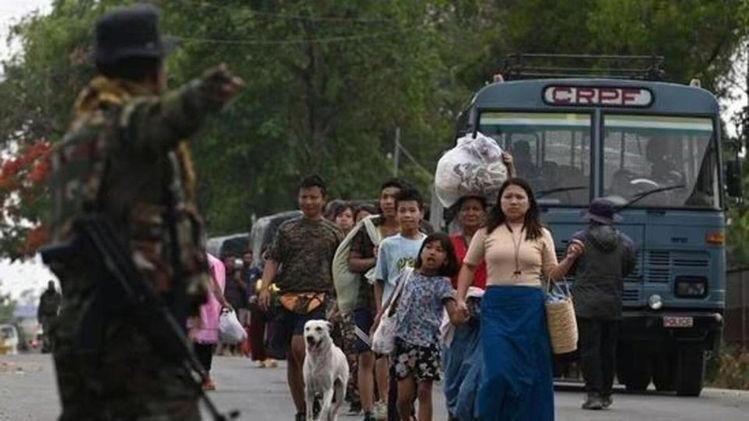
The issue of Myanmar refugees in Mizoram continues to grow as fresh data revealed that more than 29,000 people have taken shelter in the state. Home Minister K. Sapdanga recently confirmed these figures and highlighted the immense pressure on the state’s resources. The arrival of thousands of displaced people from Myanmar reflects the deepening humanitarian and security challenges along the border.
Read More: Mizoram Sticks to 1875 Notification for Assam Border: Minister
Rise in Myanmar refugees in Mizoram
According to the Home Minister, the number of Myanmar refugees in Mizoram has crossed 29,000, with people arriving from the Chin State, which shares a long border with Mizoram. Violence in Myanmar since the 2021 military coup has forced many families to flee, and Mizoram has become their closest refuge. Communities in the state, bound by ethnic and cultural ties with the Chin population, have extended support despite limited resources.
Local officials noted that refugees are spread across several districts, including Champhai, Siaha, and Lawngtlai. These regions, situated close to the border, have seen the largest influx. The situation has placed significant strain on food, health, and housing facilities. Despite the challenges, Mizoram has maintained its humanitarian approach.
Challenges for Mizoram’s administration
While Mizoram has a tradition of offering shelter to those in need, the ongoing influx of Myanmar refugees in Mizoram has raised concerns for the administration. Schools, hospitals, and relief centres are under increasing pressure. The Home Minister stressed that the state government is doing everything possible, but without financial and logistical support from the Centre, sustaining aid will be difficult.
Community organizations and local churches have stepped forward to provide food, clothing, and shelter. However, with the numbers rising, voluntary efforts alone may not suffice. The lack of long-term funding and proper refugee infrastructure poses a major challenge.
Appeal to the central government
The Home Minister reiterated Mizoram’s request for support from the central government to manage the situation. He emphasized that although Mizoram shares strong kinship ties with Myanmar’s Chin people, the scale of the crisis requires national assistance. The state cannot handle such large numbers on its own, he stated.
Sapdanga mentioned that officials are in continuous dialogue with the Union Home Ministry to seek financial aid and policy clarity on how to manage the refugees. While humanitarian considerations remain central, the state also faces security and administrative hurdles in balancing refugee needs with local welfare.
Humanitarian concerns and local response
The refugee crisis has deeply affected the border communities of Mizoram. Villagers living close to the Myanmar border have opened their homes to refugees, sharing food and daily essentials. Churches have played a key role by setting up relief camps and organizing donations.
Despite these efforts, conditions remain difficult. Many refugees live in temporary shelters with limited access to clean water and sanitation. Medical care is also a pressing concern, with hospitals struggling to accommodate both locals and refugees. Cases of malnutrition among children have also been reported.
Political and security dimensions
The presence of a large number of Myanmar refugees in Mizoram also carries political and security implications. The porous border, spanning more than 500 kilometers, makes monitoring movement extremely challenging. Security agencies remain alert to prevent illegal activities such as arms smuggling or drug trafficking that could take advantage of the situation.
Nevertheless, the Home Minister assured that the situation is being monitored closely. Mizoram continues to prioritize humanitarian care, but coordination with central security agencies is vital to prevent misuse of the crisis by anti-social groups.
Regional and cultural ties
A unique factor influencing Mizoram’s response is the cultural bond between the Mizos and the Chin people of Myanmar. Both groups share ethnic roots, languages, and customs. This kinship has motivated Mizoram’s warm response despite its limited capacity. Community leaders argue that turning away people in distress would go against the state’s values and traditions.
The bond between the two communities has also helped in easing tensions, as refugees are often welcomed rather than seen as outsiders. This cultural connection has prevented possible friction between locals and refugees, at least for now.
The road ahead
Managing the growing number of Myanmar refugees in Mizoram requires coordinated action. While the state continues to offer humanitarian assistance, sustained central government support is crucial for health care, food supply, education, and infrastructure. Aid agencies and civil society groups also have a vital role to play in easing the burden.
The Home Minister’s statement reflects both concern and commitment. On one hand, the numbers are increasing and stretching Mizoram’s resources thin. On the other, the state remains determined to stand with those seeking refuge. However, the future depends on broader policy decisions at the national level.
The growing presence of Myanmar refugees in Mizoram highlights a pressing humanitarian challenge at India’s northeastern border. With over 29,000 people now sheltered, the crisis demands urgent attention and support. Mizoram has shown compassion rooted in cultural ties, but sustaining relief requires greater involvement from the central government.
The state’s approach underscores a balance between empathy and responsibility, ensuring that both refugees and locals receive care. The situation calls for a collective response, blending humanitarian values with practical measures to address one of the most significant refugee challenges in the region.
Read More: Dhubri SHG Women Get Rs 10,000 Aid for Empowerment