


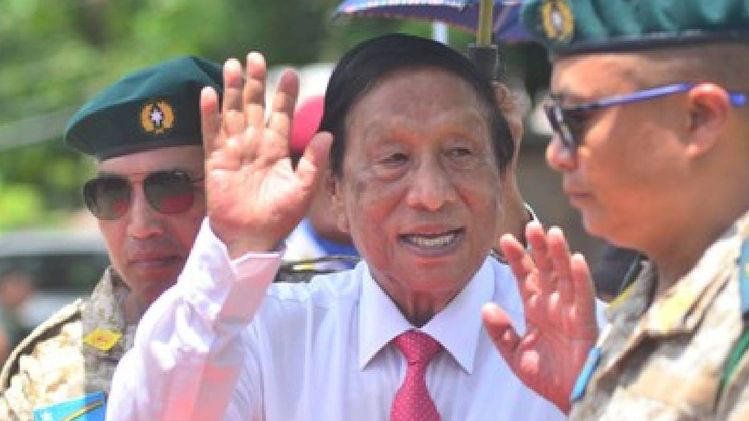
Naga leader Thuingaleng Muivah, the General Secretary of the National Socialist Council of Nagalim (Isak-Muivah), returned to his native Somdal village in Manipur’s Ukhrul district after fifty long years. The 90-year-old leader’s homecoming on Tuesday was an emotional and historic event that stirred deep feelings among the Naga people. His return symbolized hope, unity, and the unbroken spirit of a community that continues to strive for peace.
Muivah’s convoy entered Somdal amid high security. Hundreds of villagers gathered along the roads, holding banners and traditional shawls to greet him. The air was filled with folk songs and chants, showing the immense respect he commands among his people. For many villagers, seeing him in person for the first time felt like witnessing a piece of living history.
Read More: Sikkim Government Urges NHIDCL to Address Frequent NH-10 Closures
Emotional Reunion with His Homeland
Addressing the crowd briefly, Th Muivah thanked the people for their unwavering support. He said his return was not just a personal journey but a symbol of the Naga people’s struggle for dignity and unity. “Coming back to Somdal feels like returning to the roots of our mission,” he said. His words drew loud applause from the crowd, which included elders, women, and youth from nearby villages.
The villagers organized a grand reception, featuring traditional dances, songs, and prayers for his good health. Elderly women presented shawls, while the youth performed Tangkhul folk dances to celebrate his arrival. The event turned Somdal into a festival ground, filled with songs of freedom and stories of sacrifice.
The Significance of His Return
Muivah’s visit carries deep political and cultural meaning. He last visited his native village in the early 1970s, before dedicating his life to the Naga political movement. Over the decades, he became one of the key figures in Naga history. His leadership guided the NSCN (IM) through critical negotiations with the Indian government, which began in 1997 and continue to this day.
Local leaders said his return would help heal internal divisions among different Naga groups. Many believe his presence in Ukhrul could inspire reconciliation and unity after years of tension. “This visit is more than symbolic. It is a call for peace and solidarity,” said a community leader during the reception.
Tight Security and Calm Atmosphere
To ensure safety, the Manipur government deployed additional security forces around Somdal and nearby areas. Despite the heavy presence of personnel, the atmosphere remained peaceful. Villagers maintained order and discipline throughout the event, reflecting their respect for Muivah and their desire for harmony.
Officials from Tangkhul Naga Long and civil society organizations attended the ceremony. They praised Muivah’s lifelong contribution to preserving Naga identity and culture. Several speakers highlighted his role in taking the Naga voice to national and global platforms, keeping their political aspirations alive for generations.
A Lifetime of Struggle and Leadership
Born in 1934 in Somdal, Thuingaleng Muivah’s journey began as a young visionary deeply committed to his people’s cause. He joined the Naga National Council in his early years and later co-founded the NSCN in 1980. His political career has been marked by persistence and negotiation, always emphasizing dialogue over violence.
Over time, Muivah became a central figure in peace efforts between Naga groups and the Indian government. He often stated that the Naga people seek recognition of their unique identity within India’s constitutional framework, with special safeguards to preserve their traditions and autonomy.
Inspiring the Younger Generation
During his speech, Muivah urged young Nagas to stay united and work for a peaceful future. He reminded them of the sacrifices made by their forefathers and called for renewed commitment to community values. “Our journey is long, but our faith must remain firm,” he said, his tone both humble and powerful.
The younger generation saw his visit as an opportunity to reconnect with their roots. Many students and youth leaders expressed admiration for his resilience and dedication. “We have heard his name in history books, but seeing him here gives us hope,” said a young attendee from Ukhrul town.
Cultural Festivities and Local Memories
The celebration continued with vibrant cultural programs throughout the day. Villagers prepared local dishes and shared stories from Muivah’s childhood. Elders recalled how he was a disciplined student and a thoughtful young man who dreamed big for his people. His homecoming, they said, was a moment that completed a long and emotional journey.
The entire village was decorated with flowers, traditional motifs, and flags representing Naga unity. Songs of welcome echoed through the hills, blending with the sound of gongs and flutes. For many, the sight of Muivah walking through the same paths he once took as a child was deeply moving.
Looking Ahead: Hope for Reconciliation
Th Muivah’s return comes at a crucial time when the Naga peace talks are once again under discussion. Political observers believe that his presence in Manipur could bring a fresh push for unity and dialogue among the various Naga factions. His homecoming may also renew public confidence in the ongoing peace process.
Community leaders expressed optimism that this visit would mark a new phase in the Naga struggle — one focused on reconciliation and coexistence. They also stressed the need to continue the dialogue with mutual trust and understanding.
A Symbol of Strength and Identity
As dusk fell over Somdal, the celebration slowly came to an end, but the emotions lingered. Villagers lit candles and prayed for peace, unity, and the leader’s long life. For them, Muivah’s return was not only about nostalgia but also a reminder of how far they have come together as a people.
Th Muivah’s homecoming after five decades stood as a symbol of endurance, unity, and hope. It reminded everyone that even after years of separation and struggle, the bond between a leader and his people remains unbroken.
Read More: Meghalaya Police Destroy 10 Tonnes of Illegally Grown Cannabis in East Khasi Hills