


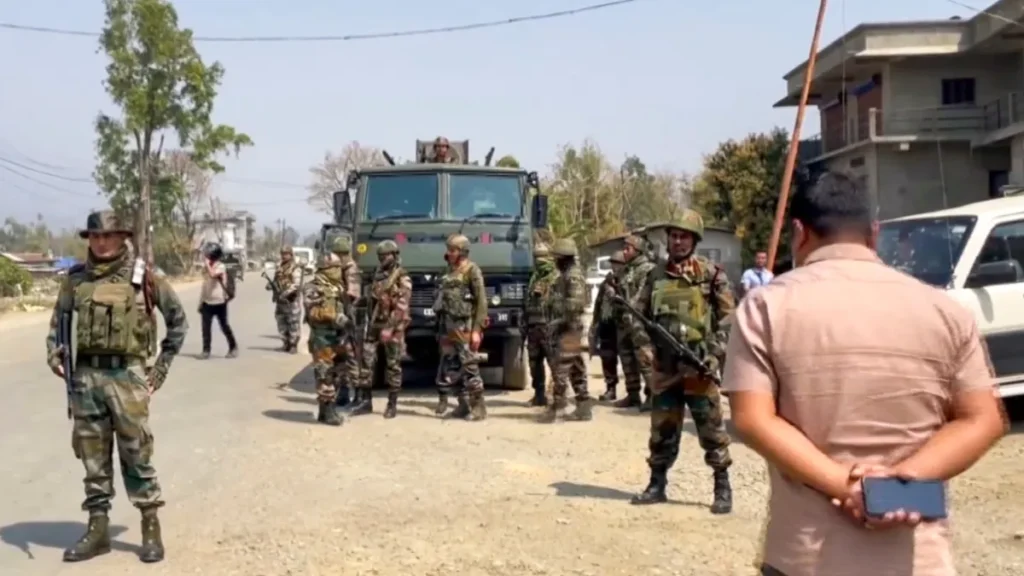
Naga Women Arrest Tensions escalated sharply around Noney Bazaar in Manipur after security forces detained five Naga women amid an ongoing economic blockade along NH-37. The arrests triggered strong opposition from the Joint Tribes Council-Manipur (JTCM), which announced a total shutdown of vehicular movement along the Imphal-Jiribam highway.
However, the situation began to ease after the five women were released on September 12. Following their release, JTCM withdrew the NH-37 shutdown and its suspension of Central government projects in areas under its jurisdiction.
PM Modi Turns 76: Himanta Credits Him for Assam’s Growth and Development
Naga Women Arrest Tensions Escalate at Noney
The Naga Women Arrest Tensions developed against the backdrop of an economic blockade announced by the United Naga Council (UNC) from September 9. The blockade sought justice over the deaths of six Liangmai Naga men whose bodies were reportedly recovered on June 10 after their alleged abduction from Leilon Vaiphei village on May 13.
During the blockade, movement along NH-37 became increasingly difficult. The highway remains an important transportation corridor connecting Imphal with Jiribam and western Manipur. Consequently, any prolonged disruption can affect the movement of goods and essential supplies.
On September 10, a convoy of around 150 trucks and fuel tankers travelling from Jiribam towards Imphal reportedly came under stone-pelting near Noney. Reports said several vehicles suffered damage and five drivers were injured. One injured driver was later reported to have been shifted to an intensive care unit for treatment.
Authorities subsequently increased security along vulnerable stretches of the highway. Rapid Action Force personnel and CRPF CoBRA units were deployed at strategic locations in Noney district as officials sought to prevent further disruption and maintain highway security.
Five Women Detained Following Highway Incident
The five women were detained on September 11 by a combined team involving CRPF CoBRA, Rapid Action Force and Manipur Police, according to reports. The women were identified in reports as Rose Kamei, Stella Thaimei, Khamsinliu Phaomei, Kumtharla and Ellen Kamei.
The circumstances surrounding the detentions became the immediate focus of the dispute. Reports citing security and police accounts connected the arrests to the previous day’s disruption involving vehicles travelling along NH-37. However, JTCM rejected that characterization and maintained that the women were participating peacefully in the broader movement.
The council described the arrests as unjust and demanded the women’s immediate and unconditional release. It also argued that authorities should address the underlying grievances that had led to the economic blockade rather than intensifying tensions with protesters.
Because accounts of the incident differed, the circumstances surrounding the women’s detention required careful attribution. Claims made by community organisations did not independently establish what each individual woman had done, while allegations concerning involvement in the highway incident also remained subject to legal proceedings.
Meanwhile, the arrests quickly transformed an already tense highway situation into a broader confrontation between tribal organisations and the authorities.
JTCM Announces Total NH-37 Shutdown
Following the arrests, JTCM announced an immediate total shutdown along NH-37. The organisation ordered vehicles and goods to stop moving on the Imphal-Jiribam corridor. It also called for a suspension of Central government-sponsored projects in areas linked to the Zeme, Liangmai, Rongmei and Inpui communities.
The council linked its action to what it described as continuing injustice against Naga communities. It particularly referred to the unresolved case involving six Naga men. The council also said the arrest of five women had increased community concerns.
The announcement created another challenge for authorities. NH-37 serves as a major supply route. Furthermore, the highway already faced pressure from the UNC economic blockade. The additional shutdown could further restrict commercial and passenger movement.
JTCM also appealed to members of the four communities to maintain unity, calm and discipline. Nevertheless, the shutdown added another layer to a complicated situation. The situation involved competing protests, security deployments and concerns over essential supplies.
The developments also affected transport operators. On September 10, a stone-pelting incident occurred along the route. Following the incident, petroleum product drivers reportedly announced a “hands-off steering wheel” protest. They also sought stronger security while travelling through vulnerable areas.
Therefore, the dispute extended beyond the detention of five women. It began affecting highway operations, transport workers, security planning and essential commodity movement.
Release of Women Brings Immediate De-escalation
The situation changed on September 12 when authorities released the five women. JTCM then withdrew its indefinite shutdown along NH-37. It also withdrew its call to halt Central government projects. The decision removed the immediate trigger for the council’s protest action.
The withdrawal marked a significant de-escalation around Noney. Moreover, it showed the direct connection between the women’s detention and the highway shutdown.
However, the release did not resolve the wider issues behind the confrontation. The UNC economic blockade remained a separate development. It relates to demands for justice for the six Liangmai Naga men.
Therefore, traffic normalisation depends on several factors. These include the release of the women, the security situation and the wider dispute along NH-37.
Authorities also continue to focus on safe movement for transport operators. The reported attack on a goods convoy highlighted risks for drivers. Many drivers travel through areas affected by protests and blockades.
Furthermore, competing accounts of the Noney incident make a transparent investigation important. Appropriate legal procedures can help establish individual responsibility. They can also separate specific allegations from wider community grievances.
For residents and transport operators, predictable movement remains an immediate priority. NH-37 connects the Imphal Valley with Jiribam. It also serves as an important route for goods entering Manipur. Consequently, prolonged disruption could affect markets and essential supplies.
Wider Implications for Manipur’s Highway Security
The Naga Women Arrest Tensions also highlight wider challenges for highway security in Manipur.
Authorities face repeated disruptions on major transport corridors. The continuing conflict has contributed to these challenges. Security forces must protect essential supply routes while managing demonstrations and competing community demands.
The latest Noney episode shows how quickly a highway dispute can expand. An economic blockade came first. A goods convoy incident followed. Authorities then detained five women. JTCM responded with a community-led shutdown. The women’s release later ended that shutdown.
Moreover, the episode shows the importance of dialogue alongside security measures. Enforcement can address immediate public safety concerns. At the same time, sustained communication can reduce misunderstandings and limit further escalation.
Transport workers also play an important role. Drivers carry fuel, food and other essential commodities through vulnerable areas. They need adequate security when protests or blockades affect highways.
Any reluctance among drivers to use vulnerable routes can disrupt supplies. This can happen even when authorities keep the highway formally open.
Therefore, normal traffic will depend on conditions on the ground. It will also depend on the positions of organisations involved in the blockades. Security arrangements for transport operators will remain another key factor.
The release of the five women reduced one immediate source of tension. Nevertheless, wider grievances remain. The deaths of six Naga men and disagreements over highway blockades continue to shape the situation.
Conclusion
The Naga Women Arrest Tensions around Noney grew from a highway security incident into a wider confrontation. Tribal organisations, transport operators and security forces became involved in the developments.
The detention of five Naga women prompted JTCM to impose a total shutdown along NH-37. The council also sought to suspend Central government projects in areas under its jurisdiction.
However, authorities released the five women on September 12. JTCM then withdrew its highway shutdown and project-related restrictions.
The immediate situation has therefore eased. However, wider issues remain unresolved. The economic blockade concerns the deaths of six Liangmai Naga men. Highway safety concerns also remain.
Competing accounts of the Noney incident further require careful examination. Administrative and legal processes will remain important as authorities work to prevent further disruption.
FAQs
What caused the Naga Women Arrest Tensions in Noney?
The Naga Women Arrest Tensions followed the detention of five Naga women at Noney amid an economic blockade and a separate incident involving stone-pelting at vehicles travelling along NH-37.
Who announced the shutdown of NH-37?
The Joint Tribes Council-Manipur announced the shutdown following the detention of the five women. It initially called for a halt to vehicle and goods movement along NH-37.
Were the five Naga women released?
Yes. The five women were released on September 12, after which JTCM withdrew its NH-37 shutdown and its suspension of Central government projects.
Why is NH-37 important?
NH-37 is an important road corridor connecting Imphal and Jiribam. It supports the movement of passengers, commercial vehicles and essential commodities between different parts of Manipur.
Is the wider dispute resolved?
Not completely. The release of the women ended the immediate JTCM shutdown, but the separate UNC economic blockade and wider demands for justice concerning six Liangmai Naga men remain important issues.