


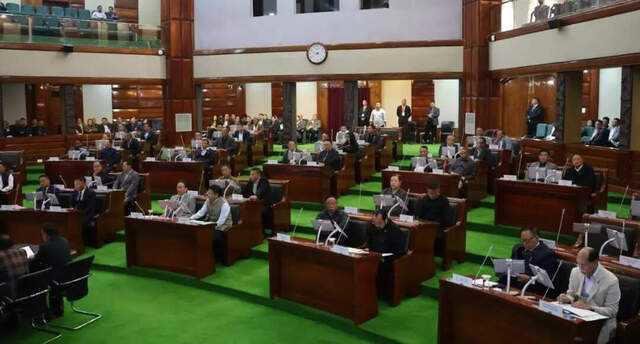
The Nagaland budget 2026-27 deficit has drawn attention after Chief Minister Neiphiu Rio presented a financial plan projecting a deficit of Rs 337.04 crore. The budget reflects a careful balance between development priorities and fiscal responsibility, as the state continues to navigate economic challenges.
Presented in the state assembly, the budget outlines key allocations for infrastructure, social welfare, and administrative expenses. At the same time, it acknowledges financial constraints, which have led to the projected deficit.
Importantly, the government has emphasized that the deficit remains manageable. It has also highlighted efforts to boost revenue and control expenditure. As a result, the budget aims to sustain growth while maintaining financial discipline.
Read More: Meghalaya NPP Expands Assam Poll Strategy
Focus on development and infrastructure
A major highlight of the Nagaland budget 2026-27 deficit plan is its focus on development. The government has allocated significant funds for infrastructure projects. These include roads, connectivity, and urban development initiatives.
Improving connectivity remains a priority for the state. Therefore, investments in road networks and transport systems have received increased attention. Such projects are expected to enhance economic activity and create employment opportunities.
Additionally, the budget emphasizes rural development. Many areas in Nagaland still require improved infrastructure and basic services. By addressing these gaps, the government aims to promote inclusive growth.
Strengthening social sector spending
The Nagaland budget 2026-27 deficit also highlights the importance of social sector investments. The government has allocated funds for healthcare, education, and welfare programs. These sectors play a crucial role in improving the quality of life for citizens.
Healthcare infrastructure has received a boost, with provisions for upgrading hospitals and medical facilities. At the same time, the education sector will benefit from increased funding for schools and higher education institutions.
Moreover, welfare schemes targeting vulnerable groups continue to be a priority. The government has ensured that social support programs remain adequately funded despite fiscal constraints.
Revenue generation and fiscal strategy
While presenting the Nagaland budget 2026-27 deficit, Neiphiu Rio stressed the need to enhance revenue generation. The state is exploring multiple avenues to increase its income. These include improving tax collection and promoting economic activities.
At the same time, the government is focusing on expenditure management. It aims to reduce unnecessary spending and improve efficiency in public finance. This dual approach is expected to help manage the deficit effectively.
Furthermore, the budget outlines measures to attract investments. By creating a favorable business environment, the state hopes to boost economic growth. Increased investment can also contribute to higher revenue in the long run.
Addressing the deficit challenge
The projected deficit of Rs 337.04 crore reflects ongoing financial challenges. However, the government has assured that the situation remains under control. It has adopted a cautious approach to borrowing and spending.
Importantly, the deficit is not uncommon for states with limited revenue sources. Nagaland, like many Northeast states, relies significantly on central assistance. Therefore, managing finances requires careful planning.
The government has also highlighted efforts to improve financial transparency. By ensuring accountability, it aims to build public confidence in its fiscal policies.
Political and economic context
The Nagaland budget 2026-27 deficit comes at a time when states across India are facing economic pressures. Rising costs and limited revenue streams have made fiscal management more challenging.
In this context, the budget reflects a pragmatic approach. It balances the need for development with the realities of financial constraints. Political observers note that such budgets are crucial for maintaining stability.
At the same time, the government’s focus on long-term growth remains evident. By investing in infrastructure and social sectors, it aims to create a strong foundation for the future.
Road ahead for Nagaland’s economy
Looking ahead, the success of the Nagaland budget 2026-27 deficit plan will depend on effective implementation. The government will need to ensure that allocated funds are used efficiently.
Moreover, revenue generation efforts must yield results. Without increased income, managing the deficit could become more challenging. Therefore, economic growth remains a key priority.
The state also needs to strengthen its institutional capacity. Improved governance and better financial management can enhance outcomes.
In addition, collaboration with the central government will play an important role. Continued support can help the state achieve its development goals.
A balanced approach to growth and discipline
The Nagaland budget 2026-27 deficit highlights a balanced approach to governance. While the projected deficit of Rs 337.04 crore poses challenges, it also reflects the realities of public finance.
Under the leadership of Neiphiu Rio, the government has focused on maintaining stability. It has prioritized development while ensuring fiscal discipline.
In conclusion, the budget represents a strategic effort to navigate economic challenges. By combining prudent financial management with targeted investments, Nagaland aims to sustain growth and improve the well-being of its citizens.
Read More: Mamata Banerjee Promises Free Legal Aid for Rejected Voters