


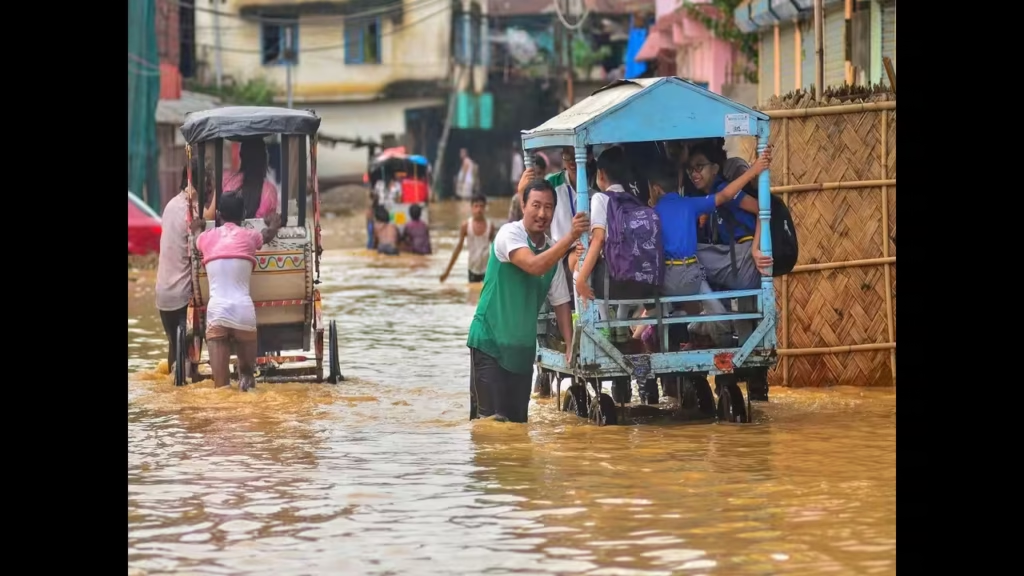
The Nagaland flood damage review has gained attention as Chief Minister Neiphiu Rio discussed the impact of the monsoon with a Central Inter-Ministerial Team visiting the state. The assessment focused on damage caused by heavy rainfall, flooding and landslides across affected areas.
The Central team’s visit is important because detailed ground assessments can help determine the scale of damage and guide decisions on additional assistance. Meanwhile, the state government continues to coordinate relief operations and restore essential infrastructure affected by the monsoon.
Ram Prasad Paul Meets Amit Shah for Tripura Development
Chief Minister Discusses Monsoon Damage
Chief Minister Neiphiu Rio held discussions with the Central Inter-Ministerial Team regarding the damage caused by the monsoon across Nagaland.
The meeting allowed the state government to present details of damage to roads, bridges, public infrastructure, agriculture and other essential facilities.
Rio also emphasized the difficulties faced by communities in affected areas. Heavy rainfall can quickly disrupt transportation and communication in Nagaland because of the state’s mountainous terrain.
Consequently, timely assessment and financial support remain important for recovery efforts.
Central Team Assesses Ground Situation
The Central Inter-Ministerial Team’s assessment is intended to provide the Union government with a clearer picture of the damage.
Such teams typically visit affected areas, inspect damaged infrastructure and interact with state officials before preparing reports on the extent of losses.
The findings can subsequently support decisions regarding additional relief and rehabilitation assistance.
For Nagaland, the assessment could therefore play an important role in securing further support for communities and infrastructure affected by the monsoon.
Roads and Bridges Face Major Risks
Roads and bridges remain among the most vulnerable infrastructure during intense monsoon conditions.
Nagaland’s hilly landscape makes transportation networks particularly susceptible to landslides, erosion and flooding. When important roads become blocked, communities can face difficulties accessing markets, hospitals, schools and other essential services.
Bridge damage can create additional challenges because alternative routes are often limited.
Therefore, restoring damaged transportation infrastructure remains a major priority during the recovery process.
Agriculture Also Faces Losses
The monsoon can also affect farmers across Nagaland.
Heavy rainfall and flooding can damage standing crops, farmland and agricultural infrastructure. For rural households that depend heavily on agriculture, such losses can directly affect income and food security.
A comprehensive Nagaland flood damage review therefore needs to consider both infrastructure and livelihood losses.
Financial assistance for affected farmers can help communities recover while reducing the economic impact of crop damage.
Need for Timely Relief
Flood-affected families often require immediate assistance with food, shelter, healthcare and other essential needs.
The state administration has responsibility for coordinating immediate relief operations, while additional central assistance can support larger rehabilitation requirements.
The Central team’s assessment could help identify areas where existing resources are insufficient.
Furthermore, accurate damage estimates can make future reconstruction planning more effective.
Landslides Add to Monsoon Challenges
Nagaland’s mountainous geography increases the risk of landslides during periods of prolonged rainfall.
Landslides can damage roads, isolate villages and threaten homes located near vulnerable slopes. In some cases, debris can also block drainage channels and worsen flooding.
Consequently, monsoon preparedness requires both emergency response and long-term measures to improve slope stability and drainage.
The current assessment could help authorities identify infrastructure that requires stronger protection against future rainfall events.
Focus on Rehabilitation
Beyond immediate relief, rehabilitation will remain a major concern.
Damaged roads, bridges, public buildings and agricultural infrastructure require significant resources to restore. Some locations may also need long-term reconstruction rather than temporary repairs.
The Central government’s assessment can help determine the scale of support required for these projects.
Meanwhile, Nagaland authorities will need to prioritize the most critical infrastructure so that essential services can resume quickly.
Coordination Between Centre and State
The Nagaland flood damage review highlights the importance of coordination between the state and Union governments during natural disasters.
The state government has direct knowledge of local conditions, while central agencies can provide technical and financial support.
Regular communication between both levels of government can improve the speed and effectiveness of relief operations.
It can also help prevent delays in reconstruction once the assessment process is complete.
Preparedness for Future Monsoons
The latest damage assessment could also inform Nagaland’s future disaster-management planning.
Authorities can use information about vulnerable roads, bridges, drainage systems and settlements to strengthen preparedness before subsequent monsoon seasons.
Early-warning systems, improved drainage and better slope management could reduce the impact of heavy rainfall.
Moreover, stronger coordination among district administrations, disaster-response agencies and local communities can improve emergency response times.
Importance for Affected Communities
For residents in affected areas, central assessment offers hope for faster recovery.
Families whose homes or livelihoods have suffered damage need clear information about relief eligibility and rehabilitation plans.
At the same time, restoring roads and communication links can help local economies recover.
Small businesses, farmers and transport operators can face significant losses when connectivity remains disrupted for extended periods.
Therefore, recovery efforts need to address both immediate humanitarian needs and longer-term economic disruption.
Conclusion
The Nagaland flood damage review involving Chief Minister Neiphiu Rio and a Central Inter-Ministerial Team highlights the state’s ongoing efforts to assess and respond to monsoon-related losses.
The assessment covers the broader impact of flooding, landslides and heavy rainfall on infrastructure, agriculture and communities. Furthermore, the findings could help determine the additional assistance required for relief and rehabilitation.
As Nagaland continues to experience monsoon challenges, coordinated action between the state and Centre will remain essential. Faster infrastructure restoration, livelihood support and stronger disaster preparedness can help affected communities recover and improve resilience against future extreme weather.
FAQs
1. What did the Nagaland Chief Minister discuss with the Central team?
Chief Minister Neiphiu Rio discussed monsoon-related damage and the state’s relief and rehabilitation requirements.
2. Why did the Central Inter-Ministerial Team visit Nagaland?
The team visited to assess damage caused by flooding, heavy rainfall and related monsoon impacts.
3. Which infrastructure can be affected by heavy monsoon rainfall?
Roads, bridges, drainage systems, public buildings and communication infrastructure can suffer damage.
4. How can farmers be affected by flooding?
Flooding can damage crops, farmland and agricultural infrastructure, affecting rural household incomes.
5. Why is central assistance important?
Central support can provide additional financial and technical resources for large-scale relief, rehabilitation and reconstruction.
6. How can Nagaland improve future monsoon preparedness?
Improved drainage, early-warning systems, slope management and stronger disaster-response coordination can help reduce future risks.