


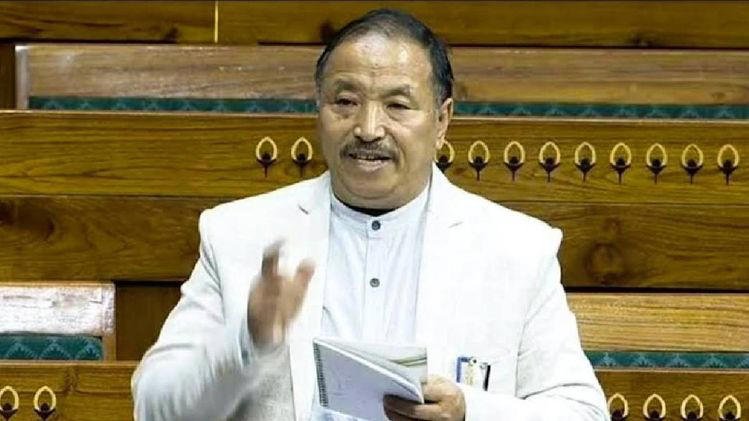
The Nagaland Congress has intensified its criticism of the Central government over the women’s reservation issue, alleging that the matter is being politicised rather than addressed with sincerity. The party leaders have argued that despite repeated promises and public statements, there has been little concrete progress toward ensuring meaningful representation of women in legislative bodies.
The Nagaland Congress women’s reservation issue has now become a focal point of political debate in the state. According to party representatives, the delay in implementing the reservation reflects a lack of political will. They claim that the Centre is using the issue as a strategic tool to gain electoral advantage rather than empowering women in a genuine manner.
Read More: Assam Dy Speaker Targets Mamata Banerjee Over 2017 Durga Row
Party leaders have further emphasized that the women of Nagaland have long been demanding adequate representation. However, successive developments have failed to translate these demands into policy action. As a result, frustration continues to grow among civil society groups and women’s organisations across the state.
Allegations of political intent and delayed implementation
The Congress leadership in Nagaland has directly accused the Centre of deliberately delaying the implementation of the women’s reservation framework. They argue that announcements are often made ahead of elections, but tangible steps are missing once political objectives are achieved.
Moreover, the party has pointed out that while the Women’s Reservation Bill was passed with much fanfare, its actual rollout remains uncertain. They believe that the lack of clarity around timelines raises serious questions about the government’s intent.
In addition, Congress leaders have noted that northeastern states like Nagaland face unique socio-political challenges. Therefore, they argue that a tailored approach is necessary to ensure that women’s reservation policies are effective and inclusive. Without such considerations, they warn that the policy risks becoming symbolic rather than transformative.
The party has also criticized what it calls selective engagement by the Centre. According to them, consultations with local stakeholders have been limited. Consequently, this has led to a disconnect between policy formulation and ground realities.
Demand for immediate action and clarity
The Nagaland Congress has called for immediate steps to implement women’s reservation in a transparent and time-bound manner. They have urged the Centre to provide a clear roadmap, including timelines and mechanisms for execution.
Furthermore, the party has stressed the need for inclusive dialogue involving state governments, tribal bodies, and women’s groups. They believe that such collaboration is essential to ensure that the policy is both effective and culturally sensitive.
At the same time, Congress leaders have reiterated their commitment to women’s empowerment. They have pledged to continue raising the issue at various platforms until concrete action is taken.
The party has also warned that continued delays could undermine public trust. According to them, if the Centre fails to act decisively, it may lead to increased political mobilisation around the issue in the coming months.
Broader implications for Nagaland politics
The Nagaland Congress women’s reservation issue is not just a policy debate but also a significant political development. Analysts suggest that the issue could influence voter sentiment, especially among women and younger demographics.
Additionally, the controversy has sparked discussions about the role of regional parties and civil society in shaping policy outcomes. Many observers believe that sustained pressure from these groups could compel the Centre to act more decisively.
Meanwhile, women’s organisations in Nagaland have welcomed the renewed focus on the issue. However, they have also expressed caution, stating that political statements must be followed by action. They continue to advocate for greater representation in decision-making bodies at all levels.
The issue has also highlighted the broader challenges of implementing national policies in diverse regions like the Northeast. Experts argue that without local adaptation, even well-intentioned policies may fail to achieve their objectives.
Growing calls for accountability
As the debate intensifies, calls for accountability are growing louder. The Nagaland Congress has demanded that the Centre explain the reasons behind the delay and outline specific steps being taken to address the issue.
They have also urged other political parties to take a clear stand. According to them, women’s representation should not become a partisan issue but rather a shared commitment across the political spectrum.
In response, some leaders from other parties have defended the Centre, stating that the implementation process involves complex considerations such as delimitation and constitutional procedures. However, the Congress remains unconvinced and continues to push for faster action.
Civil society groups have also joined the conversation, organizing discussions and awareness campaigns. These efforts aim to keep the issue in public focus and ensure that it does not lose momentum.
Conclusion
The Nagaland Congress women’s reservation issue has emerged as a key political flashpoint, reflecting deeper concerns about governance, representation, and policy implementation. While the Centre maintains that the process is underway, the opposition remains critical of what it perceives as delays and political maneuvering.
As the debate continues, the focus is likely to remain on whether the government can translate its commitments into action. For the women of Nagaland, the issue goes beyond politics—it represents a long-standing demand for equality and participation in decision-making.
Ultimately, the coming months will be crucial in determining the direction of this issue. Whether through political pressure or policy reform, the demand for women’s reservation in Nagaland is unlikely to fade anytime soon.
Read More: Tripura CM Says BJP Will Fulfil Bengal Aspirations