


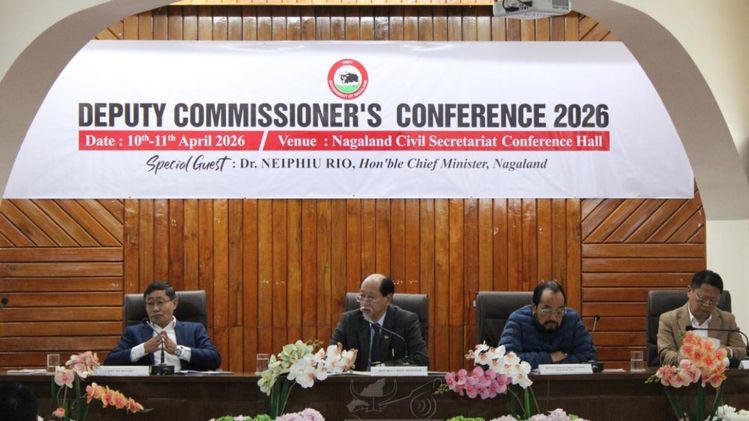
The Nagaland DCs conference 2026 commenced in Kohima with a strong focus on governance, census preparedness, and development reforms. Senior administrative officials from across the state gathered to deliberate on key policy issues and strategies aimed at improving administrative efficiency.
The event, held in Kohima, brings together Deputy Commissioners (DCs) who play a crucial role in district-level governance. The focus keyphrase Nagaland DCs conference 2026 reflects the importance of the gathering in shaping administrative priorities for the coming year.
Read More: PM Modi to inaugurate HPCL refinery in Rajasthan on April 21
Conference sets agenda for governance improvements
The conference opened with discussions on strengthening governance mechanisms across districts. Officials emphasized the need for efficient service delivery and transparency in administration. As a result, DCs were encouraged to adopt innovative approaches to address local challenges.
Participants reviewed existing policies and identified areas that require improvement. Moreover, they discussed best practices that can be implemented across districts. This exchange of ideas aims to enhance overall governance standards in Nagaland.
Senior officials highlighted the importance of coordination between departments. Effective collaboration, they noted, ensures better implementation of government schemes. Therefore, DCs were urged to foster stronger inter-departmental relationships.
In addition, the conference stressed accountability at all levels of administration. By ensuring that officials remain answerable for their actions, the government aims to build public trust. This approach forms a key part of governance reforms.
Census preparedness takes center stage
One of the major topics discussed at the conference was preparation for the upcoming census. Officials emphasized the importance of accurate data collection for effective policy planning. Therefore, DCs were instructed to ensure thorough readiness in their respective districts.
The census process involves multiple stages, including enumeration and verification. As a result, coordination among various agencies becomes essential. The conference provided a platform to address potential challenges and streamline procedures.
Officials also discussed the use of technology in census operations. Digital tools can improve accuracy and efficiency. Consequently, training programs will be conducted to equip field staff with necessary skills.
Furthermore, awareness campaigns will be launched to encourage public participation. Ensuring cooperation from residents is vital for the success of the census. Hence, DCs were advised to engage actively with local communities.
Development reforms remain a key priority
Development reforms formed another central theme of the conference. Officials reviewed ongoing projects and assessed their impact on local communities. This evaluation helps identify gaps and improve future planning.
Infrastructure development, including roads and connectivity, received special attention. Improved infrastructure is essential for economic growth. Therefore, DCs were directed to monitor project implementation closely.
In addition, the conference focused on sectors such as healthcare and education. Strengthening these areas remains crucial for overall development. Officials discussed strategies to enhance service delivery and accessibility.
The role of sustainable development was also highlighted. Balancing economic growth with environmental protection is a key challenge. As a result, DCs were encouraged to adopt eco-friendly practices in their districts.
Moreover, the conference emphasized inclusive development. Ensuring that benefits reach all sections of society remains a priority. This approach aligns with the government’s broader vision for equitable growth.
Strengthening grassroots administration
Another important aspect of the conference was the focus on grassroots administration. DCs were reminded of their role as key linkages between the government and the public. Their actions directly impact people’s daily lives.
Officials discussed ways to improve communication with local communities. Regular interaction helps identify issues and address them promptly. Therefore, DCs were encouraged to maintain open channels of communication.
The conference also highlighted the importance of capacity building. Training programs for administrative staff can enhance efficiency. As a result, the government plans to invest in skill development initiatives.
In addition, emphasis was placed on leveraging local resources. Utilizing available resources effectively can lead to better outcomes. This approach supports sustainable development at the grassroots level.
Technology integration in governance
The integration of technology into governance processes was another key topic. Officials discussed the benefits of digital platforms in improving service delivery. These tools can reduce delays and increase transparency.
E-governance initiatives were reviewed during the conference. DCs shared experiences and challenges related to their implementation. This exchange helps refine strategies and overcome obstacles.
Moreover, the use of data analytics was highlighted as a valuable tool. Accurate data can guide decision-making and policy formulation. Therefore, officials were encouraged to adopt data-driven approaches.
The conference also addressed cybersecurity concerns. Protecting sensitive information remains a priority as digital systems expand. As a result, measures are being taken to strengthen data security.
Collaborative approach to future challenges
The Nagaland DCs conference 2026 emphasized the need for a collaborative approach to address future challenges. Officials acknowledged that complex issues require coordinated efforts. Therefore, teamwork remains essential.
Participants discussed strategies to handle emergencies and unforeseen situations. Preparedness and quick response are crucial in such cases. As a result, DCs were advised to strengthen disaster management systems.
The conference also highlighted the importance of continuous learning. Keeping up with new developments and best practices can improve governance. Hence, officials were encouraged to engage in ongoing training.
Furthermore, the role of public feedback was emphasized. Listening to citizens helps identify gaps in service delivery. This feedback can guide policy adjustments and improve outcomes.
Conclusion
The Nagaland DCs conference 2026 marks a significant step towards improving governance, census preparedness, and development reforms in the state. By bringing together key administrative officials, the conference provides a platform for meaningful discussions and strategic planning.
With a focus on transparency, efficiency, and inclusivity, the initiatives discussed are expected to enhance administrative performance. As DCs implement these strategies in their districts, the impact will be visible at the grassroots level.
The conference underscores the importance of collaboration and innovation in governance. By addressing challenges proactively, Nagaland aims to achieve sustainable and inclusive development in the years ahead.
Read More: Tipra Motha Exit Certain, BJP Eyes District Council Power in Tripura