


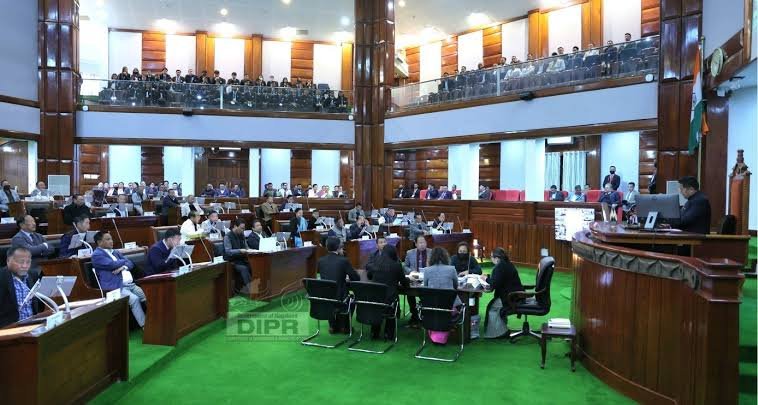
Nagaland GST Amendment Bills were introduced in the Nagaland Legislative Assembly during the ongoing session, with Chief Minister Dr. Neiphiu Rio moving the Nagaland Goods and Services Tax (Eleventh and Twelfth Amendment) Bills, 2026. The legislative move places state taxation law back on the Assembly’s agenda as lawmakers consider further amendments to the Nagaland GST framework.
Nagaland GST Amendment Bills Enter Assembly Proceedings
Chief Minister Dr. Neiphiu Rio moved the two GST amendment Bills during the Assembly session. The Eleventh and Twelfth Amendment Bills form part of the government’s legislative business before the House.
Moreover, introducing a Bill represents the beginning of the legislative process rather than its final enactment. The Assembly must consider the proposed legislation through the required procedures before an amendment can take effect.
Therefore, the introduction of the two Bills should be viewed as an important procedural step in updating Nagaland’s state-level GST legislation.
The move also reflects the continuing need to align state taxation provisions with changes in the broader GST framework. However, the precise provisions of the two Bills require examination of the official legislative text before their individual effects can be established.
Rio Moves Two Taxation Amendment Bills
Dr. Neiphiu Rio, who leads the Nagaland government, moved both the Eleventh and Twelfth Amendment Bills during the session. His role in introducing the legislation places the proposals formally before the state legislature.
Furthermore, separate amendment Bills can allow the government to address different legislative requirements within the same taxation framework. However, the available report does not provide sufficient detail to establish that the two Bills address identical or separate tax provisions.
Consequently, their specific objectives should be understood from the official Bills and the Assembly’s subsequent proceedings rather than from the titles alone.
Meanwhile, the introduction gives legislators an opportunity to examine the proposed changes and consider their implications for taxpayers, businesses and the state’s revenue administration.
The development therefore represents another stage in the evolution of Nagaland’s GST-related legal framework.
Nagaland GST Framework Continues to Evolve
The Goods and Services Tax system requires periodic legislative and administrative updates as taxation rules and national GST arrangements evolve. State governments consequently bring amendment legislation before their respective assemblies when changes require state-level legal action.
Additionally, Nagaland’s GST framework affects businesses operating within the state as well as the government’s tax administration. Any enacted amendments can therefore have implications for compliance and revenue collection.
However, the introduction of the Eleventh and Twelfth Amendment Bills does not by itself establish the final impact on taxpayers. That assessment will depend on the provisions eventually approved by the Assembly.
Therefore, businesses and other affected stakeholders will need to refer to the final legislation and official notifications once the legislative process concludes.
The Assembly’s consideration of the Bills will consequently remain important for understanding their practical effect.
Assembly Process Will Determine Final Impact
The next stage involves legislative consideration of the proposed amendments. Depending on Assembly procedure, the Bills may be discussed, examined and subjected to further consideration before the House decides whether to pass them.
Moreover, amendments can undergo changes during the legislative process. Therefore, the version introduced by the Chief Minister should not automatically be treated as the final version of the law.
If the Assembly approves the Bills, the legislation would then proceed through the remaining constitutional process before becoming enforceable.
Consequently, the final notification and any accompanying rules or administrative directions will be important for determining how the amendments affect taxation in Nagaland.
For now, the introduction of the two Bills marks the government’s latest legislative step concerning the state’s GST framework. Further Assembly proceedings will provide greater clarity on the exact provisions and their implications.
Conclusion
Nagaland GST Amendment Bills introduced by Chief Minister Dr. Neiphiu Rio mark a fresh legislative step in the state’s taxation framework. The Eleventh and Twelfth Amendment Bills, 2026, are now part of the Assembly’s legislative proceedings. However, their precise impact will depend on the detailed provisions, Assembly consideration and the final legal process
FAQs
1. Which GST Bills did Neiphiu Rio introduce?
Chief Minister Dr. Neiphiu Rio moved the Nagaland Goods and Services Tax (Eleventh and Twelfth Amendment) Bills, 2026.
2. What do the Bills seek to change?
The available report confirms their introduction but does not provide enough detail to accurately describe the specific provisions of each Bill.
3. Does introducing a Bill mean it has become law?
No. Introduction is an initial legislative step. The Bill must go through the required Assembly process before it can become law.
4. Why are GST amendments important for Nagaland?
GST amendments can affect the state’s taxation framework, revenue administration and compliance requirements for businesses and other taxpayers.
5. When will the impact of the Nagaland GST Amendment Bills become clear?
Their precise impact will become clearer after the Assembly considers the Bills and the final legislation and related notifications are issued.