


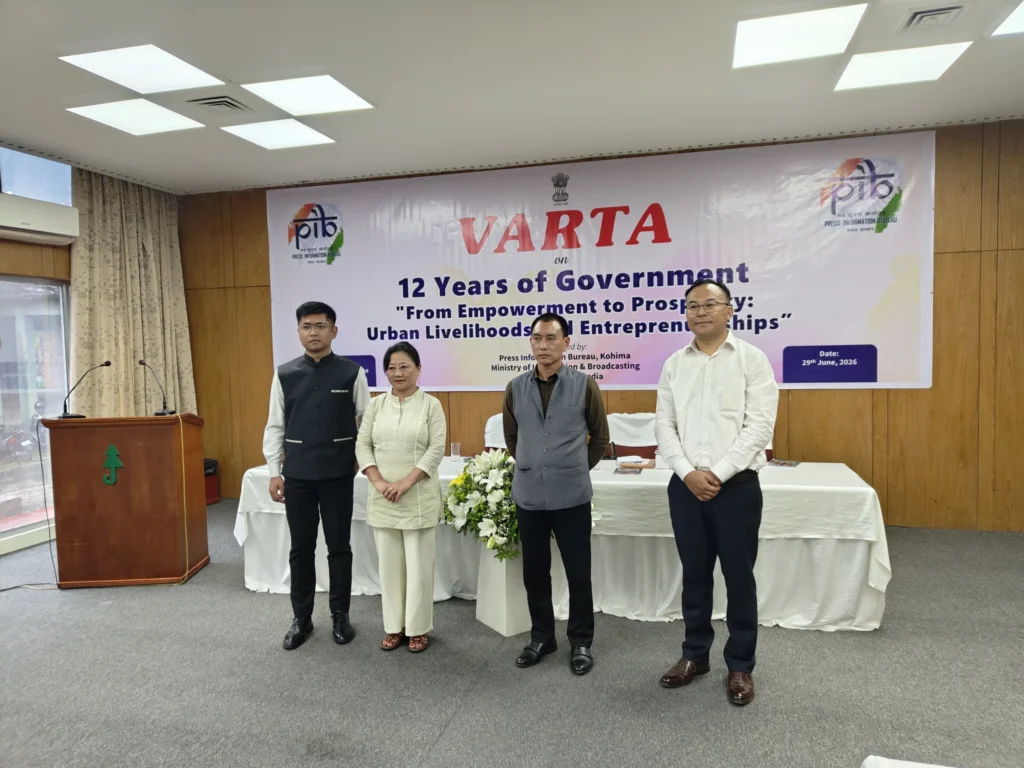
The DAY-NULM Kohima pilot has been officially launched by the Nagaland government to strengthen urban livelihoods and support vulnerable workers. Flagged off in Kohima, the pilot project under the Deendayal Antyodaya Yojana–National Urban Livelihoods Mission (DAY-NULM) aims to improve social protection, skill development, and livelihood opportunities for economically disadvantaged urban communities, including vulnerable manual workers.
Nagaland Expands PM SVANidhi Support for Street Vendors
Amit Shah Reiterates Target of Phasing Out AFSPA from Most of Northeast by 2027
Strengthening Institutional Coordination
Under the DAY-NULM Kohima pilot project, government departments, urban local bodies, and community organisations coordinate more closely to improve service delivery. As a result, implementation becomes smoother and outreach to vulnerable groups increases.
In addition, officials emphasise inclusive development strategies that address the needs of economically weaker and marginalised urban populations. Therefore, the project improves administrative efficiency and strengthens service accessibility.
Focus on Vulnerable Urban Workers
The DAY-NULM Kohima pilot project prioritises vulnerable manual workers and low-income urban households. Specifically, the programme expands access to skill development, financial inclusion, and sustainable employment opportunities.
Moreover, the initiative actively encourages community participation. Self-help groups, livelihood collectives, and local support networks strengthen so that income stability and social security improve over time.
Consequently, the programme directly supports urban poverty reduction goals.
Urban Livelihood Mission Implementation
The DAY-NULM Kohima pilot project forms part of the Deendayal Antyodaya Yojana–National Urban Livelihoods Mission (DAY-NULM). This flagship programme reduces urban poverty through structured skill training, self-employment support, and institutional capacity-building.
Furthermore, officials use the pilot to evaluate implementation methods before scaling interventions to other urban centres. They also monitor progress closely so they can identify and replicate effective practices.
As a result, the project serves as a model-testing framework for future livelihood expansion.
Conclusion
The DAY-NULM Kohima pilot project reflects Nagaland’s commitment to strengthening urban livelihoods through inclusive welfare interventions. It improves access to skills, financial services, and employment opportunities. Ultimately, the initiative promotes sustainable and equitable urban development, and its outcomes will guide future livelihood programmes across the state.
FAQs
1. What is the DAY-NULM Kohima pilot?
The DAY-NULM Kohima pilot is a Nagaland government initiative under the Deendayal Antyodaya Yojana–National Urban Livelihoods Mission to strengthen urban livelihoods and support vulnerable workers.
2. Where was the pilot launched?
The project was officially flagged off in Kohima.
3. Who will benefit from the project?
Vulnerable manual workers, economically weaker urban households, self-help groups, and other eligible beneficiaries are expected to benefit.
4. What are the programme’s objectives?
The initiative aims to promote skill development, financial inclusion, self-employment, and sustainable livelihood opportunities.
5. Why is the pilot significant?
It will help evaluate effective implementation strategies and strengthen urban poverty alleviation efforts in Nagaland.
6. Will the programme be expanded?
Authorities are expected to assess the pilot’s performance before considering expansion to other urban areas.