


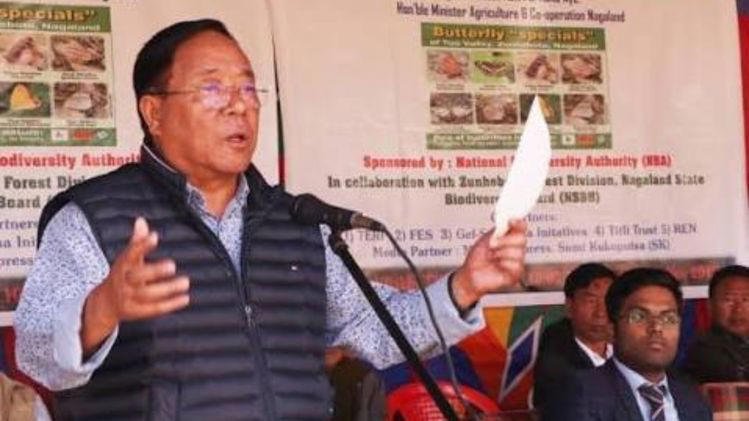
Nagaland Roads and Bridges Minister G Kaito Aye has called for greater unity and harmony among the Naga people, urging the younger generation to look beyond tribal differences and work together to address social and economic challenges.
Kaito made the appeal on September 21 while speaking at a Cultural Fiesta organised by the Angami Students’ Union (ASU) in collaboration with tribal subordinate students’ bodies at the Capital Cultural Hall in Kohima. The event brought together students and representatives from different Naga communities to celebrate their cultural traditions and promote greater understanding.
Kaito Calls for Unity Among Nagas
Speaking at the event, Kaito stressed that Nagas may belong to different tribes with distinct histories and traditions, but they share a broader Naga identity.
The minister urged young people to place greater emphasis on their common identity rather than allowing tribal differences to create divisions. He said Nagas need to recognise and support one another if they want to address challenges facing their society.
Kaito also called for the message of unity to reach different parts of Nagaland. He said cultural initiatives that bring communities together can help young people understand one another and develop stronger social connections.
Cultural Identity at the Centre of the Message
The Cultural Fiesta provided a platform for different Naga communities to showcase their traditions. Kaito described culture as an important part of identity and encouraged young people to preserve their cultural heritage.
He said cultural diversity should not become a source of separation. Instead, different traditions can help communities understand each other better while strengthening a shared Naga identity.
The minister appreciated the Angami Students’ Union for organising the event and encouraged similar programmes in other parts of the state. Cultural exchanges can provide opportunities for students from different communities to interact and learn about each other’s customs, traditions and histories.
Youth Urged to Focus on Education
Kaito also placed education at the centre of his message to young people. He encouraged students to work towards academic excellence and prepare themselves for different opportunities.
He described education as an important tool for the younger generation. The minister urged students not to become discouraged by uncertainty about employment and instead develop skills that can help them compete in different fields.
He also encouraged young people to become active contributors to society. According to Kaito, students should use their education and skills to identify problems in their communities and participate constructively in efforts to address them.
Minister Raises Social Concerns
Alongside education and cultural identity, Kaito raised concerns about social problems affecting young people in Nagaland.
He specifically cautioned students against alcoholism and drug abuse, saying these issues can affect individuals, families and communities. He urged young people to protect themselves from substance abuse and make responsible choices.
The minister also spoke about the growing use of technology. While acknowledging its usefulness, he cautioned young people against excessive use and addiction.
His message focused on encouraging students to use technology and education as tools for personal development rather than allowing them to become sources of distraction or harmful behaviour.
Kaito Links Unity With Harmony
Kaito also distinguished between simply coming together and maintaining genuine harmony. He said unity requires peace, understanding and a willingness to support one another.
According to the minister, communities need to understand each other’s difficulties and work together to address common challenges. He encouraged young people to develop relationships beyond their individual tribal communities.
He also urged students to study the living conditions and development practices of different Naga communities. Learning from one another, he said, could help communities identify useful practices and address development gaps.
Political Uncertainty Should Not Stop Development
The minister also referred to the long-standing Naga political issue. He said political developments should not prevent Nagas from focusing on their social and economic future.
Kaito observed that whatever the outcome of the political process, Naga communities would continue to live together. He therefore urged people to prepare for the future by improving living conditions and strengthening cooperation.
His remarks placed the emphasis on issues that communities can address together, including education, development, social welfare and cultural preservation.
Focus on Improving Local Communities
Kaito also spoke about the need to address development gaps within Nagaland. He urged young people to examine the condition of villages and identify areas where improvements remain necessary.
He referred to the existence of Village Development Boards and said that some villages still face shortcomings in basic infrastructure. He called for greater attention to putting local communities in order before extending development efforts beyond the state.
This approach places grassroots development alongside cultural and social unity. It also encourages young people to take an active interest in the conditions of their own communities.
Students Highlight Importance of Cultural Exchange
Other speakers at the Cultural Fiesta also stressed the importance of bringing Naga communities together.
Angami Public Organisation president Thejao Vihienuo described the event as a celebration of Naga identity and cultural diversity. He encouraged participants to use the occasion to understand different traditions and build friendships across communities.
Eastern Naga Students’ Federation president Nuheymong Yimkhiung compared the diversity of Naga tribes to the different colours found in traditional attire. He said the different traditions contribute to the richness of Naga identity and called for greater unity among communities.
Cultural Fiesta Brings Tribes Together
The Cultural Fiesta brought together student organisations representing 17 Naga tribes. Participants presented cultural performances and showcased their respective traditions.
The event’s theme, “Together in Culture – Together in Harmony,” reflected its objective of promoting cultural exchange and interaction among young people from different communities.
ASU president Diezevisie Nakhro said the programme aimed to appreciate the diverse traditions, talents and cultures of the Naga people while creating greater unity among them.
Youth Seen as Key to Naga Future
The discussions at the event placed considerable responsibility on the younger generation. Speakers encouraged students to preserve their heritage while building relationships across tribal and geographical boundaries.
Kaito’s appeal also connected cultural identity with education, social responsibility and community development. He urged young people to prepare themselves for future challenges and contribute positively to society.
For the Naga community, youth organisations and student bodies can provide important platforms for cultural exchange and dialogue. Events such as the Cultural Fiesta offer opportunities for young people to interact beyond their individual communities.
Road Ahead for Naga Unity
Kaito’s message centred on unity, harmony, cultural preservation and youth development. He urged young Nagas to recognise their shared identity while respecting the distinct traditions of different tribes.
The Cultural Fiesta provided a practical platform for that message by bringing together students from multiple Naga communities. Its focus on cultural exchange also highlighted the role of young people in preserving traditions and strengthening social relationships.
As Nagaland continues to address its social and economic challenges, the minister’s appeal places young people at the centre of efforts to build greater understanding and cooperation among Naga communities.