


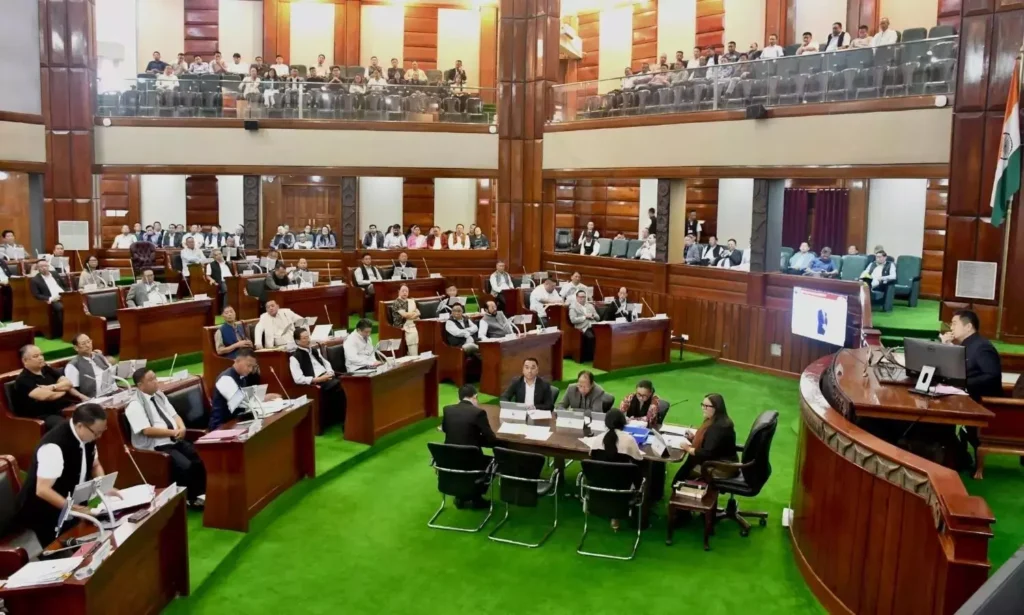
The Nagaland PAP Withdrawal Resolution has marked a significant development after the Nagaland Legislative Assembly sought the complete withdrawal of the Protected Area Permit (PAP) regime. Chief Minister Neiphiu Rio urged the Central Government to lift the restrictions, arguing that the security situation in Nagaland has improved considerably. Moreover, the state government believes that continuing the permit requirements could limit tourism, investment and wider economic opportunities. The resolution has renewed discussions about balancing security considerations with Nagaland’s development needs.
Tripura Land Rights Draft Expected Within 15 Days After New Delhi Deliberations
Nagaland PAP Withdrawal Resolution Seeks Complete Removal
The Nagaland Legislative Assembly passed a resolution calling for the complete withdrawal of the Protected Area Permit regime.
Furthermore, the resolution places the issue directly before the Central Government, which holds authority over the permit framework.
The PAP system regulates entry by certain foreign nationals into designated protected areas.
However, Nagaland’s government has argued that changing circumstances in the state justify reconsidering the continuation of these restrictions.
Chief Minister Neiphiu Rio has therefore urged the Centre to review the existing arrangement in light of the state’s improved security environment.
The Nagaland PAP Withdrawal Resolution consequently represents a formal expression of the state legislature’s position on the issue.
Nagaland PAP Withdrawal Resolution Highlights Security Improvements
Chief Minister Rio has argued that Nagaland’s security situation has improved and no longer warrants the same restrictions.
Moreover, improvements in peace and stability can create conditions for greater economic activity and increased interaction with visitors.
The state government believes that removing the PAP regime could support Nagaland’s efforts to expand tourism and attract greater economic interest.
Furthermore, easier access for international visitors could provide new opportunities for the hospitality sector and local businesses.
However, any decision to withdraw the restrictions must also consider national security and border-management concerns.
Therefore, the Central Government will need to assess the state’s request while considering the broader security environment in the region.
Nagaland PAP Withdrawal Resolution Could Boost Tourism
Tourism represents an important opportunity for Nagaland, which offers distinctive cultural traditions, festivals and natural landscapes.
Moreover, international visitors can contribute to the local economy through accommodation, transportation, food services and other tourism-related activities.
The continuation of entry restrictions can create additional administrative requirements for foreign visitors planning to travel to protected areas.
Therefore, removing the PAP regime could make Nagaland more accessible to international tourists.
Additionally, greater international visibility could help local entrepreneurs and tourism operators develop new services and partnerships.
The Nagaland PAP Withdrawal Resolution has consequently generated interest beyond security policy because the decision could also influence the state’s tourism and economic prospects.
Nagaland PAP Withdrawal Resolution Puts Centre-State Dialogue in Focus
The Assembly’s resolution now places greater emphasis on discussions between the state government and the Central Government.
Furthermore, any change to the PAP framework would require the Centre to consider the state’s arguments alongside national security requirements.
Chief Minister Rio’s appeal reflects Nagaland’s position that the current situation supports a more open approach to international visitors.
Meanwhile, authorities will need to ensure that any policy change maintains appropriate safeguards where necessary.
A balanced approach could allow Nagaland to pursue tourism and investment opportunities while addressing legitimate security concerns.
Consequently, the Nagaland PAP Withdrawal Resolution could become an important part of ongoing Centre-state discussions over the state’s development and connectivity.
Conclusion
The Nagaland PAP Withdrawal Resolution has strengthened the state’s call for the complete removal of the Protected Area Permit regime. The Nagaland Legislative Assembly passed the resolution, while Chief Minister Neiphiu Rio urged the Central Government to lift the restrictions, citing improvements in the state’s security situation. Moreover, the proposed withdrawal could support tourism and economic activity, although the Centre will ultimately assess the request alongside wider security considerations.
FAQs
1. What is the Nagaland PAP Withdrawal Resolution?
It is a resolution passed by the Nagaland Legislative Assembly seeking the complete withdrawal of the Protected Area Permit regime.
2. What has Chief Minister Neiphiu Rio requested?
CM Rio has urged the Central Government to withdraw the PAP restrictions from Nagaland.
3. Why does Nagaland want the PAP regime withdrawn?
The state government argues that the security situation has improved and that the existing restrictions are no longer necessary.
4. How could PAP withdrawal affect tourism?
Removing the restrictions could make Nagaland more accessible to international visitors and potentially support tourism-related businesses.
5. What will determine whether the PAP regime is withdrawn?
The Central Government will need to consider Nagaland’s request while assessing broader security and administrative considerations.