


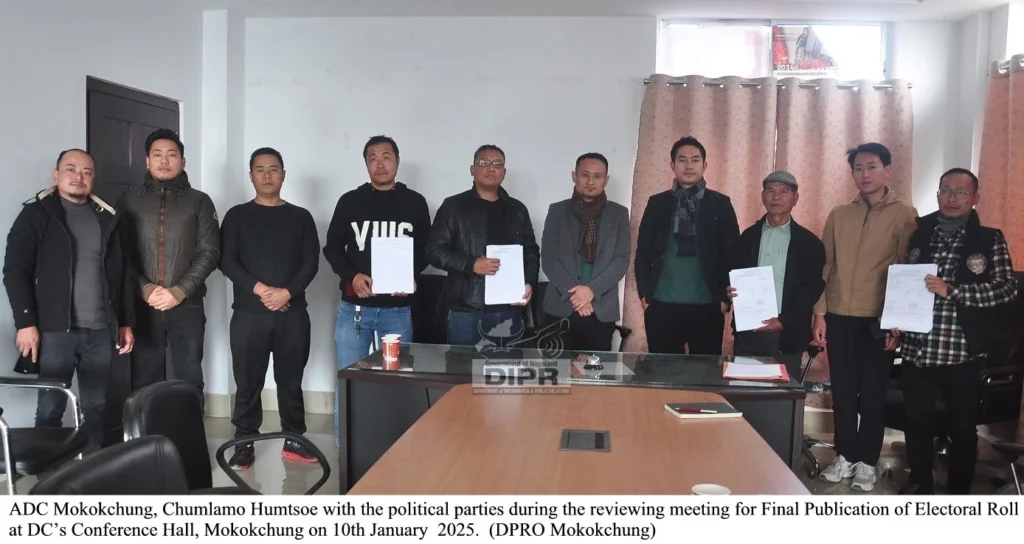
Political parties in Nagaland are calling for stronger Booth Level Agent participation to improve voter-roll transparency and strengthen scrutiny during the electoral revision process. The demand comes as parties focus on verifying voter records and ensuring that eligible electors remain on the electoral rolls.
Booth Level Agents can play an important role in helping political parties examine electoral-roll changes at the local level. Moreover, their participation can improve communication between political organisations and election officials during revision exercises.
The demand has gained significance as several northeastern states review electoral rolls through detailed verification. However, party representatives must work within the procedures established by election authorities, while officials retain responsibility for making final decisions on voter registration.
Census 2026 Delay Demands: Akoijam Focuses on National Register of Citizens
Parties Seek Greater Booth-Level Oversight
Political parties want stronger representation at the booth level during voter-roll verification.
Booth Level Agents can examine electoral rolls, identify potential discrepancies, and communicate concerns to the relevant election authorities. Furthermore, their local presence can help parties monitor changes affecting individual voters.
Such participation can add another layer of scrutiny to electoral-roll management.
However, Booth Level Agents do not have the authority to independently add or remove voters from official electoral rolls.
Why Booth Level Agents Matter
Booth Level Agents serve as a link between political parties and election administration.
They can help parties understand changes in voter lists and raise concerns through established procedures. Additionally, their presence can encourage voters to check their registration details and report errors.
This local-level monitoring can become particularly useful during intensive revision exercises.
However, agents must follow the rules governing their appointment and activities.
Voter Transparency Becomes Key Issue
The demand reflects wider concerns about transparency in electoral-roll revision.
Political parties want greater visibility into how voter records change during verification. Moreover, transparent procedures can help reduce misunderstandings about missing names, duplicate registrations, or other corrections.
Clear information can consequently strengthen public confidence in the electoral process.
However, transparency also requires authorities to protect voters’ personal information.
Verification Can Identify Discrepancies
Electoral-roll verification can uncover several types of inconsistencies.
Officials may identify duplicate registrations, incorrect addresses, deceased electors, or people who have permanently shifted residence. Furthermore, voters can request corrections when they discover inaccurate information.
Booth Level Agents can help parties identify potential issues for further examination.
However, officials must verify each case before making a final change to an electoral record.
Missing Names Remain a Concern
The absence of an eligible voter’s name can create serious problems.
Political parties can encourage voters to check their names during electoral-roll revision. Additionally, Booth Level Agents can bring potential omissions to the attention of party organisations and election officials.
Early identification can help affected voters use the appropriate correction mechanisms.
However, a missing name from a draft or provisional list does not automatically establish wrongful deletion.
Agents Can Strengthen Local Communication
Booth-level representatives can help communicate electoral information within communities.
They can inform voters about verification exercises, relevant procedures, and the importance of checking electoral records. Moreover, their local knowledge can help parties identify areas where voters may face difficulties accessing election services.
This can improve grassroots awareness.
However, official election authorities remain responsible for issuing valid instructions and deadlines.
Nagaland’s Geography Adds Challenges
Nagaland’s terrain and dispersed settlements can make voter verification demanding.
Some communities may face difficulties travelling to administrative centres or accessing digital services. Furthermore, local outreach can help ensure that voters in remote areas understand how to verify and correct their records.
Booth-level participation can therefore support voter awareness.
However, election officials must ensure that verification follows uniform legal standards throughout the state.
Political Parties Monitor Electoral Changes
The demand also reflects growing political attention on electoral-roll changes.
Parties can compare current rolls with earlier records and examine areas where voter numbers have changed substantially. Additionally, they can use their booth-level networks to encourage supporters to verify their registration status.
This monitoring can increase accountability.
However, numerical changes alone cannot prove electoral manipulation.
BJP, Congress and NPF Remain Active
Major political organisations in Nagaland have a direct interest in voter-roll accuracy.
The BJP, Congress, NPF, and other parties can use their local networks to monitor voter-list changes and assist eligible voters. Moreover, competition between parties makes independent scrutiny at the booth level particularly significant.
Their involvement can increase political attention on the revision.
However, coordination on electoral administration does not necessarily indicate an electoral alliance.
Claims and Objections Provide Safeguards
Electoral authorities generally provide formal mechanisms for voters to challenge incorrect entries.
Claims and objections allow eligible electors to request inclusion or correction. Furthermore, political parties can help voters understand these mechanisms without replacing the authority of election officials.
These safeguards are essential when electoral rolls undergo substantial changes.
However, voters should follow the official requirements and deadlines applicable to their cases.
Transparency Must Protect Privacy
Greater scrutiny of electoral rolls must also respect voter privacy.
Political representatives may need access to electoral information for legitimate monitoring purposes, but personal information should receive appropriate protection. Additionally, parties and agents should avoid publicly circulating sensitive voter details without a legitimate reason.
Transparency and privacy must therefore operate together.
However, the exact information available to Booth Level Agents depends on the applicable election rules.
Could Improve Electoral Confidence
Effective Booth Level Agent participation could strengthen confidence in the electoral-roll process.
When political parties can observe and raise concerns through established channels, voters may feel more confident that discrepancies receive attention. Moreover, constructive cooperation can reduce unnecessary disputes.
The process could consequently improve trust in electoral administration.
However, confidence ultimately depends on transparent decisions by election authorities.
Political Competition Adds Importance
Nagaland’s competitive political environment makes voter-roll accuracy particularly important.
Parties rely on accurate electoral information to plan campaigns, organise booth-level activities, and communicate with supporters. Furthermore, changes in voter numbers can affect how parties assess constituencies.
Booth-level monitoring can therefore become an important part of election preparation.
However, voter-roll management must remain focused on eligible electors rather than partisan interests.
Final Decisions Remain With Election Authorities
Political parties can monitor and raise concerns, but they do not control the electoral roll.
Election officials remain responsible for determining voter eligibility and implementing corrections under the law. Additionally, formal claims, objections, and appeals provide mechanisms for resolving disputed cases.
This division of responsibility protects the integrity of the electoral process.
However, parties can still play an important role by identifying issues and encouraging voters to participate.
Conclusion
The demand for Booth Level Agents in Nagaland reflects growing political attention on voter transparency and electoral-roll accuracy. Political parties see booth-level monitoring as a way to identify discrepancies, improve communication, and ensure that eligible voters remain represented during the revision process.
Moreover, stronger participation could improve transparency by giving parties a structured mechanism to examine electoral changes and raise concerns. At the same time, election authorities must retain control over final decisions and ensure that verification follows established legal procedures.
Overall, effective Booth Level Agent participation could strengthen public confidence in Nagaland’s electoral administration. The success of the process will depend on cooperation among political parties, election officials, and voters while maintaining both transparency and privacy.
FAQs
1. What is a Booth Level Agent?
A Booth Level Agent represents a political party at the polling-station or booth level and can monitor electoral-roll matters within the applicable rules.
2. Why are parties demanding Booth Level Agents?
Parties want greater local-level scrutiny of voter-roll verification and better mechanisms for identifying potential discrepancies.
3. Can Booth Level Agents delete voter names?
No. Final decisions regarding voter registration and electoral-roll changes remain with the competent election authorities.
4. Can agents help voters with missing names?
They can help identify potential issues and guide voters toward the appropriate official procedures, subject to election rules.
5. Why is booth-level transparency important?
Local monitoring can help identify discrepancies earlier, improve voter awareness, and strengthen confidence in the electoral-roll revision process.