


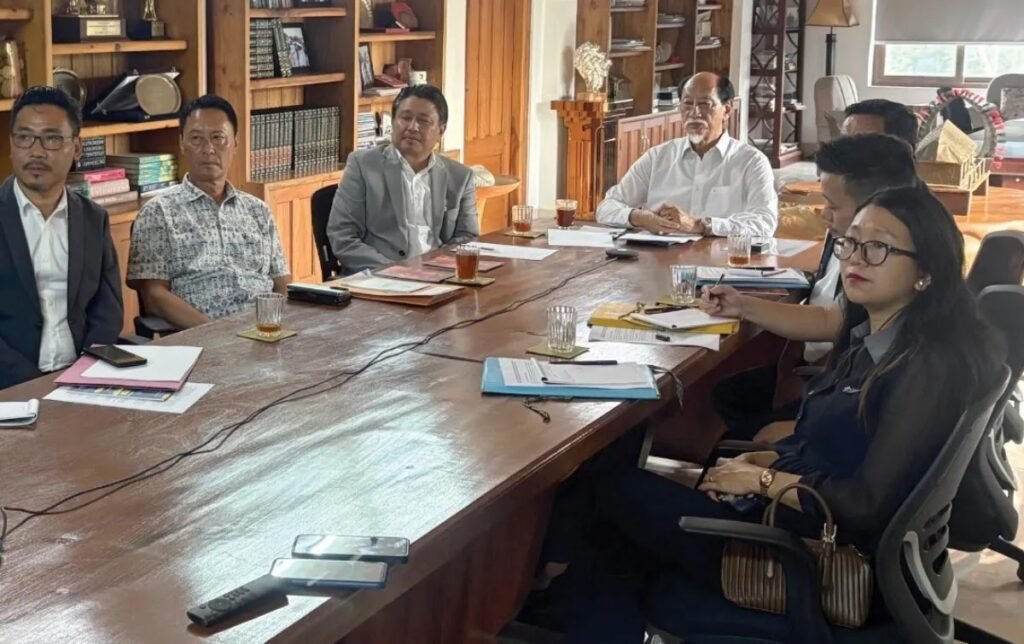
The Jal Jeevan Mission 2.0 Nagaland initiative gained momentum as the Centre signed a major development MoU with the state to significantly upgrade rural water supply infrastructure. The agreement aims to strengthen household tap water coverage, modernize water distribution systems, and improve long-term sustainability of drinking water resources across rural regions. Moreover, the pact reflects a continued push to ensure safe and reliable water access for every household.
Puspabanta Palace to Host Luxury Hotel Project Foundation Ceremony
TTAADC Election Final Voter List to Be Published on June 15
Major MoU Signed Under Jal Jeevan Mission 2.0
The Centre and Nagaland government have formally signed a development MoU under Jal Jeevan Mission 2.0 Nagaland.
Moreover, the agreement focuses on accelerating rural water supply coverage and upgrading existing infrastructure systems.
Consequently, the initiative is expected to strengthen drinking water access across remote areas.
Focus on Rural Water Infrastructure Upgrade
A key objective of the mission is to modernize rural water distribution networks.
Furthermore, this includes improving pipelines, storage systems, and last-mile connectivity to households.
Therefore, the program aims to ensure consistent and safe water supply.
Expanding Household Tap Water Coverage
The Jal Jeevan Mission 2.0 Nagaland framework prioritizes universal tap water access in rural households.
Moreover, the focus is on reaching remote and difficult terrains where water access remains a challenge.
As a result, more households are expected to gain reliable drinking water connections.
Strengthening Water Sustainability Systems
The initiative also emphasizes sustainable water management practices.
Furthermore, efforts will include source conservation, rainwater harvesting, and groundwater recharge measures.
Consequently, long-term water security is a key component of the mission.
Improving Service Delivery and Monitoring
Better monitoring systems are expected to enhance service delivery.
Moreover, digital tracking and local governance participation will help ensure accountability.
Therefore, efficiency in implementation is likely to improve significantly.
Community Participation in Water Management
Community involvement is a core element of the mission.
Furthermore, local water committees are expected to play a role in maintenance and monitoring.
As a result, decentralized management is expected to strengthen outcomes.
Boost to Rural Development
Improved water infrastructure directly contributes to rural development.
Moreover, access to clean water supports health, education, and livelihood outcomes.
Consequently, the initiative is expected to improve overall quality of life.
Alignment with National Goals
The Jal Jeevan Mission 2.0 Nagaland aligns with India’s broader goal of universal safe drinking water access.
Furthermore, it supports long-term sustainable development objectives under national policy frameworks.
Therefore, the MoU strengthens Centre–state cooperation in essential services.
Looking Ahead
The implementation phase of the mission will focus on infrastructure rollout and monitoring systems.
Moreover, periodic reviews will likely assess progress and address implementation challenges.
Consequently, the next phase will be critical for achieving coverage targets.
Conclusion
The signing of the Jal Jeevan Mission 2.0 MoU marks a significant step toward improving rural water infrastructure in Nagaland. The Jal Jeevan Mission 2.0 Nagaland initiative aims to ensure reliable, safe, and sustainable drinking water access for rural households while strengthening long-term water security.
FAQs
What is Jal Jeevan Mission 2.0 Nagaland?
It is a Centre–state initiative to improve rural drinking water infrastructure in Nagaland.
What does the MoU focus on?
Expanding tap water coverage and upgrading water supply systems.
Who signed the agreement?
The Government of India and the Nagaland state government.
How will rural areas benefit?
They will receive improved access to safe and reliable drinking water.
What is the long-term goal?
Universal and sustainable drinking water access for all rural households.