


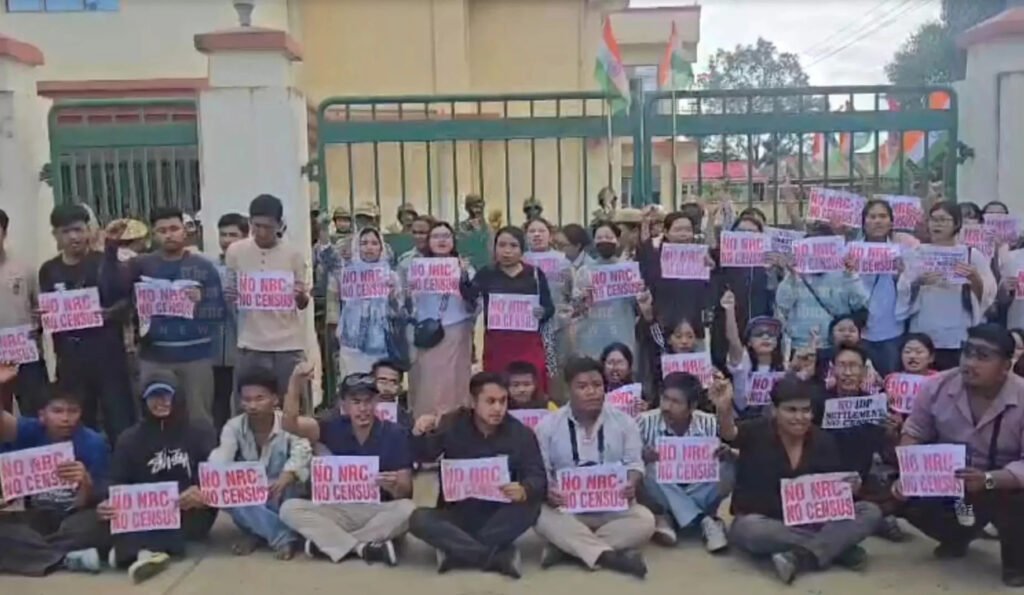
Activists and students in Imphal have reportedly blocked major roads while demanding that the government complete an update of the National Register of Citizens (NRC) before conducting the national Census. The protest has brought renewed attention to citizenship documentation, migration, and demographic concerns in Manipur.
The demonstrators are calling for the NRC exercise to precede the Census, arguing that population data should follow a comprehensive citizenship-verification process. Moreover, the road blockades have created disruptions for commuters and added pressure on authorities to address the protesters’ demands.
However, the demand remains a matter of political and civic debate. The available information does not indicate that the Central government has agreed to conduct an NRC update before the Census.
Dr. Thejo Kumari Amudala Honoured at Rashtriya Gourav Awards
Imphal Roads Blocked During Protest
The “No NRC, No Census” protest has reportedly disrupted major roads in Imphal.
Activists and students have used road blockades to draw attention to their demand. Furthermore, demonstrations that affect major transport routes can quickly attract public attention and place additional pressure on government authorities.
The disruption may also affect ordinary commuters, businesses, and public transportation.
However, the exact roads affected and the duration of the blockades have not been specified.
Protesters Demand NRC Before Census
The central demand involves conducting an NRC update before the national Census.
The protesters argue that citizenship verification should precede population enumeration. Additionally, they believe that establishing accurate citizenship records could provide a clearer basis for demographic documentation.
The demand reflects continuing concerns about migration and citizenship in the state.
However, an NRC and a Census serve different administrative purposes and operate under different legal frameworks.
Citizenship Documentation Remains Sensitive
Questions surrounding citizenship documentation have remained politically sensitive in Manipur.
The state’s international border with Myanmar and concerns surrounding cross-border movement have contributed to public debate over migration and population records. Moreover, different communities and political organisations hold varying views about how authorities should address these concerns.
Any large-scale documentation exercise would therefore require careful planning.
Census and NRC Serve Different Purposes
A Census primarily collects demographic and socioeconomic information about the population.
An NRC, by contrast, concerns the identification and documentation of citizenship under the applicable legal framework. Furthermore, conducting one process does not automatically establish or replace the other.
Understanding this distinction remains important when discussing the protesters’ demand.
Students Join the Demonstrations
Students have reportedly joined activists in blocking roads and supporting the demand.
Student participation can increase the visibility of a public movement and bring additional attention to concerns surrounding citizenship and demographic documentation. Additionally, youth organisations can play an influential role in shaping public debate in the region.
However, road blockades can also create difficulties for people who are not involved in the protest.
Traffic Disruptions Reported
Blocking major roads can affect daily movement across Imphal.
Commuters may face delays, while public transport and commercial vehicles may need to use alternative routes. Moreover, prolonged disruptions can affect businesses and people travelling for work, education, or healthcare.
Authorities therefore face pressure to balance public order with the right to peaceful expression.
Law-and-Order Challenge for Authorities
Road blockades create a practical challenge for law-enforcement agencies.
Police may need to manage traffic, maintain emergency access, and prevent confrontations while responding to the demonstration. Furthermore, authorities must consider lawful procedures when dealing with protesters.
Dialogue can help reduce tensions while allowing the underlying issues to receive attention.
Wider Political Debate Over Migration
The protest reflects broader political concerns about migration and demographic change in Manipur.
Supporters of stronger citizenship documentation argue that accurate records can help authorities understand population movements and enforce applicable laws. However, others may raise concerns about documentation gaps, humanitarian issues, and the potential impact on vulnerable communities.
These competing perspectives make the issue particularly sensitive.
Central Government Decision Remains Crucial
The protesters’ demand ultimately involves decisions at the national level.
The Census operates under the Union government’s administrative framework, while an NRC exercise would require an appropriate legal and administrative basis. Moreover, any proposed process would need clear rules concerning documentation, verification, and appeals.
No confirmed decision to conduct an NRC before the Census has been provided.
Need for Peaceful Dialogue
The road blockade demonstrates the intensity of public concern surrounding the issue.
However, sustained dialogue between government representatives, student organisations, civil society groups, and community representatives could provide a more constructive path forward. Additionally, transparent communication could help address misinformation and clarify what the government plans to do.
Such engagement could reduce the likelihood of prolonged disruption.
What Happens Next?
Authorities will need to monitor the situation in Imphal while responding to the protesters’ demands.
Further discussions could determine whether the government provides any formal response regarding an NRC update before the Census. Furthermore, authorities may need to manage traffic disruptions and ensure that emergency services continue to operate.
The situation could develop as negotiations and public demonstrations continue.
Conclusion
The “No NRC, No Census” protest in Imphal has brought activists and students onto major roads to demand that an NRC update take place before the national Census. The demonstrations reflect continuing concerns about citizenship documentation, migration, and demographic records in Manipur.
Moreover, the protests have created traffic and law-and-order challenges for authorities. At the same time, the Central government has not been confirmed to have accepted the demand for an NRC before the Census.
Overall, the Manipur NRC-Census protest highlights a sensitive debate that will require clear legal procedures, transparent communication, and sustained dialogue among authorities and affected communities.
FAQs
1. What is the “No NRC, No Census” protest?
It is a protest in Imphal where activists and students are reportedly demanding an NRC update before the government conducts the national Census.
2. Why are protesters demanding an NRC first?
They argue that citizenship verification should precede population enumeration to establish clearer demographic and citizenship records.
3. Has the government accepted the demand?
There is no confirmed information that the government has agreed to conduct an NRC update before the Census.
4. How have protesters disrupted movement?
Activists and students have reportedly blocked major roads in Imphal, affecting traffic and daily commuting.
5. Why is the issue sensitive in Manipur?
Manipur’s international border with Myanmar and continuing debates over migration, citizenship, and demographic change contribute to the sensitivity surrounding the issue.