


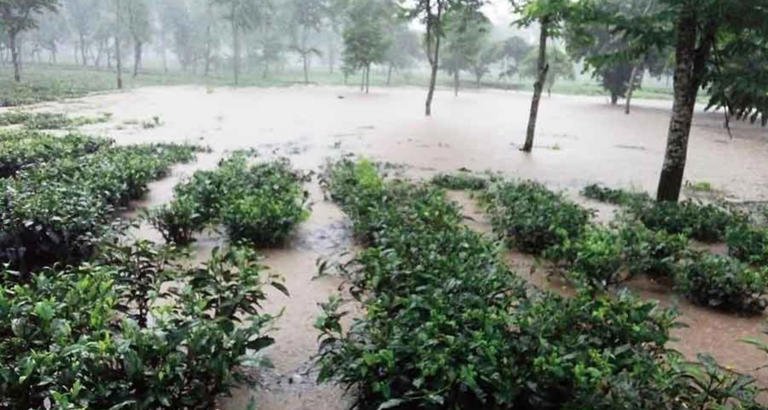
Continuous rainfall and landslides have left the North Bengal tea industry hit hard. Tea-growing regions across Dooars, Terai, and the hills are struggling as plantations, factories, and roads lie damaged. Heavy downpours have destroyed crops, eroded soil, and displaced hundreds of workers, threatening both production and employment.
Read More: Tripura : Mayor Vows Justice After Teen Critical in Alleged Assault
Widespread damage across tea gardens
In Jalpaiguri and Alipurduar, several gardens, including Chengmari, Kurti, and Moraghat, suffered extensive flooding. Water from swollen rivers and inflows from Bhutan submerged tea bushes, factory grounds, and labour lines. In many estates, internal roads collapsed, while culverts and embankments broke under pressure.
The Chengmari estate, one of Asia’s largest, lost hundreds of hectares of tea bushes. Its storehouses and hospitals were flooded, forcing families to move to higher ground. In the hills, landslides buried large patches of plantations under silt, making plucking impossible. As connectivity broke down, power lines and transport routes also suffered heavy damage.
Financial losses and reduced output
Industry estimates suggest losses exceeding Rs 100 crore. Since this is a critical plucking season, the destruction of tea bushes and shade trees will lower yields and quality. Many factories lost processed leaves and green tea stock that were ready for dispatch.
Small growers have been hit the hardest. Many rely entirely on local buyers, and damaged roads have cut off access to markets. Transportation delays are adding costs, while damaged infrastructure will take months to rebuild. As a result, experts predict a drop in overall tea production and possible price hikes in the coming months.
Impact on workers and local communities
Thousands of garden workers now face uncertain futures. Flooded housing, damaged schools, and broken bridges have left many without basic services. Several estates had to evacuate labour quarters when heavy rains flooded hospital premises.
In addition, many daily wage earners have lost their income since field work remains suspended. Without immediate assistance, families may struggle to afford essentials. The crisis has revealed how vulnerable plantation communities remain to extreme weather.
Need for urgent government support
Tea associations have appealed for swift government action. They demand financial relief, infrastructure restoration, and replanting subsidies. Associations also want the state to repair damaged roads and culverts so supplies can resume.
Industry representatives argue that without quick intervention, the North Bengal tea industry hit by rains may face a prolonged crisis. They have asked for special packages for affected gardens and compensation for workers who lost homes or income.
Preventive steps for long-term safety
Experts believe long-term solutions are equally important. They recommend stronger drainage networks, reinforced river embankments, and early warning systems in hilly zones. Regular maintenance of plantation roads and better slope management could also reduce damage from future landslides.
Environmental groups have urged authorities to preserve forest cover near tea belts. Deforestation and soil erosion have made many estates vulnerable to flooding. A balanced approach combining reforestation and modern infrastructure is crucial for lasting resilience.
Effect on markets and trade
With large estates facing shutdowns, supply chains across North Bengal have slowed. Reduced output is likely to affect both domestic markets and export orders. Buyers expect delays in shipment, while traders fear rising costs.
For regions like Darjeeling, Dooars, and Terai, tea is the economic backbone. When estates stop production, it affects not only workers but transporters, packers, and local businesses. Reduced earnings could also impact rural consumption, widening the economic gap in already fragile areas.
Rebuilding and future resilience
Restoring normalcy will require financial aid, labour, and coordination among departments. Estates must replant tea bushes, clear debris, and repair housing before resuming operations. Many owners say they cannot manage the cost without external help.
Building resilience is now a priority. Estates plan to invest in stronger infrastructure and create emergency response plans for heavy rain events. Replanting shade trees, maintaining drainage, and using soil-retaining vegetation can also help prevent future losses.
Conclusion
The North Bengal tea industry hit by relentless rains and landslides faces one of its toughest challenges in years. The losses are huge, and recovery will take time. However, with timely aid, better planning, and stronger climate resilience, this vital industry can regain stability. The coming months will show whether collective action can save North Bengal’s iconic tea heritage from climate adversity.
Read More: Tipra Motha issues ultimatum over Tiprasa Accord delay