


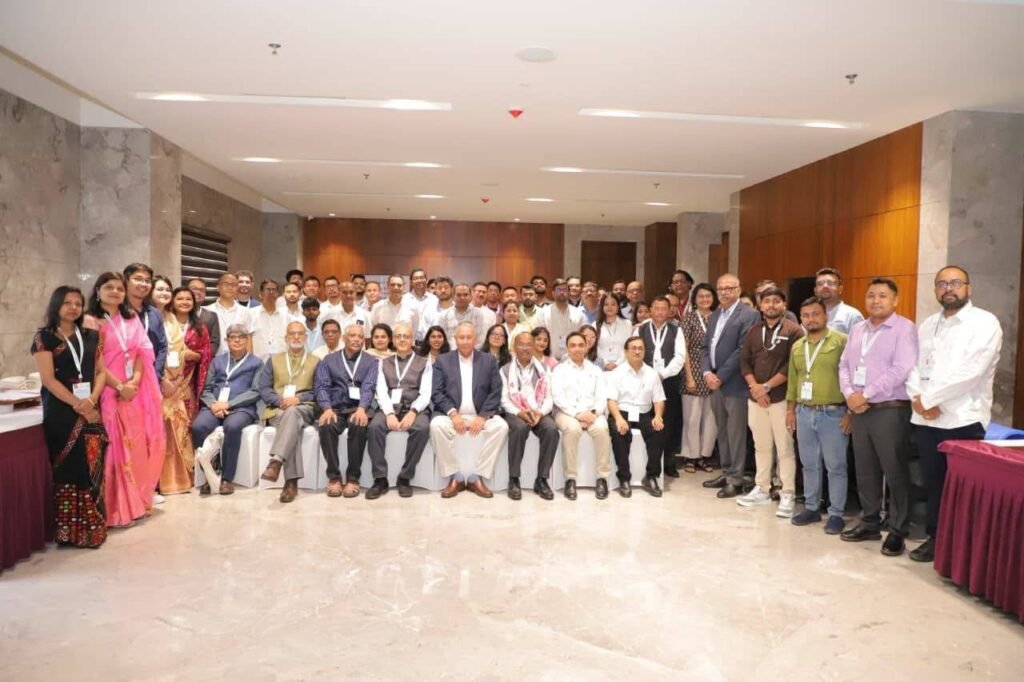
North Tripura District Magistrate and Collector Chandni Chandran, IAS, participated in a panel discussion on sustainable springshed management during the Regional Workshop on Himalayan Water Partnership. The discussion focused on the role of technology, community participation, and integrated policy frameworks in protecting and restoring spring-based water resources. Experts and administrators emphasized the need to combine scientific tools with traditional knowledge to strengthen water conservation efforts.
Furthermore, participants highlighted the importance of empowering local communities and improving institutional coordination to ensure long-term water security. The workshop also provided a platform for sharing best practices and innovative solutions for climate-resilient water management.
Read More: CPI(M) Announces Statewide Agitation in Tripura
Key Facts
- Event: Regional Workshop on Himalayan Water Partnership
- Topic: Strengthening Knowledge, Practice and Partnerships for Springshed Management
- Participant: Chandni Chandran, IAS, District Magistrate and Collector, North Tripura
- Discussion Theme: Technology, community participation, and integrated policy frameworks
- Focus Areas: Water conservation, springshed restoration, climate resilience
- Objective: Sustainable management of spring-based water resources
DM Chandni Chandran Participates in Key Water Management Discussion
North Tripura District Magistrate and Collector Chandni Chandran took part in a panel discussion during the Regional Workshop on Himalayan Water Partnership. The session brought together experts, policymakers, administrators, and stakeholders working in the field of water resource management.
During the discussion, participants examined strategies to improve springshed management through technology, community engagement, and coordinated policy initiatives.
Technology and Traditional Knowledge Must Work Together
Panelists emphasized that effective springshed management requires a combination of modern scientific tools and traditional knowledge systems.
Furthermore, experts noted that technology can help monitor water resources, assess environmental changes, and support evidence-based decision-making. At the same time, local communities possess valuable knowledge that can contribute to sustainable conservation efforts.
Communities Play a Crucial Role in Water Conservation
A major focus of the discussion was the importance of community participation in protecting water resources. Participants stressed that local residents must play an active role in planning, implementing, and monitoring conservation initiatives.
Moreover, empowering communities can improve the long-term success of water management projects and strengthen local ownership of natural resources.
Need for an Integrated Policy Framework
The panel also highlighted the importance of stronger coordination among government institutions, policymakers, local bodies, and development partners.
According to participants, an integrated policy framework can help create long-term solutions for water security. Consequently, better coordination can improve resource management and support sustainable development in Himalayan regions.
Workshop Encourages Knowledge Sharing and Innovation
The workshop provided an opportunity for experts and stakeholders to exchange experiences, discuss best practices, and explore innovative approaches to springshed conservation.
Additionally, participants examined successful models from different regions and discussed ways to scale up effective water management strategies. Such collaborative efforts can strengthen climate resilience and improve the sustainability of critical water sources.
Importance of Tripura and the Himalayan Region
Although Tripura is not part of the Himalayan belt, the state faces growing challenges related to water resource management and climate change. Therefore, participation in regional initiatives such as the Himalayan Water Partnership helps administrators learn from successful conservation models and adopt best practices for sustainable water management across Northeast India.
Questions and Answers
What event did Chandni Chandran attend?
She participated in the Regional Workshop on Himalayan Water Partnership focused on springshed management.
What was the main topic of discussion?
The panel discussed the role of technology, community participation, and integrated policy frameworks in springshed management.
Why is community participation important?
Community involvement helps ensure sustainable conservation, local ownership, and long-term success of water management projects.
What role does technology play in springshed management?
Technology helps monitor water resources, analyze environmental changes, and support informed decision-making.
What did the workshop aim to achieve?
The workshop aimed to strengthen knowledge sharing, partnerships, and practical solutions for sustainable water resource management.
Why is springshed management important?
Effective springshed management helps protect water sources, improve water security, and build climate-resilient communities.
Also Read: Universal Compassion Cup 2026 to Begin on June 21