


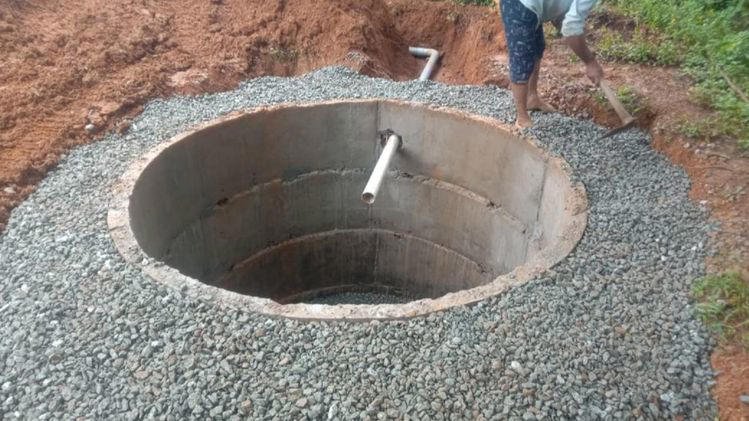
The North Tripura administration has launched the North Tripura Uttar Jal Sanchay Yatra, a large-scale mission to construct 50,000 soak pits in just two days. The campaign has brought together local residents, government officials, students, and volunteers to promote sustainable groundwater management and create awareness about water security.
Read More: 100 Flutists to Honour Zubeen Garg in Sonapur Tribute
North Tripura Uttar Jal Sanchay Yatra begins
The initiative started with great enthusiasm across all 13 blocks of North Tripura. District Magistrate Vishal Kumar flagged off the mission, urging citizens to participate actively. He said that collective efforts are crucial to tackle growing water scarcity and the adverse impacts of climate change. The campaign, launched under the Jal Shakti Abhiyan, reflects the state government’s commitment to conserving natural resources.
Officials explained that the construction of 50,000 soak pits within 48 hours aims to enhance groundwater recharge and reduce surface runoff. Each gram panchayat has received a fixed target, while government departments are supervising the progress to ensure timely execution.
Mass participation strengthens the campaign
The North Tripura Uttar Jal Sanchay Yatra has gained strong community participation. Schools, colleges, and local institutions have joined the effort by building soak pits in their premises. Students are conducting awareness rallies and poster campaigns on the importance of water conservation.
Local bodies, including panchayats and self-help groups, have organized public meetings to educate villagers about the role of soak pits in preventing water wastage. Government departments such as the Rural Development Department, Forest Department, and PHED have coordinated closely to supply materials and manpower. This united approach has turned the campaign into a people’s movement rather than just an administrative task.
Simple technology, strong impact
Officials highlighted that soak pits provide a simple yet effective solution for groundwater recharge. These pits collect rainwater runoff from rooftops, courtyards, and open fields, allowing it to percolate into the soil. As a result, they prevent both waterlogging and erosion.
The district administration has used a standard model for construction to ensure efficiency and long-term usability. Teams have been deployed across all 13 blocks to guide villagers and monitor the process. According to estimates, the completed pits will significantly increase groundwater levels and reduce the dependence on external water sources during dry months.
Addressing water scarcity in Tripura
Over the past few years, North Tripura has faced irregular rainfall patterns and a gradual decline in groundwater levels. This situation has affected agriculture and daily water needs. The North Tripura Uttar Jal Sanchay Yatra aims to address this problem directly by replenishing underground reserves.
Chief Minister Dr. Manik Saha has consistently urged citizens to adopt sustainable water practices. His government has implemented several programs under the Jal Jeevan Mission and Jal Shakti Abhiyan to secure Tripura’s water future. He stressed that conservation begins at the grassroots level and every drop of water must count.
The campaign also supports Prime Minister Narendra Modi’s call for a “Catch the Rain” movement, encouraging states to take proactive measures to conserve rainwater.
North Tripura leads the way in sustainability
The success of the North Tripura Uttar Jal Sanchay Yatra could set a benchmark for other districts in Tripura. Officials said the campaign is not just about construction but about inspiring behavioral change. Through regular awareness drives, citizens are learning the importance of protecting water sources and reducing wastage.
Volunteers, NGOs, and local youth groups are taking an active role in motivating people to participate. Social media updates, short videos, and photographs of ongoing work are being shared widely to inspire others. The administration’s focus on community involvement has ensured that the campaign reaches even the remotest areas of the district.
Two-day mission with long-term goals
The mission follows a structured two-day plan. On the first day, teams identify suitable locations, distribute materials, and guide workers on technical details. The second day focuses on rapid construction and quality checks. Supervisors from the PHED and Rural Development Department visit each site to ensure uniformity.
Officials believe that once completed, the 50,000 soak pits will recharge several million liters of groundwater every year. This will benefit both agricultural and domestic users in the long run. They also plan to maintain the structures periodically to ensure continuous effectiveness.
Creating awareness for the future
Besides construction, the North Tripura Uttar Jal Sanchay Yatra emphasizes education and awareness. Seminars and street plays are being organized to highlight the importance of conserving every drop of water. Students are learning how small efforts like fixing leaks or harvesting rainwater can create lasting environmental impact.
The administration has also planned to include water conservation topics in school activities to make the younger generation aware of their environmental responsibility. Officials believe that spreading awareness among children will have a ripple effect on their families and communities.
Beyond the campaign: what lies ahead
Once the North Tripura campaign concludes, similar programs will roll out across other Tripura districts. The state government plans to replicate the model, combining local participation with scientific planning. Future efforts may include pond rejuvenation, rainwater harvesting on rooftops, and village-level water audits to ensure efficient usage.
Officials are confident that the results from this campaign will demonstrate the effectiveness of community-led conservation. With strong coordination, North Tripura aims to become a model district for sustainable water management in the region.
The North Tripura Uttar Jal Sanchay Yatra shows how small, collective steps can bring meaningful change. By completing 50,000 soak pits in just two days, the district has proven that when people unite for a cause, environmental transformation becomes achievable. The campaign not only tackles water scarcity but also builds a stronger, more aware community ready to protect its natural resources for generations to come.
Read More: Assam CM Sarma reaffirms commitment to equal opportunities for girls