


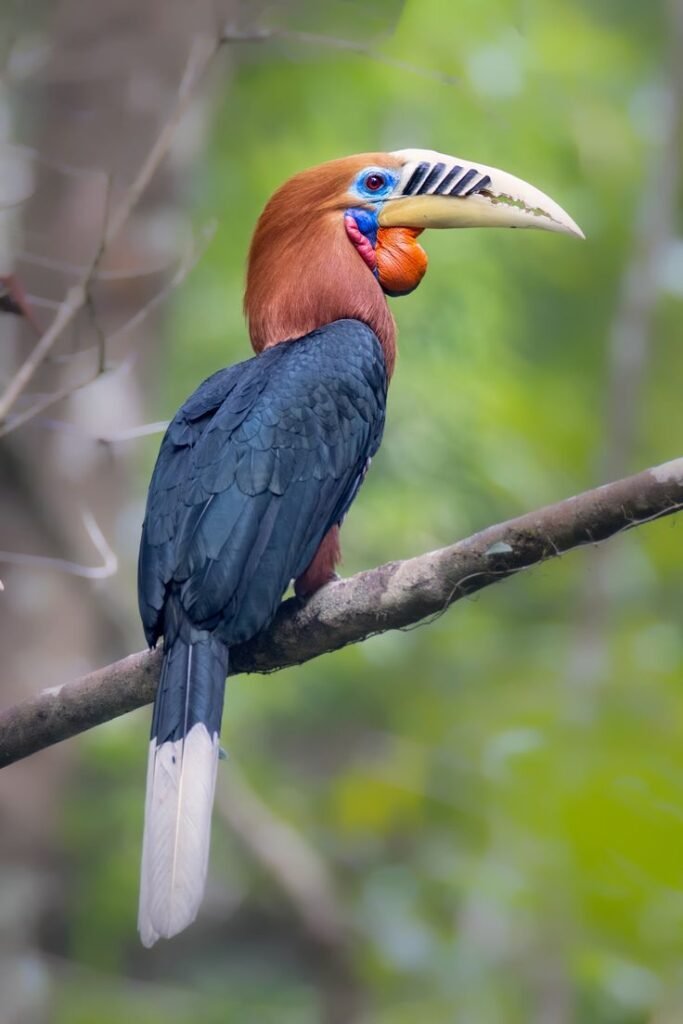
Northeast India remains a biodiversity hotspot rare birds thrive in. Recent features have highlighted species such as the Rufous-necked Hornbill in Arunachal Pradesh, storks in Assam’s wetlands, and pheasants in Nagaland. These sightings underscore the ecological richness of the region and its global importance for conservation.
Why Northeast India Is a Biodiversity Hotspot
Northeast India lies at the crossroads of the Indo-Malayan and Indo-Chinese biogeographic zones. Therefore, it hosts a unique blend of flora and fauna not found elsewhere in the country.
Moreover, the region’s dense forests, wetlands, and hilly terrains provide ideal habitats for rare bird species. Consequently, ornithologists and conservationists often describe Northeast India as one of the most critical ecological zones in Asia.
Rare Bird Species in Focus
Rufous-necked Hornbill in Arunachal Pradesh
The Rufous-necked Hornbill, a striking bird with vibrant plumage, is considered vulnerable due to habitat loss. Arunachal Pradesh’s forests remain one of its last strongholds. Conservationists emphasize that protecting hornbill habitats is essential to prevent further decline.
Storks in Assam Wetlands
Assam’s wetlands, including the famous Kaziranga National Park and Deepor Beel, host rare stork species such as the Greater Adjutant. These wetlands are biodiversity hubs, supporting migratory birds and endangered species.
Pheasants in Nagaland
Nagaland’s hilly terrain shelters colorful pheasants, including the Blyth’s Tragopan. This bird is listed as vulnerable and is also the state bird of Nagaland. Local communities, therefore, play a vital role in protecting pheasant populations through community-led conservation initiatives.
Ecological Richness Beyond Birds
While rare birds capture attention, Northeast India’s biodiversity extends to mammals, reptiles, and plants. The region is home to elephants, clouded leopards, orchids, and medicinal plants. Consequently, it contributes significantly to India’s ecological balance.
Threats to Biodiversity in Northeast India
Despite its richness, the region faces challenges:
- Deforestation due to logging and shifting cultivation
- Wetland degradation from urban expansion
- Poaching and hunting of rare species
- Climate change impacts altering habitats
Therefore, urgent conservation measures are needed to safeguard these ecosystems.
Conservation Efforts in the Region
Government Initiatives
Protected areas such as Kaziranga National Park, Namdapha National Park, and Nokrek Biosphere Reserve highlight government efforts to conserve biodiversity.
Community Participation
Local communities in Nagaland and Arunachal Pradesh have established conservation reserves. Moreover, eco-tourism initiatives encourage sustainable practices while providing livelihoods.
Global Importance of Northeast India’s Biodiversity
International organizations recognize Northeast India as part of the Indo-Burma biodiversity hotspot. Consequently, the region attracts researchers, birdwatchers, and conservationists worldwide.
This global recognition underscores the need for India to prioritize conservation in the Northeast, not only for national pride but also for international ecological commitments.
Protect Northeast India’s Rare Birds
The Northeast India biodiversity hotspot rare birds remind us of nature’s beauty and fragility. Protecting them requires collective effort.
👉 Support eco-tourism initiatives that promote conservation. 👉 Participate in awareness campaigns about biodiversity. 👉 Encourage sustainable practices in local communities.
Every individual can contribute to safeguarding the ecological richness of Northeast India.
READ MORE: NFR Adds Coaches, Special Trains in Mizoram
The Northeast India biodiversity hotspot rare birds—from the Rufous-necked Hornbill in Arunachal Pradesh to storks in Assam wetlands and pheasants in Nagaland—symbolize the region’s ecological wealth.
Therefore, protecting these species is not just about preserving birds; it is about sustaining ecosystems that support millions of lives. As conservationists often say, saving rare birds means saving ourselves.