


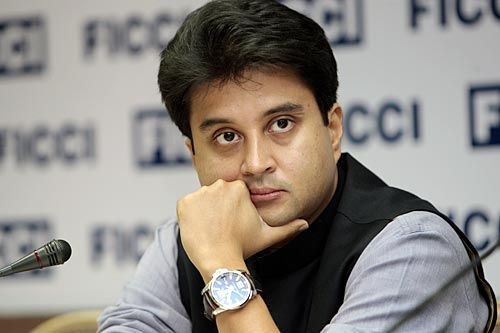
In a major statement on November 2, 2025, Union Minister Jyotiraditya Scindia said that Northeast India has transitioned “from a land-locked region to a land-linked powerhouse” under Prime Minister Narendra Modi’s leadership. The minister emphasized the region’s rapid connectivity and infrastructure development, noting how improved rail, road, and air networks are transforming its socio-economic landscape.
A Vision for Regional Integration
Speaking at an event highlighting India’s logistics and trade growth, Scindia said, “The Northeast has gone from isolation to integration. What was once seen as distant and disconnected is now the gateway to Southeast Asia.”
He cited projects like the Bharatmala, UDAN, and Act East Policy as the foundation of this transformation. According to the minister, over the past decade, the government has invested heavily in highway expansion, airport upgrades, and cross-border trade facilities.
Scindia also said that states such as Assam, Manipur, Mizoram, and Tripura have emerged as critical trade and transport hubs. The Kaladan Multi-Modal Transit Project and the India-Myanmar-Thailand Trilateral Highway are among the flagship initiatives designed to connect Northeast India with Southeast Asia.
“The region is no longer the end of India but the beginning of a new frontier,” Scindia added.
Key Infrastructure Projects Transforming the Region
Road and Rail Connectivity
Over 3,800 km of new highways have been sanctioned for the Northeast under the Bharatmala Pariyojana, while the Railways Ministry has extended broad-gauge connectivity to nearly all state capitals. The Agartala-Akhaura rail link, inaugurated in 2023, now provides direct connectivity between India and Bangladesh, drastically cutting freight and travel time.
Similarly, the Bogibeel Bridge in Assam—the longest rail-cum-road bridge in India—has become a symbol of infrastructural resilience and progress.
Expanding Air Networks
Scindia, who also oversees Civil Aviation, highlighted that the UDAN (Ude Desh Ka Aam Nagrik) scheme has successfully brought air travel to smaller towns across the Northeast. Airports in Guwahati, Dibrugarh, Shillong, Aizawl, and Imphal have undergone major upgrades, improving access and tourism potential.
“Connectivity brings opportunity. Each flight and every new road open doors for trade, tourism, and investment,” Scindia remarked.
(For official project details, visit the Ministry of Development of North Eastern Region (MDoNER) website.)
Economic Growth and Strategic Importance
Northeast India’s economic transformation has also taken on a strategic dimension. Its location bordering China, Bhutan, Bangladesh, and Myanmar makes it vital to India’s Act East Policy, which seeks to deepen trade and cultural ties with ASEAN nations.
Data from the Ministry of Commerce show that cross-border trade through Moreh (Manipur) and Dawki (Meghalaya) has increased steadily in recent years. New land ports, logistics hubs, and special economic zones (SEZs) are being planned to support regional exports of tea, bamboo, and handicrafts.
Scindia emphasized that the region is also becoming a “clean energy corridor”, with new hydropower and green energy projects under construction in Arunachal Pradesh and Sikkim.
Local Voices and Regional Response
State leaders have largely welcomed the Union Minister’s remarks. Assam Chief Minister Himanta Biswa Sarma said the statement reflects the visible progress across the region. “Ten years ago, roads were broken, airports were outdated, and connectivity was a challenge. Today, the Northeast is opening to the world,” he said in a media interaction.
However, experts note that while connectivity has improved, issues such as employment generation, land acquisition, and ecological sustainability remain areas that need careful attention.
Analysts from North Eastern Hill University (NEHU) say that inclusive growth—where tribal and rural communities directly benefit—will determine the success of these projects.
Cultural and Tourism Opportunities
Improved access has also boosted tourism in Meghalaya, Sikkim, and Nagaland. Festivals like the Hornbill Festival, Shillong Cherry Blossom Festival, and Ziro Music Festival now attract both domestic and international visitors.
According to Meghalaya’s tourism department, visitor numbers have risen by over 30% in the last two years, thanks to better roads and flights. This growth aligns with the government’s goal of making the Northeast a sustainable tourism hub.
Challenges Ahead
Despite progress, challenges such as flash floods, hilly terrain, and security issues continue to affect connectivity projects. Environmentalists urge that future infrastructure planning must balance development with ecological preservation.
Economists also suggest focusing on industrial growth and digital infrastructure, which can complement physical connectivity.
The Road Forward
Union Minister Scindia’s statement underscores a crucial policy shift—one that positions the Northeast not as a peripheral region, but as India’s emerging growth frontier.
With the Act East Policy, expanding trade corridors, and an emphasis on regional empowerment, the Northeast’s transformation story is now central to India’s growth narrative.
READ MORE: Assam NEET PG Counselling from 6 November