


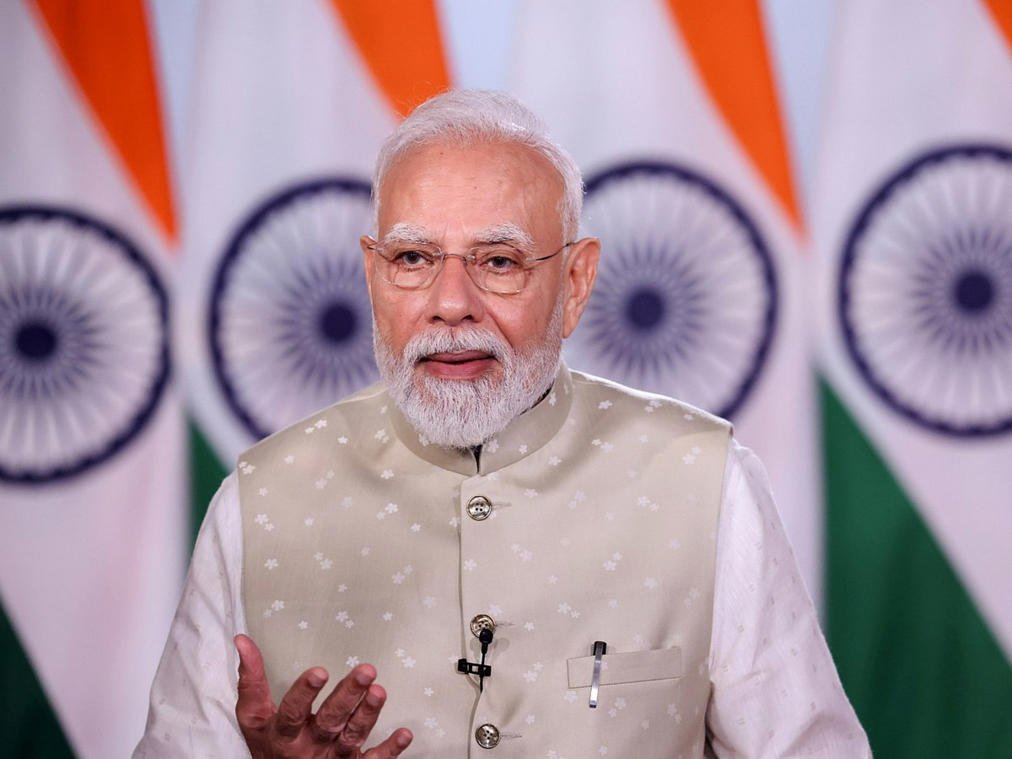
Prime Minister Narendra Modi and several BJP leaders paid tribute to revolutionary freedom fighter Shaheed Bhagat Singh on Monday, September 28, marking his 119th birth anniversary. Leaders remembered his role in India’s freedom struggle and highlighted his courage, sacrifice and commitment to the country.
Bhagat Singh was born on September 28, 1907, in Banga village in the Lyallpur district of Punjab, which is now in Pakistan. Across India, people observe his birth anniversary each year to remember his contribution to the independence movement.
PM Modi Remembers Bhagat Singh
Prime Minister Narendra Modi paid tribute to Bhagat Singh through a post on X on Monday. The Prime Minister described the revolutionary’s courage and valour as important contributions to India’s freedom movement.
Modi said Bhagat Singh gave a new direction to the freedom struggle through his courage. He also referred to Singh’s willingness to sacrifice everything for the honour of the nation.
According to the Prime Minister, Bhagat Singh’s spirit of sacrifice remains a symbol of courage and determination for India’s youth.
Modi also shared a video message to mark the occasion. In his message, he recalled Bhagat Singh as an inspirational figure, particularly for young Indians.
BJP Leaders Pay Their Respects
Several BJP leaders also marked Bhagat Singh’s birth anniversary with messages on social media.
Uttar Pradesh Chief Minister Yogi Adityanath paid tribute to the revolutionary and recalled his dedication to India’s independence. Maharashtra Chief Minister Devendra Fadnavis also remembered Bhagat Singh, referring to his courage, patriotism and sacrifice during the freedom struggle.
Union Education Minister Pralhad Joshi joined other leaders in remembering the revolutionary on the occasion. Their messages focused on Bhagat Singh’s contribution to India’s independence movement and his lasting place in the country’s public memory.
The tributes came from leaders in different parts of the country. Meanwhile, political parties and public institutions also organised programmes to mark the anniversary.
Bhagat Singh and India’s Freedom Movement
Bhagat Singh emerged as one of the prominent young revolutionaries of India’s freedom movement. He became involved in anti-colonial activities at a young age and later worked with revolutionary organisations.
His political activities, writings and opposition to British rule brought him national attention. He also developed political ideas that went beyond the immediate struggle against colonial rule.
In 1929, Bhagat Singh and Batukeshwar Dutt threw bombs inside the Central Legislative Assembly in Delhi. The action aimed to protest against colonial policies and attract public attention to their political cause.
The incident led to the arrest of both revolutionaries. Their subsequent trial drew widespread attention across India.
Bhagat Singh, Rajguru and Sukhdev
Bhagat Singh’s name remains closely associated with Shivaram Rajguru and Sukhdev Thapar. British authorities executed the three revolutionaries on March 23, 1931, in Lahore.
Bhagat Singh was only 23 years old at the time. His execution turned him into one of the most enduring symbols of India’s anti-colonial struggle.
The three revolutionaries continue to receive tributes on important national occasions. Their names also remain part of India’s public discussions about the country’s independence movement.
His Influence on Young Indians
Bhagat Singh’s young age remains one of the notable aspects of his legacy. He entered political and revolutionary activities while still a young man and continued writing and engaging with political ideas before his execution.
Prime Minister Modi again highlighted this connection with India’s youth in his 2026 tribute. He said Bhagat Singh’s courage and determination continue to serve as a symbol for young Indians.
His writings and political ideas have also remained subjects of academic and historical discussion. Scholars have examined his views on colonialism, socialism, revolution and India’s future.
Tributes Across the Country
Bhagat Singh’s 119th birth anniversary was marked through commemorative programmes across India.
In Punjab, events were planned at locations associated with his life and legacy. A state-level programme titled “Jashn-e-Inquilab” was scheduled at Punjab Agricultural University in Ludhiana. The programme was organised to mark the anniversary and highlight Bhagat Singh’s legacy.
People also gathered at Khatkar Kalan, a village closely associated with Bhagat Singh, for commemorative activities.
Elsewhere, public institutions and government offices organised events to remember the freedom fighter. The Delhi Assembly also held a tribute programme, where Deputy Speaker Mohan Singh Bisht paid floral tributes to Bhagat Singh.
Bhagat Singh’s Place in India’s History
Bhagat Singh occupies a significant place in India’s history of the freedom struggle. His revolutionary activities, political writings and execution at a young age have contributed to his enduring public legacy.
Over the decades, leaders from different political backgrounds have invoked his name while discussing India’s independence movement. His birth anniversary therefore receives attention across political and social groups.
The anniversary also provides an opportunity to revisit the history of India’s struggle against British colonial rule and the different approaches adopted by freedom fighters during that period.
A Legacy Remembered Nearly a Century Later
Nearly a century after his execution, Bhagat Singh continues to attract public attention on his birth anniversary. His life remains connected with discussions about India’s independence, revolutionary politics and the participation of young people in the freedom movement.
On September 28, 2026, Prime Minister Narendra Modi and BJP leaders joined people across the country in remembering him. Modi’s tribute focused on Bhagat Singh’s courage, valour and spirit of sacrifice, while other leaders also recalled his contribution to the freedom struggle.
The nationwide observance of his 119th birth anniversary once again brought Bhagat Singh’s life and historical contribution into focus. His role in India’s anti-colonial movement continues to form an important part of the country’s collective remembrance of the freedom struggle.