


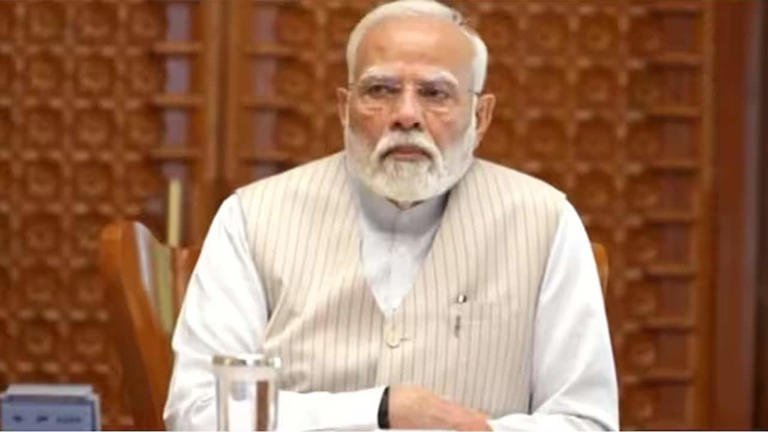
Narendra Modi paid rich tribute to Nobel laureate Rabindranath Tagore and described him as the “timeless voice of India’s civilisational soul.” The prime minister remembered Tagore’s immense contribution to literature, philosophy, music, education, and India’s cultural identity while paying homage on his birth anniversary.
Modi said Tagore’s thoughts and writings continue to inspire generations across the world. He also highlighted the poet’s deep connection with Indian civilisation, spirituality, and human values.
The tribute once again brought national attention to Tagore’s enduring legacy as one of India’s greatest literary and cultural icons.
Read More: From Giant Slayer To Bengal CM: Why Suvendu Adhikari Chose Celibacy
PM Modi Remembers Tagore’s Legacy
In his message, Prime Minister Narendra Modi praised Rabindranath Tagore for shaping India’s intellectual and cultural consciousness through his works.
He referred to Tagore as a visionary thinker whose ideas transcended time and geographical boundaries. According to Modi, Tagore’s writings reflected the spirit of India’s civilisation while promoting universal humanism and harmony.
The prime minister stated that Tagore’s poetry, songs, essays, and educational philosophy continue influencing millions of people even today.
Modi also said the Nobel laureate’s legacy remains deeply connected with India’s cultural and spiritual traditions.
His tribute received widespread attention on social media and among political and cultural figures across the country.
Rabindranath Tagore’s Place In Indian History
Rabindranath Tagore remains one of the most celebrated literary figures in Indian history. Born in 1861 in Bengal, he emerged as a poet, philosopher, composer, novelist, playwright, and educationist.
He became the first Asian to win the Nobel Prize in Literature in 1913 for his celebrated work “Gitanjali.”
Tagore’s contribution extended far beyond literature. He played a major role in shaping modern Indian cultural thought and educational reform.
His songs later became the national anthems of both India and Bangladesh.
Political leaders and scholars often describe Tagore as a bridge between Indian tradition and global modernity.
His ideas on nationalism, humanity, and education continue to remain relevant in contemporary times.
Tagore’s Connection With Indian Civilisation
Prime Minister Modi’s reference to Tagore as the “timeless voice of India’s civilisational soul” highlighted the poet’s deep philosophical engagement with Indian heritage.
Tagore’s writings frequently explored themes related to spirituality, nature, freedom, and cultural identity.
Experts say he believed India’s civilisational strength came from diversity, coexistence, and intellectual openness.
At the same time, Tagore encouraged critical thinking and individual freedom through his literary and philosophical works.
His educational vision also reflected these values. Through Visva-Bharati University, Tagore attempted to create a model that combined Indian traditions with global learning.
Political analysts say Modi’s remarks sought to highlight Tagore’s role as a cultural symbol of India’s civilisational continuity.
National Leaders Pay Tribute
Several political leaders, cultural personalities, and institutions across India also paid homage to Rabindranath Tagore on the occasion.
Tribute programmes, literary events, and cultural performances took place in different parts of the country, especially in West Bengal.
Leaders across party lines acknowledged Tagore’s unmatched contribution to literature and nation-building.
Educational institutions organised discussions and events highlighting his influence on Indian art, music, and philosophy.
Social media platforms also witnessed widespread sharing of Tagore’s poems, songs, and quotations during the commemorative programmes.
Observers noted that Tagore remains one of the few literary figures admired across ideological and political boundaries.
Tagore’s Influence On Literature And Music
Rabindranath Tagore transformed Bengali literature and significantly influenced Indian literary traditions.
His poems and stories explored complex human emotions, social realities, and philosophical themes with remarkable depth.
Tagore also composed thousands of songs, collectively known as Rabindra Sangeet, which remain deeply popular in Bengal and beyond.
Experts believe his literary style blended lyrical beauty with intellectual and emotional richness.
His works influenced generations of writers, artists, filmmakers, and musicians across India.
Political leaders frequently reference Tagore’s writings because they continue resonating with themes of humanity, freedom, and cultural pride.
Educational Philosophy Continues To Inspire
Apart from literature, Tagore’s educational philosophy remains one of his most lasting contributions.
He founded Visva-Bharati University at Santiniketan with the aim of creating an environment that encouraged creativity, freedom, and holistic learning.
Tagore opposed rigid colonial education systems and promoted learning connected to nature, art, and cultural understanding.
Experts say his ideas influenced later educational reforms in India.
Prime Minister Modi has also previously spoken about India’s traditional knowledge systems and the importance of culturally rooted education.
Observers believe his tribute to Tagore aligns with broader efforts to celebrate Indian intellectual and civilisational heritage.
Tagore’s Global Recognition
Rabindranath Tagore earned international recognition during his lifetime through lectures, literary works, and interactions with global thinkers.
He travelled extensively and engaged with scholars, writers, and political leaders across continents.
Tagore’s writings explored universal themes such as peace, human dignity, and coexistence. As a result, readers around the world connected deeply with his ideas.
His Nobel Prize in Literature brought global attention to Indian literary traditions and cultural thought.
Even today, Tagore’s works continue to be translated into multiple languages and studied internationally.
Experts say his ability to combine Indian cultural identity with universal human values explains his enduring global appeal.
Cultural Importance In Bengal
In Bengal, Rabindranath Tagore occupies a unique cultural and emotional place.
His songs, poems, and literary works remain deeply woven into Bengali social and cultural life.
Festivals, educational programmes, and public events in Bengal often feature Rabindra Sangeet and readings from his writings.
Political leaders from Bengal regularly invoke Tagore’s legacy during cultural and national discussions.
The prime minister’s tribute therefore carried particular significance because of Tagore’s deep connection with Bengal’s identity and India’s broader cultural heritage.
Modi Highlights India’s Cultural Icons
Prime Minister Modi has frequently paid tribute to Indian philosophers, poets, spiritual leaders, and reformers as part of broader efforts to highlight India’s civilisational heritage.
Political observers say such tributes seek to connect modern governance narratives with historical cultural figures.
Tagore remains especially significant because of his contributions to literature, education, music, and national thought.
Experts believe references to Tagore also resonate strongly with intellectual and cultural audiences across India.
Legacy Continues To Inspire Generations
More than eight decades after his death, Rabindranath Tagore’s influence remains visible in literature, music, education, and cultural discussions across India and the world.
His works continue inspiring readers, artists, scholars, and political thinkers.
Prime Minister Modi’s tribute once again brought attention to the enduring relevance of Tagore’s philosophy and artistic legacy.
As India commemorates one of its greatest literary figures, Tagore’s ideas on humanity, creativity, and civilisation continue shaping cultural and intellectual conversations even today.
Read More: Manipur Congress Condemns Reported Attacks On Border Villages, Demands Action