


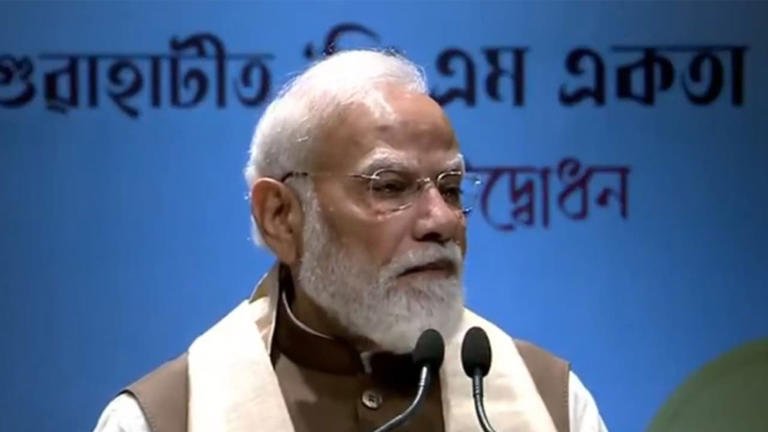
Prime Minister Narendra Modi is set to perform the Bhoomi Poojan ceremony for the proposed Shillong–Silchar corridor in Assam, marking the beginning of a major infrastructure project aimed at strengthening connectivity in the northeastern region. The corridor will connect key areas of Shillong in Meghalaya with Silchar in southern Assam.
Officials said the project will significantly improve transportation links between the two regions and help facilitate economic growth, trade, and tourism in the Northeast.
Read More: Tripura CM Attends PM-Kisan Installment Event in Agartala
Major Connectivity Project For Northeast
The Shillong Silchar corridor is considered an important infrastructure initiative designed to enhance connectivity across the northeastern states. The route linking Shillong and Silchar serves as a critical transport corridor connecting several districts in Meghalaya and Assam.
At present, travel between the two cities often takes longer due to challenging terrain and limited road infrastructure in certain stretches. Once completed, the new corridor is expected to reduce travel time and make transportation more efficient.
Improved road connectivity will also help facilitate smoother movement of goods and services between the two regions. This will benefit businesses, traders, and industries that rely on road transport for logistics.
Officials believe the project will strengthen economic ties between Meghalaya and Assam while supporting regional development.
Bhoomi Poojan Marks Beginning Of Construction
The Bhoomi Poojan ceremony to be performed by Prime Minister Narendra Modi will formally mark the beginning of the corridor’s construction. Bhoomi Poojan is a traditional ceremony conducted before starting major construction work, symbolizing the commencement of a new project.
Government officials and local leaders are expected to attend the event along with representatives from infrastructure agencies involved in the project.
The ceremony highlights the importance of the corridor as part of the government’s broader efforts to strengthen transportation networks across the Northeast.
Following the ceremony, authorities will begin groundwork and construction activities in phases.
Boost To Trade And Economic Activity
The Shillong Silchar corridor is expected to boost economic activity in several districts along the route. Improved transportation infrastructure will make it easier for businesses to transport goods between Meghalaya and southern Assam.
For example, agricultural products, forest produce, and industrial goods can reach markets more quickly once the corridor becomes operational.
Better connectivity also encourages investment in industries and commercial activities along the route.
As transportation improves, new business opportunities may emerge in sectors such as logistics, retail, and tourism.
Officials say such infrastructure projects often create employment opportunities during both the construction and operational phases.
Improved Connectivity For Remote Areas
Many areas along the proposed corridor include hilly and remote regions that currently face transportation challenges. Improved road infrastructure will help residents access essential services more easily.
For instance, people in these areas will find it easier to reach hospitals, educational institutions, and government offices.
Additionally, better connectivity will support emergency services and disaster response efforts in regions that sometimes experience difficult terrain and weather conditions.
The project therefore aims not only to improve economic connectivity but also to enhance overall accessibility for residents.
Tourism Potential In Northeast
The corridor is also expected to support tourism development in the northeastern region. Both Shillong and Silchar serve as important gateways to popular tourist destinations.
Shillong attracts visitors with its scenic landscapes, waterfalls, and cultural attractions. Meanwhile, Silchar acts as a major transit point for travelers visiting southern Assam and neighboring states.
Improved road connectivity will encourage more tourists to explore destinations across Meghalaya and Assam.
Tourism authorities believe that easier travel routes can significantly increase visitor numbers and support local businesses in hospitality and tourism services.
Government Focus On Northeast Infrastructure
The Shillong Silchar corridor reflects the government’s broader strategy to strengthen infrastructure across the northeastern states.
In recent years, several highway, railway, and airport projects have been launched in the region to improve connectivity and accelerate development.
Prime Minister Narendra Modi has repeatedly emphasized the importance of infrastructure development in the Northeast as a key driver of economic growth.
Improved transportation networks help integrate the region more closely with the rest of the country while encouraging trade and investment.
Officials say the Shillong Silchar corridor will play an important role in this development strategy.
Long-Term Impact On Regional Development
Experts believe that the corridor could bring long-term benefits for both Assam and Meghalaya. Infrastructure projects of this scale often influence economic growth patterns in the surrounding areas.
Improved connectivity can encourage new industries, create jobs, and support the development of urban centers along the route.
Moreover, better transportation networks help farmers and small businesses access larger markets, increasing their income opportunities.
Such improvements contribute to balanced regional development and strengthen economic stability.
Beginning Of A Major Infrastructure Initiative
The Bhoomi Poojan ceremony for the Shillong Silchar corridor marks the beginning of a major infrastructure initiative aimed at transforming connectivity in the Northeast.
Once completed, the corridor will strengthen transportation links between Meghalaya and southern Assam while supporting trade, tourism, and economic growth.
With construction expected to begin soon after the ceremony, the project represents another step toward improving infrastructure and promoting development in one of India’s most geographically diverse regions.