


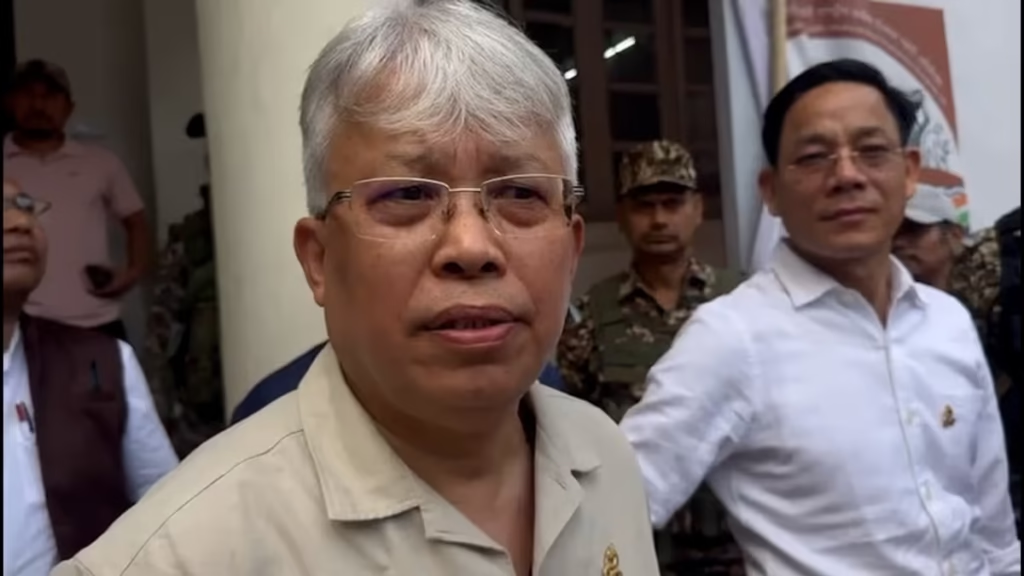
The Postpone Census 2026 demand has gained political attention after Manipur Lok Sabha MP Bimol Akoijam reportedly raised concerns about illegal immigration and population data. The issue has connected the timing of the national census with wider debates over border management, demographic changes, citizenship documentation, and electoral representation.
Akoijam’s reported position highlights concerns about whether population information should undergo greater scrutiny before authorities complete a major census exercise. Moreover, debates surrounding migration and demographic change remain politically sensitive in Manipur because of the state’s complex social and security environment.
However, concerns raised by a political representative do not establish the presence or scale of illegal immigration. The available information also does not confirm an official decision to postpone the 2026 Census.
80 Years of Independence: A Question Tripura Must Ask About Clean Water
Postpone Census 2026 Demand Centres on Immigration
The Postpone Census 2026 demand reportedly centres on concerns raised by Bimol Akoijam regarding illegal immigration.
Akoijam has argued for greater attention to population and migration-related issues before the census process moves forward. Furthermore, accurate demographic information can help governments plan public services and understand population patterns.
However, allegations concerning illegal immigration require verification through official records and established legal procedures.
The available information does not provide verified figures for undocumented migrants in Manipur.
Postpone Census 2026 Debate Raises Population Questions
The Postpone Census 2026 debate has brought population data into sharper focus.
A census provides demographic information that governments use for planning infrastructure, healthcare, education, housing, and welfare programmes. Additionally, population data can influence broader discussions about political representation and administrative planning.
Reliable enumeration therefore remains important.
However, the available information does not identify any specific census data that authorities have found inaccurate in Manipur.
Postpone Census 2026 Demand Links to Border Security
The Postpone Census 2026 demand also connects with concerns about border management.
Manipur shares an international border with Myanmar, making cross-border movement an important security and administrative issue. Moreover, authorities monitor border areas through various security and administrative mechanisms.
Political debates can therefore connect border security with questions about population records.
However, border management and census enumeration remain separate government processes.
Postpone Census 2026 Raises Documentation Concerns
The Postpone Census 2026 debate has also highlighted the importance of documentation.
Population enumeration and citizenship verification serve different purposes. Furthermore, census officials collect demographic information under the applicable census framework, while citizenship-related determinations follow separate legal procedures.
Clear communication about these distinctions can help prevent public confusion.
The available information does not establish that the census itself will determine citizenship status.
Postpone Census 2026 Enters Manipur Politics
The Postpone Census 2026 issue has become part of Manipur’s wider political debate.
Bimol Akoijam’s reported concerns place migration and demographic change alongside other questions involving security and political representation. Additionally, opposition and government representatives may interpret the potential consequences of census timing differently.
The issue could therefore remain politically significant.
However, the available information does not provide a comprehensive response from the Union Government to Akoijam’s reported demand.
Postpone Census 2026 Raises Representation Issues
The Postpone Census 2026 debate can also affect discussions about political representation.
Population data can play an important role in electoral and administrative planning. Moreover, stakeholders may seek reliable and updated demographic information before supporting future decisions involving constituencies or representation.
This makes the accuracy of population records particularly important.
However, census timing and electoral delimitation involve separate legal and administrative processes.
Postpone Census 2026 Requires Evidence-Based Assessment
The Postpone Census demand highlights the need for evidence when discussing immigration.
Claims about undocumented migration can influence public debate, but authorities need verified records before establishing the scale or nature of any migration trend. Furthermore, allegations should not substitute for evidence collected through lawful investigations and official processes.
A fact-based approach can help maintain public confidence.
The available information does not provide independently verified figures supporting a specific estimate of illegal immigration.
Postpone Census Could Affect Government Planning
The Postpone Census demand could have implications for government planning if authorities ultimately change the census schedule.
Population data supports decisions across numerous sectors, including schools, hospitals, transport, housing, and welfare. Additionally, delayed census information could affect the timing of demographic assessments used for future planning.
The consequences would depend on the length and nature of any delay.
However, no official postponement has been confirmed in the information provided.
Postpone Census 2026 Keeps Northeast Demography in Focus
The Postpone Census debate reflects wider political interest in demographic changes across Northeast India.
Several states in the region have long discussed migration, border security, indigenous communities, and population patterns. Moreover, Manipur’s location along the Myanmar border adds particular sensitivity to these discussions.
Reliable demographic data can help authorities assess population trends more accurately.
However, demographic change does not by itself establish illegal immigration.
Postpone Census 2026 Demands Government Clarification
The Postpone Census discussion could increase pressure on authorities to clarify the census schedule and methodology.
Clear official communication can help distinguish political demands from established government policy. Furthermore, authorities can explain how the census will address difficult-to-reach populations and maintain reliable enumeration procedures.
Such information can reduce uncertainty.
However, the available information does not provide details of any proposed changes to the census methodology.
Postpone Census and Legal Framework
The Postpone Census 2026 demand must also be considered within India’s legal and administrative framework governing the census.
A census is a major national exercise involving extensive preparation and coordination. Additionally, any decision to change its schedule would require appropriate action by the competent authorities.
Political demands alone do not automatically change the official timetable.
The available information does not confirm any government notification postponing the exercise.
Conclusion
The Postpone Census demand has gained attention after Manipur Lok Sabha MP Bimol Akoijam reportedly raised concerns about illegal immigration, population data, and border management. His position connects the census debate with wider political concerns about demographic change and administrative preparedness.
Moreover, reliable census information can support government planning, while immigration-related claims require verification through official records and lawful procedures. However, the available information does not establish the scale of illegal immigration in Manipur or confirm an official decision to postpone the 2026 Census.
Overall, the Postpone Census 2026 debate highlights the sensitivity surrounding population data and migration in Manipur. Any decision concerning the census schedule will ultimately depend on the competent authorities, while concerns about immigration should remain grounded in verified evidence and established legal processes.
FAQs
1. Why does Bimol Akoijam want to postpone Census 2026?
Akoijam has reportedly raised concerns about illegal immigration, population data, and border-related issues while calling for consideration of the census timeline.
2. Has the Census 2026 been officially postponed?
The available information does not confirm an official postponement.
3. Does the census determine citizenship?
No. Census enumeration and citizenship determination serve different purposes and follow separate legal and administrative frameworks.
4. Has illegal immigration in Manipur been officially quantified?
The information provided does not include verified figures establishing the scale of illegal immigration.
5. Why is the issue significant for Manipur?
Manipur’s location along the Myanmar border and its wider political and demographic sensitivities make population and migration issues particularly significant.