


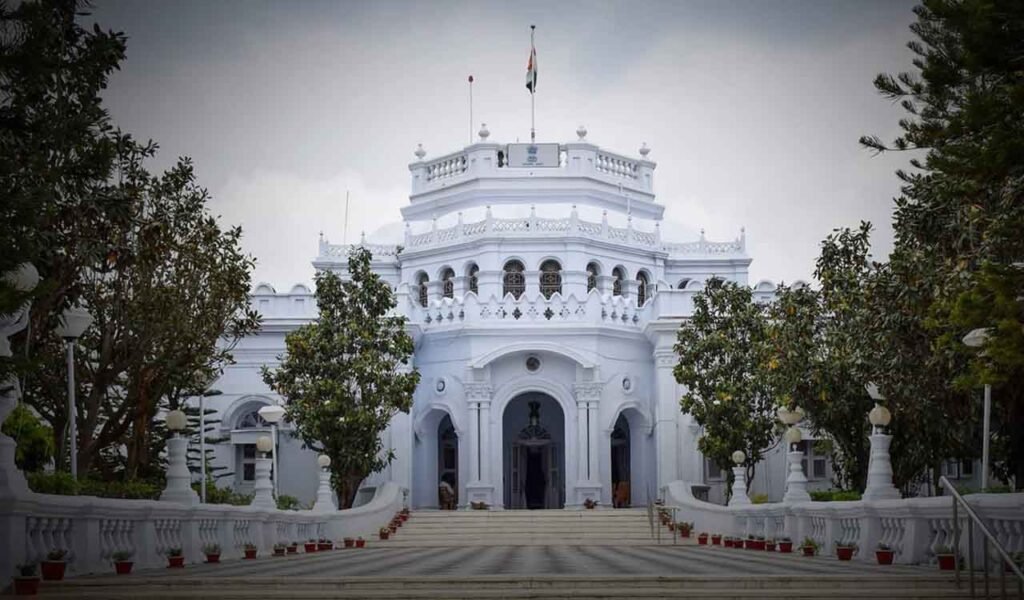
The Pushpabanta Palace hotel project is set to mark a major milestone in Tripura’s tourism and heritage sectors as Union Home Minister Amit Shah lays the foundation stone for a luxury heritage hotel at the historic Pushpabanta Palace site in Agartala. The ambitious development, being undertaken in partnership with the Tata Group, aims to transform the former Raj Bhavan into a world-class hospitality destination while preserving its historical and architectural significance. Moreover, the project is expected to boost tourism, create employment opportunities, and strengthen Tripura’s position on India’s heritage tourism map.
Assam Eyes Trade Growth Through FTAs
Tripura Youth Secure Solar Energy Jobs
Foundation Stone to Be Laid for Landmark Project
Union Home Minister Amit Shah is scheduled to lay the foundation stone for the redevelopment of Pushpabanta Palace into a luxury heritage hotel. The project represents one of the most significant tourism infrastructure initiatives undertaken in Tripura in recent years.
Moreover, the ceremony highlights the importance of heritage conservation combined with modern tourism development. Officials expect the project to attract national attention and increase visitor interest in the state.
Consequently, the initiative has generated considerable excitement among tourism stakeholders.
Historic Pushpabanta Palace to Get New Life
Pushpabanta Palace holds an important place in Tripura’s history and cultural heritage. The palace later served as the Raj Bhavan and remains one of the state’s most recognizable heritage structures.
Furthermore, converting the historic property into a heritage hotel will allow visitors to experience its architectural charm while ensuring the building’s long-term preservation. Adaptive reuse projects often help protect heritage assets while creating economic value.
As a result, the palace will gain a renewed purpose without losing its historical identity.
Tata Group Partnership Strengthens Project
The project will move forward in partnership with the Tata Group, a name widely associated with hospitality, infrastructure, and tourism development across India.
Moreover, collaboration with a reputed corporate group can bring expertise in heritage hospitality management and world-class service standards. Such partnerships often enhance project quality and long-term sustainability.
Therefore, the involvement of the Tata Group has added significance to the initiative.
Boost for Heritage Tourism
Heritage tourism continues to grow as travelers increasingly seek cultural and historical experiences. Converting heritage properties into hospitality destinations often attracts visitors interested in architecture, history, and local traditions.
Furthermore, the Pushpabanta Palace redevelopment can strengthen Tripura’s tourism appeal by offering a unique accommodation experience rooted in the state’s royal legacy.
Consequently, the project may help position Tripura as a notable heritage tourism destination.
Economic Opportunities Expected
Large-scale tourism projects often generate economic benefits through direct and indirect employment opportunities. Construction activities, hotel operations, hospitality services, and tourism-related businesses can all benefit from such investments.
Moreover, increased tourist arrivals may support local entrepreneurs, transport providers, artisans, and service industries. Tourism development frequently creates a multiplier effect across the economy.
As a result, the project could contribute significantly to local economic growth.
Preserving Historical Architecture
Heritage hotel projects often focus on maintaining the original character and architectural elements of historic structures. Preservation efforts help protect cultural assets for future generations.
Additionally, careful restoration can enhance the visitor experience while ensuring compliance with heritage conservation standards. Balancing modernization with preservation remains essential in such developments.
Therefore, the project is expected to place strong emphasis on maintaining the palace’s historical identity.
Strengthening Tripura’s Tourism Infrastructure
Tourism infrastructure plays a crucial role in attracting visitors and supporting long-term industry growth. High-quality accommodation options can improve the overall tourism experience and encourage longer stays.
Furthermore, luxury heritage hotels often become iconic attractions in their own right. Their presence can elevate the profile of a destination and attract new market segments.
Consequently, the project aligns with broader efforts to strengthen tourism infrastructure in Tripura.
Cultural Significance of the Development
The transformation of Pushpabanta Palace carries cultural significance beyond its economic value. The project highlights the importance of preserving historical landmarks while making them accessible to a wider audience.
Moreover, heritage tourism can promote awareness of local history, traditions, and cultural achievements. Visitors often develop a deeper appreciation for regional heritage through such experiences.
As a result, the development may contribute to cultural promotion and preservation.
Potential Impact on Hospitality Sector
The addition of a luxury heritage hotel can enhance the hospitality landscape in Tripura by introducing a distinctive accommodation option. Premium hospitality offerings often attract both domestic and international travelers.
Furthermore, the project may encourage further investment in tourism-related infrastructure and services. Successful developments frequently create momentum for additional growth.
Therefore, the hospitality sector could benefit substantially from the initiative.
Looking Ahead
Project planners are expected to focus on detailed development, restoration, and construction activities following the foundation stone ceremony. Authorities and stakeholders will likely monitor progress closely to ensure timely implementation.
Moreover, tourism experts anticipate that the completed hotel could become one of the state’s most prominent attractions. Continued collaboration among government agencies and private partners will remain important.
Consequently, the project’s progress will attract considerable attention in the coming years.
Conclusion
The Pushpabanta Palace hotel project represents a major step forward for heritage tourism and hospitality development in Tripura. With Amit Shah set to lay the foundation stone and the Tata Group partnering in the initiative, the historic palace is poised for a remarkable transformation into a luxury heritage destination.
By combining heritage preservation with modern hospitality standards, the project has the potential to boost tourism, generate employment, and enhance Tripura’s national profile. The redevelopment of Pushpabanta Palace could become a defining chapter in the state’s tourism growth story.
FAQs
What is the Pushpabanta Palace hotel project?
It is a plan to convert the historic Pushpabanta Palace into a luxury heritage hotel.
Who will lay the foundation stone?
Union Home Minister Amit Shah is scheduled to lay the foundation stone.
Which company is associated with the project?
The project is being developed in partnership with the Tata Group.
Why is the project important?
It aims to preserve a historic landmark while boosting tourism and economic development.
How can the project benefit Tripura?
It may increase tourist arrivals, create jobs, strengthen hospitality infrastructure, and promote heritage tourism.