


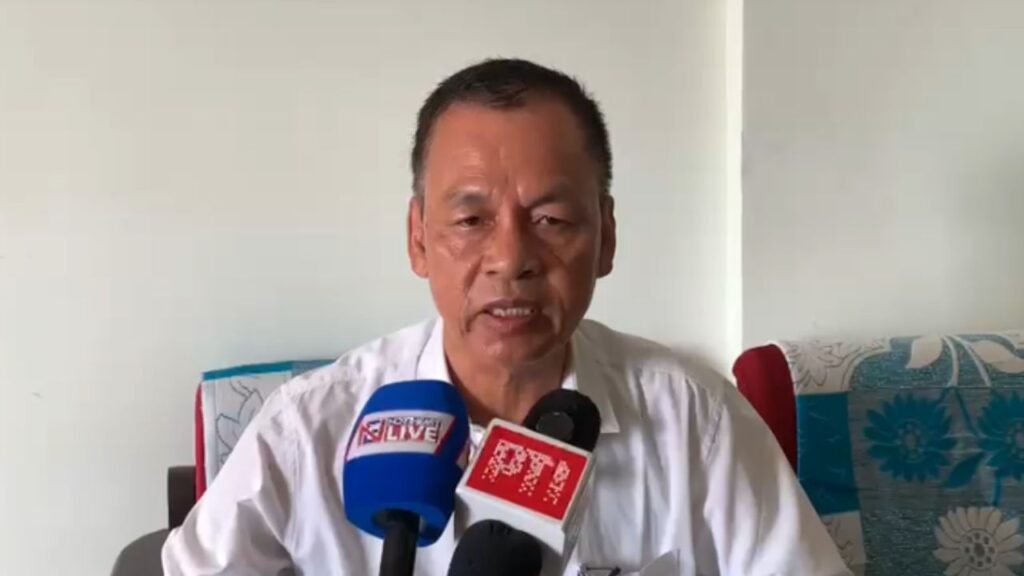
The Ranjit Debbarma ILP demand has returned to the political discussion in Tripura. The Tipra Motha MLA has renewed his call for an Inner Line Permit system in the state and said he had approached Union Home Minister Amit Shah on the issue.
Debbarma’s latest demand follows a letter from the Ministry of Home Affairs dated August 10, 2026. The letter acknowledged receipt of his communication dated July 20 concerning the proposed ILP system. However, the response did not approve ILP implementation in Tripura.
Importantly, Debbarma has clarified that his present demand covers the entire state. He said it is intended to regulate the entry of people from outside Tripura and is not a proposal to restrict movement within the Tripura Tribal Areas Autonomous District Council.
The renewed demand has brought the ILP issue back into public discussion. It also connects with a demand that Debbarma has raised with the Centre on earlier occasions.
Seven Kheyarpur Panchayat Members Resign Amid BJP Internal Dispute
Ranjit Debbarma ILP Demand Seeks Statewide Permit System
Debbarma has called for the introduction of an ILP regime across Tripura. Under his proposal, people entering the state from outside would be subject to a permit system.
The MLA has previously linked the demand with concerns about migration, border security and demographic change. These are his stated reasons for seeking stronger regulation of entry into the state.
However, the latest correspondence from the Home Ministry does not establish that the Centre has accepted these arguments. The August 10 letter only confirms that the ministry received Debbarma’s earlier communication.
Therefore, the current position remains that the MLA has renewed the demand, while no approval for implementing ILP in Tripura is indicated by the letter.
The issue also differs from the specific wording of the user’s original headline. While ILP has historically been discussed in connection with the TTAADC, Debbarma’s current demand is reportedly for the entire state of Tripura.
1993 Agreement Remains Part of ILP Debate
The ILP demand also has a historical connection with the 1993 Memorandum of Settlement between the Government of Tripura and the All Tripura Tribal Force.
Debbarma referred to the agreement when he previously approached the Centre. The agreement included a provision concerning taking up the case for introducing an Inner Line Permit system with the Government of India.
The provision has remained part of arguments supporting the ILP demand in Tripura. Debbarma has cited it to argue that the issue has been pending for decades.
Furthermore, the demand has appeared in different political and public discussions concerning safeguards for indigenous communities and regulation of entry into the state.
However, the existence of the provision does not itself mean that an ILP system automatically applies in Tripura. Implementation would require the necessary action under the applicable legal and administrative framework.
Consequently, the 1993 agreement provides historical context for the demand, while the current debate concerns whether and how the Centre and state authorities might act on it.
Centre Response Does Not Confirm ILP Approval
The August 10 letter from the Ministry of Home Affairs has become significant in the latest discussion. It confirms that Home Minister Amit Shah received Debbarma’s July 20 communication concerning ILP in Tripura.
However, the letter does not state that the Centre has approved an ILP system. It also does not announce any implementation schedule.
This distinction is important because an acknowledgement of correspondence is different from a policy decision. Therefore, the latest communication should not be described as Centre approval for ILP.
Debbarma has nevertheless continued to press the demand. Earlier in 2026, he also raised ILP alongside other measures concerning migration and electoral verification in communications with the Centre.
The renewed discussion consequently places the focus on what further action, if any, the central and state governments may take.
ILP Demand Revives Wider Tripura Policy Debate
The renewed Ranjit Debbarma ILP demand comes amid broader discussions about migration, indigenous interests, border management and the political role of the TTAADC.
ILP systems currently operate in Arunachal Pradesh, Nagaland, Mizoram and Manipur. The system regulates entry by requiring certain visitors from outside the respective states to obtain permits.
Tripura does not currently operate under the ILP system. Therefore, introducing such a framework would require a separate decision and implementation process.
Meanwhile, the distinction between a statewide ILP and an ILP specifically covering TTAADC areas remains important. Debbarma’s latest position, according to recent reporting, concerns the entire state rather than only the autonomous council areas.
Any future decision would therefore have implications for entry regulation across Tripura. It could also generate discussion about administrative procedures, legal authority and the treatment of people travelling to the state.
For now, however, the development remains a renewed political demand rather than an announced government policy.
Conclusion
The Ranjit Debbarma ILP demand has revived the debate over introducing an Inner Line Permit system in Tripura. The Tipra Motha MLA has approached Union Home Minister Amit Shah and received an acknowledgement from the Ministry of Home Affairs.
The August 10 response confirms receipt of his letter but does not indicate approval for ILP implementation. Moreover, Debbarma has clarified that his present demand covers the entire state rather than restricting movement specifically within TTAADC areas.
The demand also draws on the 1993 Tripura-ATTF agreement, which included a provision concerning the pursuit of an ILP system.
The next stage will depend on any further response or policy action from the Centre and the Tripura government.
FAQs
1. What is Ranjit Debbarma demanding?
Ranjit Debbarma is demanding the introduction of an Inner Line Permit system across Tripura to regulate entry into the state from outside.
2. Is Debbarma demanding ILP only for TTAADC areas?
No. Recent reporting quotes Debbarma as saying his demand covers the entire state and is not intended to restrict movement within TTAADC areas.
3. Has the Centre approved ILP for Tripura?
There is no indication of such approval in the August 10, 2026, Ministry of Home Affairs letter. The letter only acknowledges receipt of Debbarma’s earlier communication.
4. Why does Debbarma refer to the 1993 agreement?
He has cited the 1993 Memorandum of Settlement with the All Tripura Tribal Force, which included a provision concerning taking up the ILP demand with the Government of India.
5. Where is the ILP system currently used?
The ILP system currently applies in Arunachal Pradesh, Nagaland, Mizoram and Manipur.