


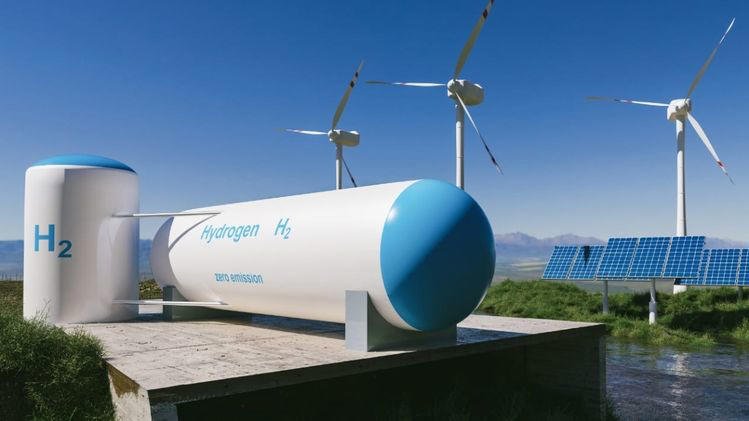
India $2 per kg green hydrogen goal has moved closer to reality after a record low tender price emerged in the country’s latest hydrogen production bids. India’s G20 Sherpa and former NITI Aayog CEO, Amitabh Kant, said the new pricing milestone marks a major step toward making green hydrogen affordable and globally competitive.
Speaking about the development, Kant noted that India is progressing steadily toward achieving the ambitious price target of producing green hydrogen at two dollars per kilogram. The recent tender result demonstrates the country’s growing capacity in renewable energy and its strong commitment to clean fuel technologies.
India has been aggressively promoting green hydrogen as a key element of its clean energy transition. The government believes the fuel will play a crucial role in reducing carbon emissions, especially in sectors such as steel, fertilisers, shipping, and heavy transport.
Read More: Assam BJP Slams Non-Existent Opposition in Rajya Sabha Poll
India $2 per kg green hydrogen goal gets boost from record tender
The India $2 per kg green hydrogen goal received a major push after companies participating in a government-backed tender quoted record low prices. The tender was conducted under the framework of the National Green Hydrogen Mission, which aims to make India a global hub for hydrogen production and exports.
According to Amitabh Kant, the price discovered during the tender reflects rapid improvements in renewable energy technology and cost efficiency. Lower solar and wind energy costs are playing a crucial role in bringing down the cost of hydrogen production.
Green hydrogen is produced by splitting water into hydrogen and oxygen using renewable electricity. Unlike conventional hydrogen, which is generated using fossil fuels, green hydrogen produces no carbon emissions during production.
India’s strategy focuses on combining abundant solar and wind resources with advanced electrolysis technologies. As renewable power prices fall, hydrogen production costs also decline, bringing the country closer to its ambitious price target.
Experts say achieving the two-dollar-per-kilogram benchmark will significantly improve the commercial viability of green hydrogen. It will also help industries shift away from fossil fuels and adopt cleaner energy alternatives.
India $2 per kg green hydrogen goal aligned with energy transition
The India $2 per kg green hydrogen goal is closely linked to the country’s broader climate commitments. India has pledged to achieve net-zero emissions by 2070 and is rapidly expanding its renewable energy capacity to support that target.
Green hydrogen is considered a critical fuel for sectors that are difficult to electrify directly. Heavy industries such as steel manufacturing require extremely high temperatures, which hydrogen can provide without emitting carbon dioxide.
Amitabh Kant highlighted that India has the potential to become one of the world’s largest producers and exporters of green hydrogen. With its vast renewable energy resources, the country can produce hydrogen at competitive prices and supply it to global markets.
The government launched the National Green Hydrogen Mission in 2023 with a significant financial allocation to promote research, production, and infrastructure development. The mission aims to produce five million tonnes of green hydrogen annually by 2030.
Additionally, the initiative seeks to attract private investment and encourage innovation in hydrogen technologies. Several energy companies have already announced large-scale projects to develop hydrogen production facilities across the country.
Industry leaders believe that early investments in hydrogen infrastructure will help India secure a strong position in the emerging global hydrogen economy.
India $2 per kg green hydrogen goal strengthens global leadership
The India $2 per kg green hydrogen goal also strengthens the country’s position as a leader in renewable energy innovation. Achieving this price benchmark would make green hydrogen competitive with conventional hydrogen produced from natural gas.
Many countries across Europe and Asia are exploring hydrogen as a clean fuel for the future. However, high production costs have remained one of the biggest challenges in scaling up the technology.
Amitabh Kant emphasised that India’s ability to achieve low production costs will provide a major competitive advantage. By producing affordable hydrogen, India could become a key supplier to international markets that are transitioning to clean energy.
Several global economies have already expressed interest in importing green hydrogen and related products such as ammonia. India is working to develop export corridors and supply chains that can support this future demand.
The country’s rapid expansion of solar and wind energy has created a strong foundation for hydrogen production. India is already one of the world’s largest renewable energy markets, and new capacity continues to grow each year.
As renewable energy costs continue to decline, hydrogen production will likely become even cheaper. This trend will help India reach the two-dollar-per-kilogram target sooner than previously expected.
Experts also point out that achieving the price target could unlock massive economic opportunities. It could create thousands of new jobs in manufacturing, engineering, and energy infrastructure while supporting sustainable development.
For now, the record low tender price has generated optimism across the energy sector. It indicates that India’s clean energy strategy is moving in the right direction and that the country is steadily progressing toward its green hydrogen ambitions.
With continued technological innovation and supportive policies, the India $2 per kg green hydrogen goal may soon become a reality. The achievement would mark a significant milestone not only for India but also for the global transition toward cleaner and more sustainable energy systems.
Read More: Want to Lose Weight? Try These 7 Healthy Roasted Snacks