


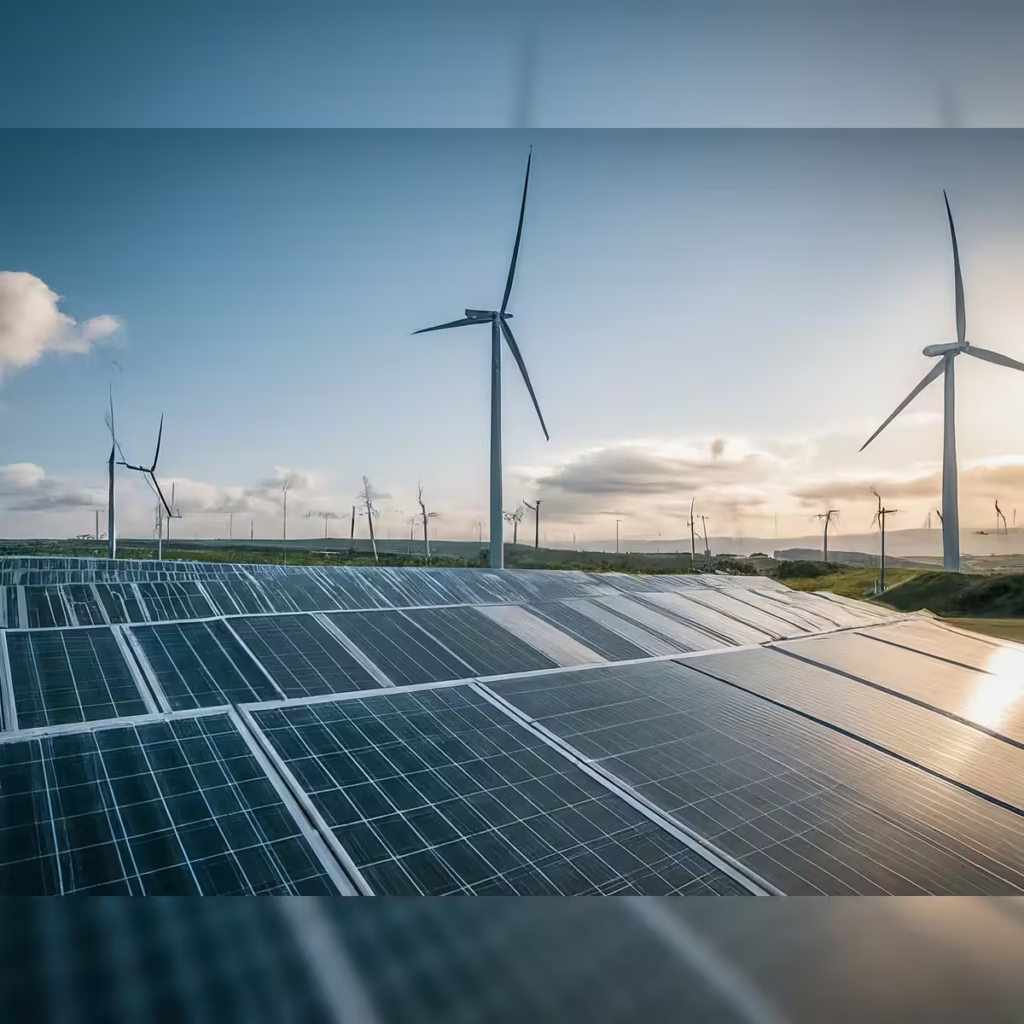
The Northeast currently utilises only around 4% of its estimated 130 GW renewable and hydropower potential, according to the economic assessment cited in the report. The figure highlights the significant gap between the region’s available clean-energy resources and its present level of development.
The region’s mountains, rivers, forests, and strong renewable-energy resources give it substantial potential for future power generation. Moreover, better utilisation could support industrial growth, improve electricity availability, and strengthen the Northeast’s role in India’s clean-energy transition.
However, expanding renewable generation will require investment in transmission networks, storage, environmental safeguards, and project infrastructure. The available information does not provide a state-wise breakdown of the estimated 130 GW potential.
Manipur 48-Hour Strike Paralyzes Life: JFD Shutdown Brings Five Valley Districts to Standstill
Northeast Renewable Energy Potential Remains Largely Untapped
The reported Northeast renewable energy potential stands at approximately 130 GW, while only about 4% currently sees utilisation.
This gap indicates considerable room for future development. Furthermore, expanding clean-energy generation could help the region meet growing electricity demand while reducing dependence on conventional energy sources.
The scale of the opportunity makes renewable energy an important part of the Northeast’s economic planning.
However, the 130 GW figure represents estimated potential rather than currently available generation capacity.
Hydropower Provides Major Opportunity
The Northeast’s extensive river systems create significant opportunities for hydropower development.
Mountainous terrain and substantial water resources can support large and small hydropower projects. Additionally, hydropower can provide relatively consistent electricity compared with some variable renewable sources.
The region could therefore play an important role in India’s future clean-energy supply.
However, hydropower development also requires careful consideration of environmental and community impacts.
Solar Energy Could Complement Hydropower
Solar power can provide another pathway for expanding clean-energy generation.
Combining solar projects with hydropower can diversify the regional electricity mix. Moreover, distributed solar installations can potentially improve electricity access in remote communities where large infrastructure projects face geographical challenges.
Such a combination could strengthen renewable-energy resilience.
However, the report does not provide a specific estimate of the Northeast’s solar capacity currently under development.
Power Infrastructure Remains Critical
Generating electricity represents only one part of the energy-development challenge.
The region also needs transmission and distribution infrastructure capable of moving electricity from generation sites to consumers. Furthermore, remote terrain can increase the cost and complexity of building power lines and substations.
Without adequate transmission capacity, additional renewable generation may not reach industrial and residential users efficiently.
Industrial Growth Could Benefit
Greater clean-energy availability could support industrial development across the Northeast.
Manufacturing facilities and technology businesses increasingly consider reliable electricity and energy sustainability when choosing locations. Additionally, renewable power could support industries seeking to reduce the carbon intensity of their operations.
The region’s energy resources could therefore become an economic advantage.
However, industrial growth will also depend on transportation, logistics, skilled workers, and other infrastructure.
Renewable Energy Could Strengthen Rural Economies
Clean-energy projects can create economic opportunities in rural and remote areas.
Construction, maintenance, transportation, land services, and related activities can generate local employment. Moreover, decentralised renewable systems can potentially support businesses and public facilities in areas with limited grid connectivity.
This could help spread the benefits of energy development beyond major urban centres.
However, the actual local economic impact will depend on project design and community participation.
Environmental Protection Must Remain Central
The Northeast contains ecologically sensitive landscapes and significant biodiversity.
Large infrastructure projects can affect forests, rivers, wildlife habitats, and local communities. Therefore, renewable-energy expansion must balance power generation with environmental protection and responsible land-use planning.
Careful project assessment can help reduce potential ecological impacts.
The available information does not identify specific environmental safeguards associated with the reported 130 GW potential.
Community Participation Can Support Projects
Local communities can play an important role in renewable-energy development.
Consultation and transparent benefit-sharing arrangements can help address concerns surrounding land, livelihoods, and environmental change. Furthermore, community participation can improve local understanding of proposed projects.
A socially responsible approach can strengthen the long-term viability of energy investments.
However, the report does not provide details about community participation mechanisms.
Storage Could Become Increasingly Important
As renewable generation expands, energy storage can help manage fluctuations in electricity supply.
Battery systems and other storage technologies can store electricity when generation exceeds demand and release it when required. Additionally, storage can help integrate solar and other variable renewable sources into the regional grid.
Such technology could become increasingly relevant as the Northeast develops its clean-energy resources.
However, no specific regional storage target has been provided.
Northeast Could Support India’s Clean-Energy Goals
The region’s untapped potential could contribute to India’s broader renewable-energy ambitions.
Developing even a portion of the estimated 130 GW resource could add substantial clean-energy capacity. Moreover, stronger inter-regional transmission networks could allow surplus electricity to reach other parts of the country.
The Northeast could therefore become an important clean-energy contributor.
However, realising the full potential would require substantial investment and long-term planning.
Investment Will Determine the Pace
Turning estimated potential into operating projects requires significant capital.
Investors need predictable policies, reliable infrastructure, clear regulatory procedures, and viable transmission arrangements. Furthermore, projects must address environmental and social considerations before construction begins.
A stable investment environment can therefore accelerate development.
However, the available report does not provide a total investment requirement for unlocking the 130 GW potential.
Skills and Technology Will Matter
Renewable-energy expansion will create demand for specialised skills.
Engineers, technicians, environmental specialists, project managers, and maintenance workers will all play roles in developing and operating energy infrastructure. Additionally, local training programmes could help ensure that communities benefit from emerging employment opportunities.
Building regional expertise can strengthen the clean-energy ecosystem.
However, no specific workforce-development target has been announced.
What Happens Next?
The reported 4% utilisation rate highlights the scale of the opportunity facing policymakers and energy developers across the Northeast.
Future efforts could focus on improving transmission infrastructure, attracting investment, developing renewable projects, expanding storage, and strengthening environmental safeguards. Moreover, coordinated planning across the eight northeastern states could help identify projects with the greatest economic and energy benefits.
The pace of development will depend on how effectively these challenges are addressed.
Conclusion
The reported Northeast renewable energy potential of 130 GW highlights a major opportunity for India’s clean-energy transition, with only around 4% currently utilised according to the cited economic assessment. The region’s hydropower, solar, and other renewable resources could support future electricity demand and industrial development.
Moreover, unlocking this potential could create jobs, strengthen rural economies, and increase the Northeast’s contribution to India’s energy system. At the same time, transmission infrastructure, environmental protection, community participation, storage, and investment will remain essential.
Overall, the Northeast’s clean-energy potential represents a significant but largely untapped economic and development opportunity.
FAQs
1. How much renewable-energy potential does the Northeast reportedly have?
The economic assessment cited in the report estimates around 130 GW of clean and hydropower potential.
2. How much of this potential is currently being used?
Only around 4% is reportedly being utilised.
3. Why is the Northeast important for renewable energy?
Its rivers, mountainous terrain, and renewable resources provide substantial opportunities for hydropower and other clean-energy projects.
4. What could greater renewable-energy utilisation achieve?
It could support electricity supply, industrial development, employment, rural economies, and India’s wider clean-energy objectives.
5. What challenges could slow development?
Transmission infrastructure, investment, environmental protection, community participation, storage, and difficult terrain could all affect the pace of development.