


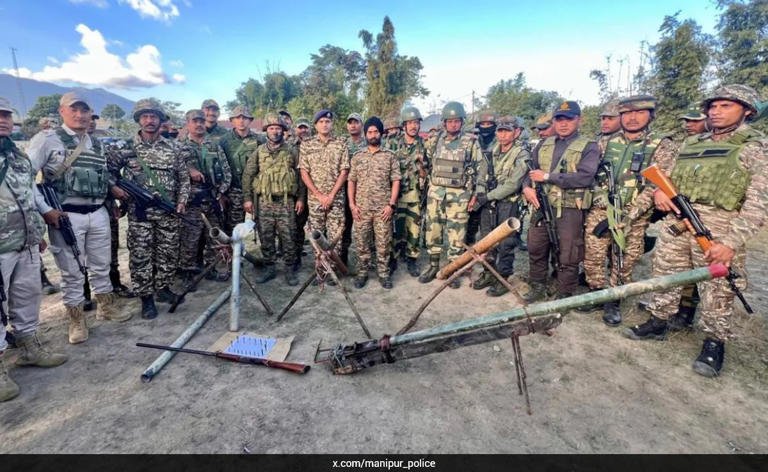
The hope of returning home remains a fragile dream for thousands of families in Northeast India. Recently, a group of nearly 400 individuals attempted to reclaim their lives after spending over 31 months in crowded shelters. However, the sound of heavy machinery was soon replaced by the echo of bullets. The journey of displaced people in Manipur continues to be a harrowing test of survival as they try to resettle while facing persistent gunfire from the surrounding hills.
Read More: Tripura Signs MoUs with Patanjali Yogpeeth Trust for ₹400 Crore Investment
Fresh Challenges for Displaced People in Manipur’s Borderlands
On December 15, 2025, the state government facilitated the return of approximately 389 people to their original homes in the Bishnupur district. These families belonged to the Torbung and Phougakchao Ikhai areas, which were among the first to be destroyed when the ethnic conflict began in May 2023. For many, this move was a chance to finally leave the misery of relief camps behind.
Tragically, the peace lasted less than 24 hours. On Tuesday night, heavy gunfire and explosions erupted from the western hill ranges overlooking the resettlement sites. Armed groups reportedly fired dozens of rounds and launched local bombs, known as “pompis,” toward the newly inhabited villages. This attack forced many displaced people in Manipur to once again run for cover, hiding in bunkers or fleeing to safer zones in the middle of the night.
The Struggle to Restore Livelihoods Amidst Fear
Resettlement is about more than just a roof; it is about reclaiming a livelihood. Most displaced people in Manipur were once prosperous farmers, weavers, or small business owners. Upon returning to their villages, they found their homes in ruins and their fields overgrown. Despite the fear of snipers from the hills, some brave residents have started clearing debris and repairing the remains of their houses.
The economic cost of displacement is staggering. Families who once lived with dignity are now dependent on government rations of rice and pulses. By returning to their lands, they hope to restart agricultural activities. However, the frequent “intermittent firing” makes it impossible to work in the fields located near the buffer zones. This constant threat keeps the cycle of poverty and dependency alive for the displaced people in Manipur.
The Impact of President’s Rule and Peace Initiatives
Manipur has been under President’s Rule since February 2025, with the central government taking a direct role in security. Authorities have set up committees at the state and district levels to streamline rehabilitation. The goal is to close all relief camps and ensure a safe return for everyone by the end of the year.
The recent hosting of the Sangai Festival was intended to signal a return to normalcy. Many members of the community even surrendered their licensed weapons as a gesture of faith in the peace process. Yet, the recent attacks in Torbung have shaken that faith. Community leaders argue that while the valley has been disarmed, armed groups in the hills still possess significant firepower, leaving displaced people in Manipur vulnerable during the resettlement phase.
Psychological Toll and the Need for Stability
The mental health of those in relief camps is a silent crisis. Studies indicate that over 65% of the displaced population suffers from symptoms of PTSD and severe anxiety. The trauma of losing everything is compounded by the “anxiety of the unknown.” When families finally build up the courage to return home, only to be met with gunfire, the psychological damage is profound.
Children are the most affected by this instability. Their education has been disrupted for over two years. In the resettlement areas, local schools are either damaged or being used as security outposts. For the displaced people in Manipur, the dream of a stable environment for their children remains just out of reach.
A Call for Lasting Security and Reconciliation
The state government insists that the phased return of internally displaced persons (IDPs) will continue. Security forces have increased patrols along the Bishnupur-Churachandpur border to prevent further escalations. However, the local population demands more than just patrols; they want a permanent end to the hill-based attacks.
For a true recovery, the “War on Drugs” and counter-insurgency efforts must walk hand-in-hand with human rehabilitation. The story of the displaced people in Manipur is a reminder that peace is not just the absence of war, but the presence of safety and the opportunity to live with dignity.
Read More: Himanta Sarma’s nuclear warning after Bangladesh remarks