


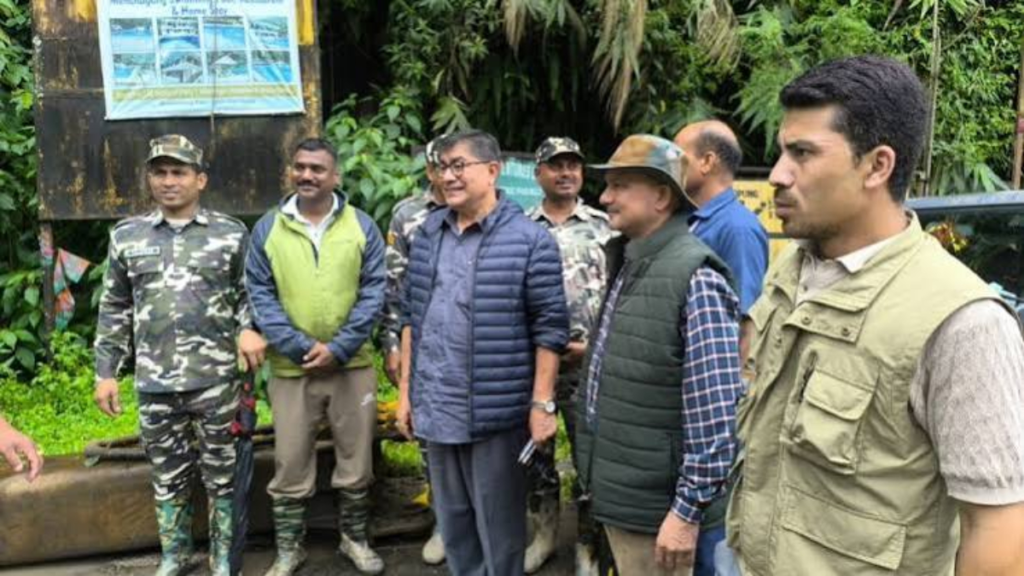
Rimbi landslide relief efforts have received support from a BJP Sikkim team, which visited the affected area and handed over relief materials to families facing hardship. The visit came as the situation in Rimbi remained serious following fresh landslide activity triggered by continuous rainfall.
The latest damage has added to concerns in Gyalshing district, where residents have faced repeated slope movement, disrupted roads and evacuation measures in recent weeks. Authorities have continued monitoring vulnerable locations and assisting affected households.
Rimbi landslide prompts fresh relief response
The BJP Sikkim team visited Rimbi to assess the situation on the ground and meet people affected by the Rimbi landslide. During the visit, the team handed over relief materials for families dealing with the impact of the disaster.
The outreach comes at a difficult time for residents. Fresh landslide activity on Thursday night damaged homes and other structures in Rimbi. Reports said several houses were affected after mud, rocks and debris moved into inhabited areas.
The administration had already evacuated vulnerable families from parts of Rimbi before the latest escalation. Therefore, relief support has become an important part of the response as authorities work to reduce risks to residents.
Fresh landslide damage raises concern
Rimbi has experienced repeated landslide activity during the monsoon. Earlier in September, a major landslide damaged the road on the Geyzing–Pelling–Yuksom route and disrupted connectivity near the area.
On September 14, officials conducted another field assessment after overnight rainfall. They decided to establish a relief camp at GPK Rimbi-Timbrong for affected and vulnerable families. Essential supplies were to be provided according to applicable relief norms.
The situation worsened after further heavy rainfall. The Sikkim State Disaster Management Authority later reported that 28 houses involving 128 people had been evacuated from vulnerable areas of Rimbi as a precautionary measure.
Administration continues relief measures
The Rimbi landslide response has involved several government departments and local representatives. The district administration has worked on evacuation, relief distribution, road restoration and monitoring of vulnerable locations.
The administration also arranged lighting at the affected site to support monitoring during rainfall. In addition, officials planned a temporary bamboo bridge to improve movement in the affected area and worked to maintain water connectivity for the relief camp.
Earlier, the government had also provided relief materials and ex-gratia assistance to 25 affected families at Rimbi-Singlitam after their properties, crops or land suffered damage.
Road connectivity remains a major issue
Connectivity has emerged as one of the key challenges following the Rimbi landslide. The damage to roads has affected movement in the area and complicated access for residents, relief teams and officials.
A recent government update said the road connecting Melli, Khechuperi and Yuksom had suffered major damage. The Roads and Bridges Department has been involved in restoration work, while authorities have explored temporary arrangements to maintain access.
Meanwhile, officials have urged residents to avoid active landslide zones, debris-covered areas and rivers or streams during heavy rainfall. They have also advised people to move to safer locations whenever authorities issue evacuation directions.
Rimbi landslide response remains focused on safety
The BJP team’s relief visit adds another layer of assistance to the ongoing response in Rimbi. The distribution of relief materials comes as affected families continue to deal with damaged homes, disrupted connectivity and uncertainty caused by unstable slopes.
Meanwhile, the district administration and disaster management authorities continue to monitor the area. The government has maintained that resident safety remains a priority as rainfall and landslide risks persist.
For families affected by the Rimbi landslide, immediate relief remains critical. At the same time, restoring connectivity and securing vulnerable locations will remain important as Sikkim manages the continuing monsoon-related risks.