


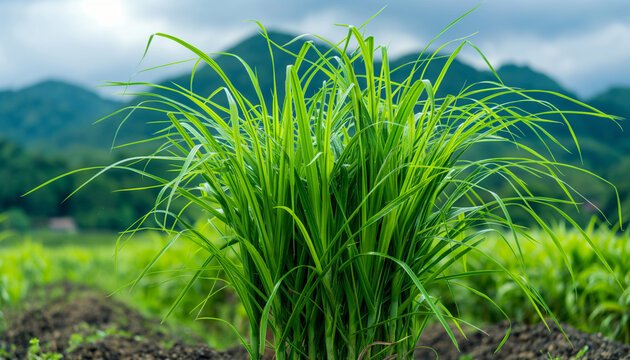
Guwahati: In a significant breakthrough for Assam’s aromatic crop sector, scientists at the CSIR-North East Institute of Science and Technology have developed two high-yielding citronella varieties—‘Jor Lab L-8’ and ‘Jor Lab C-5’—reportedly recording the highest essential oil content among Indian cultivars, with yields exceeding 1% and 1.2% respectively.
The findings were published in early 2026 on the official CSIR platform under the Government of India’s Aroma Mission.
Researchers said the improved strains of Cymbopogon nardus are capable of nearly doubling oil recovery per hectare compared to conventional varieties, addressing issues of low productivity and pest vulnerability.
“This advancement strengthens scientific validation of aromatic crops suited to the Northeast’s agro-climatic conditions,” a senior scientist associated with the project stated.
Pilot cultivation in Pengeri village of Tinsukia district and Yaongyimchen in Nagaland has reportedly increased annual farmer income from around ₹30,000 to ₹70,000 per hectare.
The citronella breakthrough coincides with other peer-reviewed research highlighting Assam’s medicinal plant wealth.
In May 2025, an ethnomedicinal study led by Chhan Kumar Kalita and colleagues from Assam University was published in the journal Vegetos. The study documented 54 plant species traditionally used by Karbi tribal communities in West Karbi Anglong district.
Based on interviews with 85 tribal elders, the research emphasized sustainable harvesting practices and identified aromatic species such as Zingiber officinale (ginger), Ocimum tenuiflorum (holy basil), and Ocimum basilicum (sweet basil) as culturally and medicinally significant.
Further expanding the scientific landscape, researchers at the Institute of Advanced Study in Science and Technology published a study in June 2025 in the international journal Toxicon.
Conducted by Prof. Ashis K. Mukherjee and Bhagya Lakhmi Rajbongshi, the research examined 70 toxic plant species with potential pharmaceutical applications, including treatments for infections, snakebites, and dermatological disorders.
The study called for chemical modification strategies to neutralize toxicity while preserving therapeutic value.
According to a June 2025 marketing analysis in Bhartiya Krishi Anusandhan Patrika, Assam currently has approximately 4.53 thousand hectares under medicinal and aromatic cultivation, producing 0.17 thousand tonnes annually.
Experts caution that expansion of aromatic crop cultivation must be aligned with biodiversity conservation and regulated harvesting frameworks.
However, with high-yield citronella varieties now entering field adoption, Assam’s scientific institutions appear to be positioning the state as a key node in India’s essential oil economy.