


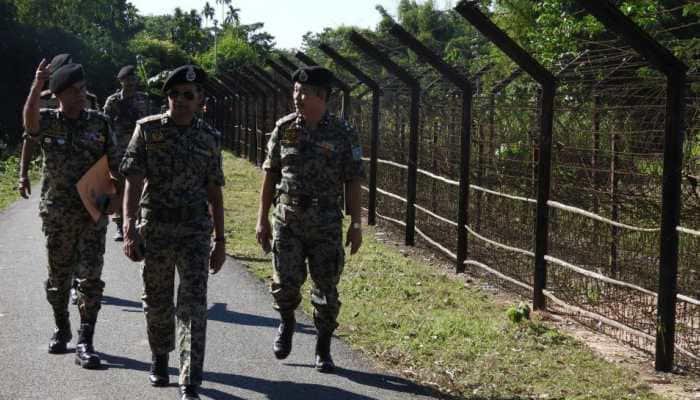
Authorities have raised the alert level across the 856-kilometer frontier this week. As security tightened along India-Bangladesh border in Tripura, officials cited new intelligence reports. These reports highlight the movement of two armed groups from Bangladesh. These groups are the Parbatya Chattagram Jana Samhati Samiti (PCJSS) and the United People’s Democratic Front (UPDF).
The groups usually operate in the Chittagong Hill Tracts (CHT) of Bangladesh. This region sits very close to the Indian state of Tripura. Recent movements near the zero line have triggered serious concerns. The Indian government fears that these groups might attempt to enter India illegally. This situation could threaten the peace of the entire Northeast region.
Read More: Tripura to Review Weather Before Winter School Closures
New Night Curfew in Gomati District
On Saturday, January 3, 2026, the District Magistrate of Gomati took swift action. The administration imposed a strict night curfew in the Karbook sub-division. This order comes under Section 163 of the Bharatiya Nagarik Suraksha Sanhita (BNSS). The curfew restricts movement from 6 p.m. to 6 a.m. every day.
The primary goal of this curfew is to prevent infiltration. Under the new rules, no person can carry firearms or weapons. The administration also banned the use of lathis or sharp objects in these zones. These restrictions will stay in place until February 28, 2026. Security forces and government workers on duty are the only people exempt from these rules.
Why Security Tightened Along India-Bangladesh Border in Tripura
Several factors led to this high-alert status. First, the Border Security Force (BSF) shared reliable data about militant activity. The BSF believes these cadres may use the dense forests and hills to hide. They often try to cross the border during the night when visibility is low.
Second, the political situation in Bangladesh remains unstable. Since August 2024, ethnic conflicts have increased in the CHT region. Many indigenous communities have faced attacks. This chaos provides a perfect cover for armed groups to move unnoticed. India wants to ensure that these internal conflicts do not spill over into Tripura.
Third, the geography of Tripura makes it hard to guard. The state shares a long and porous border with Bangladesh. Many parts of the border lack proper fencing. This makes it easier for smugglers and militants to find gaps. Therefore, the BSF has increased its patrolling and surveillance in these specific areas.
BSF and Army Coordination
The Border Security Force is not working alone. They are coordinating with the Indian Army and the Assam Rifles. Senior commanders from the Eastern Command recently visited the border. They reviewed the operational readiness of the troops in South Tripura and Belonia.
The soldiers now use advanced technology to monitor the frontier. This includes thermal imagers and night-vision drones. These tools help them spot movement even in thick fog or darkness. The BSF has also increased the number of personnel at sensitive outposts. They want to ensure a “zero-entry” policy for all illegal elements.
Impact on Local Residents
The government understands that border residents face difficulties. Those living within 300 meters of the zero line often need to move for farming. The District Magistrate has promised some relaxations for these families. However, everyone must follow the curfew hours strictly.
Chief Minister Dr. Manik Saha is also monitoring the situation. He has asked the state police to assist the BSF in the border villages. The state government wants to maintain a balance between safety and daily life. They advise citizens to report any suspicious activity to the nearest police station immediately.
As security tightened along India-Bangladesh border in Tripura, the sense of vigilance is high. The authorities will not take any risks with national security. The next few weeks will be crucial for the security forces. They must remain alert to handle any sudden changes in the cross-border dynamics.
The international border remains a sensitive zone. The Indian security apparatus remains fully prepared for any challenge. They are committed to protecting the integrity of the nation. By staying proactive, they hope to keep the state of Tripura safe from external threats and militant infiltration.
Read More: Apple Urges iPhone Users to Ditch Chrome for Safari