


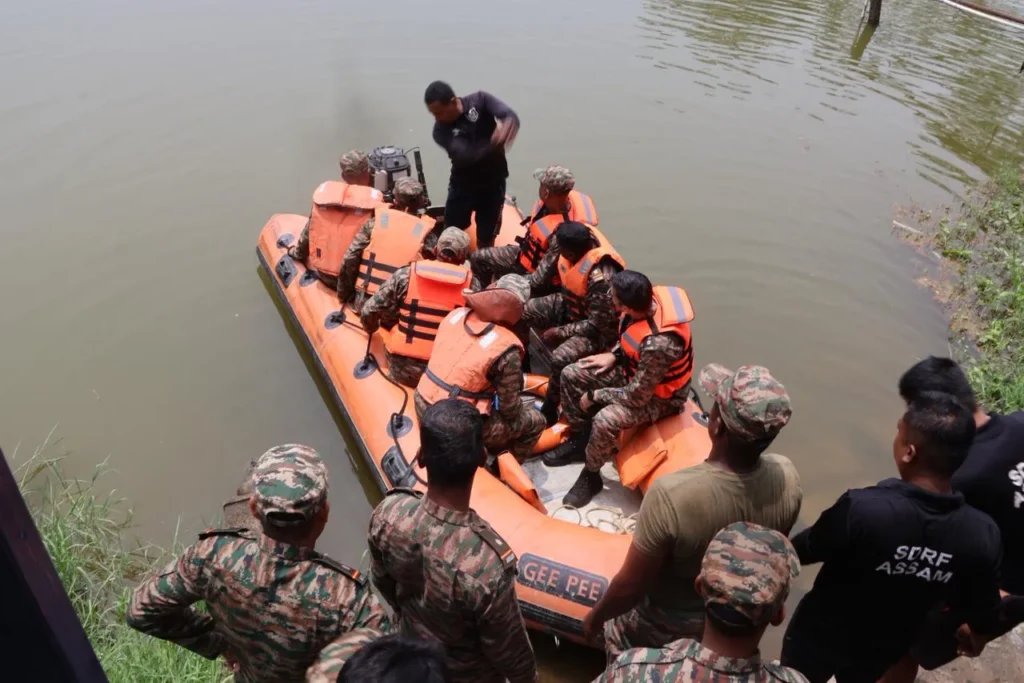
The Shah Sarma emergency coordination gained momentum after Union Home Minister Amit Shah held an urgent telephone conversation with Assam Chief Minister Himanta Biswa Sarma to review the evolving flood situation and coordinate immediate central assistance. The discussion focused on relief operations, rescue efforts, and the deployment of additional resources for affected districts facing severe monsoon-related challenges. The Centre assured the Assam government of full support, while state agencies continued working with disaster response teams to protect vulnerable communities and restore essential services in flood-hit areas.
NDRF River Rescue Saves Stranded Villagers
Tripura Secures Rs 11 Crore in Business Commitments at Queen Pineapple Global Festival
Centre Reviews Assam Flood Situation
The Shah Sarma emergency coordination followed reports of widespread flooding that affected several districts across Assam during the active monsoon season. During the high-level discussion, the Union Home Minister reviewed the latest updates on rescue operations, the condition of affected communities, and the overall humanitarian situation.
The Chief Minister briefed the Home Minister on ongoing relief measures, including evacuation efforts, temporary shelter arrangements, and the deployment of state disaster response personnel. Officials also discussed river conditions, infrastructure damage, and the immediate needs of flood-affected residents.
The Union government reiterated its commitment to extending all necessary assistance to support Assam’s response. Central authorities emphasized close coordination with the state government to ensure timely delivery of relief and effective disaster management.
Relief and Rescue Operations Continue
The Shah Sarma emergency coordination has strengthened cooperation between central and state agencies overseeing flood response operations. Disaster management teams remain engaged in rescuing stranded residents, distributing relief materials, and maintaining emergency services across affected locations.
Relief camps continue providing food, drinking water, medical assistance, and temporary accommodation for displaced families. Health officials are monitoring conditions within shelters to reduce the risk of disease outbreaks following prolonged flooding.
Authorities are also restoring damaged roads, communication links, and public utilities wherever conditions permit. Emergency teams continue monitoring vulnerable embankments and river levels as weather forecasts indicate the possibility of additional rainfall.
Officials have urged residents in flood-prone areas to remain alert, follow evacuation advisories, and avoid entering inundated zones until local administrations declare them safe.
Central Support Focuses on Immediate Needs
The Shah Sarma emergency coordination includes ongoing assessment of resource requirements to strengthen relief efforts in Assam. Central agencies are maintaining regular communication with state authorities to evaluate operational needs and facilitate rapid assistance where necessary.
Discussions have covered logistics, emergency supplies, disaster response personnel, and coordination mechanisms that enable faster delivery of aid to affected districts. Such cooperation is intended to improve response efficiency while ensuring that vulnerable communities receive timely assistance.
Officials continue reviewing the evolving flood situation through regular updates from district administrations and disaster management authorities. These assessments support informed decisions regarding resource deployment and rehabilitation planning.
The collaboration between the Centre and the state government reflects the importance of unified disaster response during large-scale natural emergencies affecting multiple regions.
Recovery Planning Remains a Priority
The Shah Sarma emergency coordination also extends to long-term recovery planning as authorities prepare for rehabilitation once floodwaters recede. Damage assessments are underway to evaluate the impact on homes, agriculture, transportation infrastructure, and public facilities.
Government departments are expected to coordinate restoration efforts, repair damaged infrastructure, and support affected communities through rehabilitation programmes. Officials have emphasized that recovery planning will remain closely aligned with ongoing relief operations to ensure a smooth transition once immediate risks decline.
Experts note that strengthening flood resilience, improving early warning systems, and enhancing disaster preparedness will remain important priorities as extreme weather events continue to affect several parts of the country during the monsoon season.
Conclusion
The Shah Sarma emergency coordination highlights the close collaboration between the Union and Assam governments in responding to severe flooding across the state. The emergency discussion between Union Home Minister Amit Shah and Chief Minister Himanta Biswa Sarma focused on accelerating relief operations, strengthening disaster response, and ensuring prompt central assistance. As rescue and rehabilitation efforts continue, sustained coordination between all agencies will remain essential for protecting affected communities and supporting recovery.
FAQs
1. Why did Amit Shah speak with Himanta Biswa Sarma?
The discussion focused on reviewing the flood situation and coordinating immediate assistance for affected areas.
2. What was the primary objective of the emergency call?
The call aimed to strengthen cooperation between the Centre and the Assam government during ongoing flood response operations.
3. What is the Shah Sarma emergency coordination?
The Shah Sarma emergency coordination refers to the high-level collaboration between Union Home Minister Amit Shah and Chief Minister Himanta Biswa Sarma to organize relief and central support during the flood emergency.
4. What kind of assistance is being provided?
Authorities are supporting rescue operations, relief distribution, emergency shelters, and restoration of essential services.
5. Are relief operations still underway?
Yes. Disaster response teams continue assisting affected communities and monitoring flood conditions.
6. What happens after the immediate emergency is over?
Authorities will focus on rehabilitation, infrastructure restoration, and long-term recovery planning.