


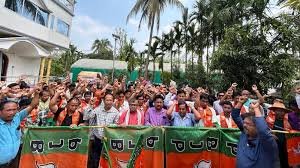
Tipraland slogans political gimmick debate has intensified ahead of TTAADC polls. Tripura minister Ratan Lal Nath strongly criticized the demand. He called the slogans misleading and politically motivated. The statement has added heat to the ongoing election discourse in the state.
Strong Pitch: Conrad Sangma Nagaland Rally
Tipraland Slogans Political Gimmick Sparks Debate
The political gimmick controversy has intensified political discussions in Tripura. State minister Ratan Lal Nath has openly criticized the demand for Tipraland. He described the slogans as misleading and politically driven.
Bold Promises Tripura Congress Manifesto
Moreover, his statement has triggered reactions from different political groups. The issue now dominates election discourse ahead of the TTAADC polls.
Ratan Lal Nath Criticizes Tipraland Demand
Ratan Lal Nath strongly opposed the political gimmick narrative. He argued that such demands create confusion among voters.
Furthermore, he stated that political leaders use these slogans to gain attention rather than offer practical solutions. He emphasized the need for realistic policies that benefit people.
As a result, his remarks have sparked sharp responses from supporters of the Tipraland demand.
Political Context Ahead of TTAADC Polls
Tipraland slogans political gimmick debate has gained importance due to the upcoming TTAADC elections. Political parties have intensified their campaigns.
Moreover, regional issues like autonomy and tribal rights have taken center stage. Leaders are using different strategies to attract voters.
Therefore, this controversy plays a significant role in shaping election narratives.
Understanding the Tipraland Demand
Tipraland refers to a proposed separate state for indigenous communities in Tripura. Supporters argue that it will ensure better governance and protection of tribal identity.
However, critics believe that the demand may not be practical. They argue that it could create administrative and political challenges.
As a result, Tipraland slogans political gimmick debate reflects differing viewpoints.
Reactions from Political Parties
Tipraland slogans political gimmick statement has drawn varied reactions. Supporters of the demand have criticized the minister’s remarks.
Additionally, opposition parties have used the issue to target the ruling government. They have questioned its approach to tribal concerns.
Meanwhile, some leaders have called for balanced discussions instead of confrontation.
Impact on Voters and Campaigns
Tipraland slogans political gimmick controversy may influence voter perception. Political narratives often shape opinions during elections.
Moreover, voters may evaluate leaders based on how they address key issues. The debate could affect campaign strategies across parties.
Therefore, the issue remains crucial in the current political environment.
Need for Constructive Political Dialogue
Tipraland slogans political gimmick debate highlights the importance of constructive dialogue. Leaders must focus on solutions rather than divisive rhetoric.
Furthermore, discussions should address real challenges faced by communities. Inclusive approaches can lead to better outcomes.
As a result, meaningful dialogue remains essential for progress.
Conclusion
Tipraland slogans political gimmick controversy has added intensity to Tripura’s political landscape. Ratan Lal Nath’s remarks have sparked debate ahead of TTAADC polls.
Moreover, the issue reflects broader concerns about governance and representation. The coming days will determine its impact on elections and public opinion.
FAQs
What did Ratan Lal Nath say about Tipraland slogans?
He described them as political gimmicks and criticized their relevance.
What is the Tipraland demand?
It is a proposal for a separate state for indigenous communities in Tripura.
Why is this issue important now?
The debate has intensified ahead of the TTAADC elections.
How have political parties reacted?
Responses vary, with supporters defending the demand and critics opposing it.
What impact could this have on elections?
It may influence voter perception and campaign strategies.